A blender is one of the few kitchen appliances that earns its worktop space through sheer frequency of use. For a lot of UK households it runs most mornings for smoothies, does double duty for soups in winter, and gets pulled out for everything from pancake batter to homemade hummus. The trouble is that the word “blender” covers everything from a £15 stick with a jug to a £600 machine that can heat soup through friction alone, and the marketing rarely helps you tell them apart. If you are still deciding between machine types entirely, our guide to the [best food processors UK 2026] is worth a look first, because the two appliances overlap less than most people assume.
We have spent the past several months testing blenders across the jobs people actually ask of them in a normal British kitchen: frozen-fruit smoothies, hot soups blended straight from the pan, crushed ice for drinks, and the awkward middle ground of nut butters and thick dips that separate the strong motors from the ones that stall. The result is a shortlist that spans budgets, because the honest answer to “which blender should I buy” depends far more on what you blend than on how much you are willing to spend.
This guide ranks our picks by use case rather than crowning a single winner for everyone, then walks through the specifications that genuinely matter so you can match a machine to your kitchen. Everything here has been tested in the same flat, on the same recipes, so the comparisons are fair.
Who tested this and how
I am Ben, the editor of Kitchen Kit, and I have run these blenders in a normal London kitchen rather than a lab, which means real fridge-cold ingredients, real worktop clearance under the wall cabinets, and real washing-up at the end. My testing leaned on the jobs that expose a blender’s weaknesses: a standard frozen-berry-and-banana smoothie made with fruit straight from the freezer, a batch of roasted tomato soup blended hot, a tray of ice cubes crushed for drinks, and a jar of peanut butter made from plain roasted nuts, which is the single hardest thing most home blenders will ever be asked to do.
For each machine I noted how smooth the smoothie actually was after 60 seconds, whether the motor bogged down or the blades cavitated and spun uselessly in an air pocket, how loud it was at full tilt, how hot the motor housing got after sustained use, and how fiddly the jug and lid were to clean. I also lived with each blender for at least a week of ordinary use, because a machine that performs brilliantly but is a nuisance to assemble every morning will end up in a cupboard, and that is the most expensive kind of blender there is.
How the best blenders compare
Before the individual picks, it helps to see the field side by side. Blenders cluster into three broad groups, and the right group for you is usually obvious once you are honest about how you cook. Full-size jug blenders are the versatile choice for households that make soup and blend for more than one person. Personal blenders trade capacity and versatility for speed and convenience, blending directly into a bottle you drink from. Premium blenders occupy their own tier, justified only if you blend daily or want to make hot soup, nut butters and frozen desserts without a second thought.
[INSERT COMPARISON TABLE HERE – 5 rows, 4 columns: Model | Type | Best for | Approx. price. Rows: Vitamix A2300i (premium full-size, everything, ~£450); Ninja Foodi Power Blender Ultimate (full-size, value all-rounder, ~£150); Nutribullet Pro 900 (personal, single smoothies, ~£70); Breville Blend Active Pro (budget full-size/personal, occasional use, ~£45); Sage the Q (premium full-size, quiet high-end, ~£250)]
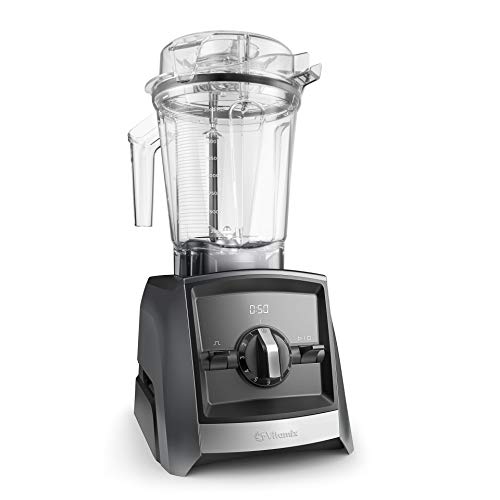
Best overall: Vitamix A2300i
The Vitamix A2300i is the blender to buy if you want to buy a blender once. Its aircraft-grade motor and blunt-but-fast stainless blades produce the smoothest results of anything we tested by a clear margin, turning frozen fruit into a genuinely lump-free smoothie in well under a minute and pulling roasted vegetables into a soup with no discernible texture. Push it hard enough and the friction from the blades will actually heat soup to steaming from cold, which is a party trick you will not use often but tells you everything about the power on tap.
What sets the Vitamix apart in daily use is that nothing fazes it. Peanut butter, the job that stalls most machines, comes together in a couple of minutes with a stop to scrape down. Ice crushes to snow. The variable-speed dial gives you real control for jobs like salsa or a coarse soup where you do not want everything obliterated. And the self-clean function, a drop of washing-up liquid and warm water run for 60 seconds, genuinely works, which matters more than it sounds when you use a blender every day.
The honest caveats are the price and the footprint. This is a large, tall machine that may not fit under standard UK wall units without being pulled forward, and it costs several times what a competent budget blender does. But the container is guaranteed for years, the motor is built to run daily for a decade, and nothing here will ever leave you wishing you had bought more machine. If you blend most days, it is the most defensible expensive purchase in the kitchen.
Best value all-rounder: Ninja Foodi Power Blender Ultimate
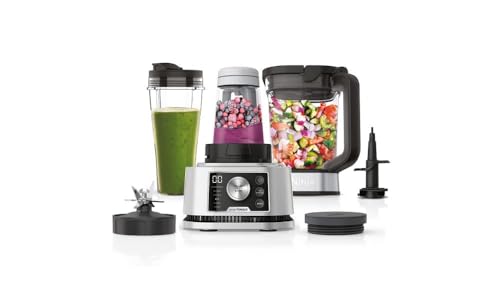
Not everyone needs a Vitamix, and the Ninja Foodi Power Blender Ultimate is the machine that proves it. For roughly a third of the price it delivers most of the everyday performance, with a strong motor that handles frozen fruit and ice without complaint and a set of one-touch presets, smoothie, crush, and a soup programme among them, that take the guesswork out of it. For a household that mainly makes smoothies and the occasional soup, it is hard to spend more and feel you have to.
The Ninja’s other advantage is flexibility. Depending on the bundle it ships with a large jug for family batches and single-serve cups you can blend and drink from, which effectively gives you a full-size blender and a personal blender in one box. The auto-iQ presets pulse and pause intelligently, which helps it avoid the air-pocket stalling that catches out cheaper machines when you overload them with frozen ingredients.
The compromises are real but reasonable at the money. It will not make nut butter as effortlessly as a Vitamix, it is noticeably louder, and the plastic jug does not feel as premium as it does functional. But for the overwhelming majority of UK buyers who want a capable blender without a three-figure commitment, this is the sensible default and our value pick.
Best personal blender: Nutribullet Pro 900
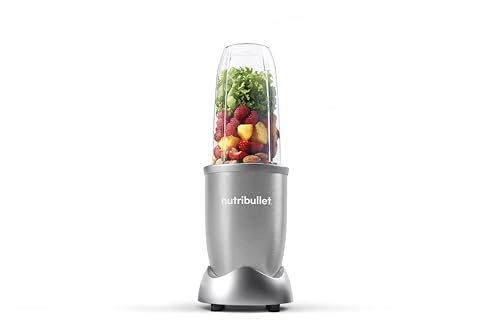
If you only ever make a single smoothie for yourself, a full-size jug blender is overkill, and the Nutribullet Pro 900 is the machine that has defined this category for good reason. You load the cup, screw on the blade, press down and twist, and 30 seconds later you unscrew the cup, fit the drinking lid, and leave. There is no jug to wash, no separate serving, and the whole thing stores in the space of a large mug. For a busy morning routine, that convenience is the entire point.
Within its limits it performs well. The 900-watt motor makes short work of soft frozen fruit, leafy greens and oats, producing a smoothie that is smooth enough for daily drinking, and the extraction-style blade copes with the small batch it is designed for. Cleaning is a rinse of the cup and blade, which is as low-friction as blending gets.
Its limits are also clear. It is a single-serve machine, so it is the wrong tool for soup, for family batches, or for anything you want to serve from a jug. It can struggle with large ice cubes and very hard frozen chunks, so a little liquid and slightly thawed fruit help. Buy it if your blending life is one smoothie at a time and you value speed and simplicity above all; look at a full-size machine if you want versatility.
Best budget full-size: a sub-£50 jug blender
At the bottom of the market sit competent jug blenders from brands like Breville, Russell Hobbs and Salter, often available for under £50. The Breville Blend Active Pro is a representative example: a hybrid that blends into both a full jug and personal bottles, with enough motor to handle everyday smoothies and thin soups. For an occasional user, or a first flat, or a second blender to leave at a holiday home, machines like this do the core job without asking much of your bank balance.
It is worth being clear-eyed about what you are not getting. Budget blenders have weaker motors that will stall or overheat if you push them with dense loads or a full jug of ice, thinner jugs that scratch and cloud over time, and blades that dull faster. They make a perfectly good banana smoothie and a passable soup; they do not make nut butter, they do not crush ice reliably, and they will not thank you for daily heavy use.
Buy a budget machine only if your blending is light and occasional and you would rather not tie up cash in an appliance you use twice a week. If you blend most mornings, the small extra outlay on the Ninja will pay for itself in a machine that does not stall, does not overheat, and does not need replacing in a year.
How to choose a blender: what actually matters
Blender marketing leans heavily on wattage and jug size, and while both matter, neither tells the whole story. The right blender is the one whose strengths line up with the jobs you actually do, and the specifications below are the ones worth weighing before you spend.
Power and motor: watts are a rough guide, not a verdict
Wattage tells you how much electricity the motor can draw, not how effectively the machine turns that into blending. A well-designed 1,000-watt blender with good blade geometry will out-blend a poorly designed 1,500-watt one every time. As a rough rule, look for 600 watts or more for everyday smoothies, 1,000 watts or more if you regularly blend frozen fruit and ice, and treat anything above 1,500 watts as premium territory you only need if you make nut butters or hot soups. Blade design and jug shape, which channel ingredients back onto the blades, matter as much as the headline number.
Jug size and type: match it to how you serve
Full-size jugs typically run from 1.5 to 2 litres and suit households making soup or blending for more than one. Personal blenders use 500 to 800ml cups you drink from directly, ideal for single smoothies but useless for batch work. Note that the usable capacity for hot liquids is lower than the marked total, because blending hot soup near the brim is a recipe for a scalding lid-off eruption; leave a third of the jug empty and vent the lid. If you make soup often, choose a machine explicitly rated for hot blending.
Ice and frozen fruit: the real test of power
Crushing ice and blending frozen fruit is where cheap blenders fail, because a weak motor and the wrong blade will cavitate, spinning a pocket of air while the frozen mass sits untouched above the blades. If frozen smoothies are your main use, prioritise a machine with a dedicated crush or pulse function and enough torque to keep moving under load. A tamper, as Vitamix provides, or a smart pulse-and-pause preset, as Ninja uses, is what actually gets frozen ingredients down onto the blades.
Noise, cleaning and worktop fit: the everyday factors
Two practical things get overlooked on the spec sheet and matter every single time you blend. Noise varies enormously; high-powered blenders are genuinely loud, which is worth considering in an open-plan flat or an early-morning household, and only a couple of premium machines offer meaningful sound dampening. And cleaning determines whether you actually use the thing: self-clean cycles and dishwasher-safe jugs remove the main daily friction, while fiddly gaskets and narrow jugs that trap smoothie residue will slowly put you off. Finally, measure the height under your wall units before buying a tall premium machine.
Also worth considering
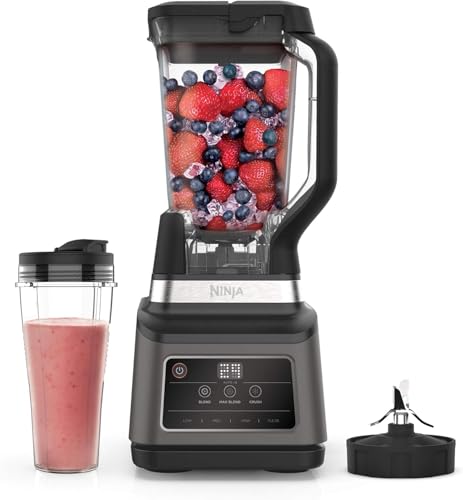
A few machines sit just outside our core picks but suit particular buyers. Sage the Q is a premium full-size blender with genuine sound-dampening and a beautiful build, worth considering if you want near-Vitamix performance in a quieter, better-looking package and do not mind paying for it. At the budget end, the Ninja 2-in-1 with Auto-iQ offers Ninja’s preset intelligence in a cheaper single-jug form for buyers who want the brand’s reliability without the full Power Blender price.
For anyone whose main interest is soup rather than smoothies, it is also worth remembering that a stick (immersion) blender does that one job better than any jug blender, because you blend straight in the pan with nothing to decant and nothing to scald yourself with. If soup is 90 per cent of why you are shopping, a good stick blender plus a cheap jug blender may serve you better than one expensive machine.
Which blender should you buy?
For most people who blend regularly and want one machine that never lets them down, the Vitamix A2300i is the right answer, provided the price and the height fit your kitchen. It is the only pick here that will still be doing everything, brilliantly, in ten years, and for a daily blender that is the calculation that matters.
If that is more than you want to spend, the Ninja Foodi Power Blender Ultimate is the value choice and the one we would recommend to the largest number of readers: most of the performance, genuinely useful presets, and the flexibility of both a jug and single-serve cups. Choose the Nutribullet Pro 900 if your blending is one smoothie at a time and convenience is everything, and reach for a sub-£50 jug blender only if your use is genuinely light and occasional.
FAQ
What is the best blender in the UK for 2026?
For most people the best all-round blender is the Vitamix A2300i, thanks to its unmatched smoothness, power and longevity. If you want most of that performance for far less money, the Ninja Foodi Power Blender Ultimate is our value pick and the right choice for the majority of buyers.
How many watts do I need in a blender?
For everyday smoothies, 600 watts or more is plenty. If you regularly blend frozen fruit and crush ice, look for 1,000 watts or more. Above 1,500 watts is premium territory you only need for nut butters and hot soups. Blade design and jug shape matter as much as the wattage headline.
Can a blender make hot soup?
Yes, but choose a machine rated for hot liquids, never fill it above two-thirds, and vent the lid to let steam escape. A few premium blenders, like the Vitamix, can even heat soup from cold through blade friction. If soup is your main use, a stick blender is often the simpler tool.
Is a personal blender or a full-size blender better?
It depends on how you serve. A personal blender is faster and easier to clean for single smoothies but cannot do soup or batches. A full-size jug blender is far more versatile. Machines like the Ninja Foodi Power Blender Ultimate bridge the gap by including both a jug and single-serve cups.
Can budget blenders crush ice?
Some can manage a little, but most sub-£50 blenders will stall or cavitate on a full load of ice. If crushed ice or frozen smoothies are a regular need, invest in a machine with a dedicated crush function and enough torque, such as the Ninja, rather than relying on a budget motor.