A vacuum sealer is the kind of gadget that sounds like a niche indulgence until you own one, at which point it quietly changes how you shop and store food. Sealed portions last several times longer in the freezer without freezer burn, bulk-buying meat and fish stops being a gamble, and if you cook sous vide it is close to essential. For anyone who batch-cooks, the appliance pairs naturally with a good food processor and a chest freezer to turn a Sunday session into weeks of ready portions; our guide to the [best food processors for batch cooking 2026] covers the prep side of that workflow.
The question the headline poses is a fair one, though: is a vacuum sealer actually worth the worktop or cupboard space it takes up? For a household that throws away food, buys in bulk, or cooks sous vide, the answer is usually yes, and it often pays for itself within months in waste avoided. For someone who freezes little and cooks day to day, it may not earn its keep. This guide is written to help you tell which camp you are in, then to pick the right machine if you decide to buy.
We tested across the two main types, external suction sealers and chamber sealers, plus the budget end, and ranked our picks by the kind of use they suit. The right sealer depends heavily on what you seal and how often, so as with most prep appliances there is no single winner for everyone.
Who tested this and how
I am Ben, the editor of Kitchen Kit, and I tested these sealers in a normal UK kitchen against the jobs people actually buy them for. My test loads were the honest ones: portioning a bulk pack of chicken breasts for the freezer, sealing steaks and fish for sous vide, bagging soft items like berries and bread that crush under too aggressive a vacuum, and the classic external-sealer challenge of anything with liquid, marinades and stews, which is where suction sealers reach their limits and chamber sealers pull ahead.
For each machine I judged how strong and airtight the seal actually was after a few days in the freezer, whether the vacuum crushed delicate items or handled them gently with a pulse mode, how long a full session of repeated sealing took before the machine needed to cool down, and how fiddly the bags, rolls and cleaning were in daily use. I also lived with each sealer for a stretch of ordinary weekly cooking, because a sealer that performs well but is a faff to set up every time will not get used, and an unused sealer is the worst value in the kitchen.
How the best vacuum sealers compare
Vacuum sealers split into two families. External suction sealers, the common type, draw air out of a textured bag through a nozzle and heat-seal the end; they are affordable, compact and fine for dry and semi-dry foods, but they struggle with liquids and can crush soft items. Chamber sealers place the whole bag inside a chamber and evacuate the air around it, giving a far stronger, more consistent vacuum that handles liquids and batches with ease, at the cost of size, price and a steeper commitment. Most home buyers want an external sealer; the committed few want a chamber.
[INSERT COMPARISON TABLE HERE – 4 rows, 4 columns: Model | Type | Best for | Approx. price. Rows: Anova Precision Vacuum Sealer Pro (external, sous vide & batch, ~£130); FoodSaver V4840 (external, everyday freezer use, ~£120); Bonsenkitchen sub-£40 (external, occasional use, ~£35); Avid Armor USV32 (chamber, heavy daily use & liquids, ~£350)]
Best overall: Anova Precision Vacuum Sealer Pro
The Anova Precision Vacuum Sealer Pro is the external sealer to buy if you take sous vide or batch cooking seriously. It pulls the strongest, most consistent vacuum of any suction sealer we tested, which translates directly into longer freezer life and tighter bags for sous vide that hug the food and cook evenly. Anova makes some of the best sous-vide sticks around, and the sealer is clearly designed to work hand in glove with them, which shows in how reliably it produces a leak-free seal on a bag destined for a long water bath. Our guide to the [best sous vide sticks UK 2026] pairs naturally with this machine.
In daily use it is quick and forgiving. A pulse and moist-food mode let you stop the vacuum before it crushes berries or bread, and the sealing bar produces a wide, secure weld that does not peel apart when frozen. It is also built to run repeatedly without the lengthy cool-down that cheaper sealers demand, so a big portioning session does not stall halfway through. For anyone whose main reason to own a sealer is sous vide or serious freezer batching, this is the machine.
The caveats are modest. It costs more than a basic sealer, and like all external suction machines it is not the tool for sealing loose liquid, for which you need a chamber sealer or the workaround of freezing the liquid first. But within the external-sealer category it is the strongest performer we tested and our overall pick.
Best value: FoodSaver V4840
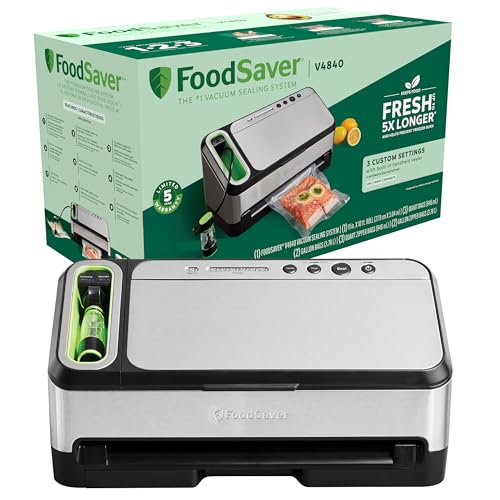
FoodSaver effectively created this category for home users, and the V4840 is the machine that shows why the brand still dominates it. It is a dependable external sealer with a strong vacuum, a genuinely useful built-in roll cutter and storage so you can make custom-length bags without a separate cutter, and a retractable handheld sealer for zipper bags and canisters. For everyday freezer use, portioning meat, sealing leftovers, storing bulk buys, it does everything most households need without fuss.
Its practical touches are what make it easy to live with. The automatic bag detection and moist/dry settings take the thinking out of it, the roll storage means you are never hunting for the cutter, and FoodSaver’s bags and rolls are widely stocked in the UK, which matters more than it sounds when consumables are an ongoing cost. It is not quite as powerful as the Anova and not aimed at hardcore sous vide, but for the mainstream buyer it is the sensible, proven choice.
The trade-offs are the usual external-sealer ones: it does not love loose liquids, and heavy back-to-back sealing will eventually ask for a cool-down. But as an everyday freezer sealer that will not let you down and is easy to feed with consumables, it is our value recommendation and the right machine for the largest number of buyers.
Best budget: a sub-£40 external sealer
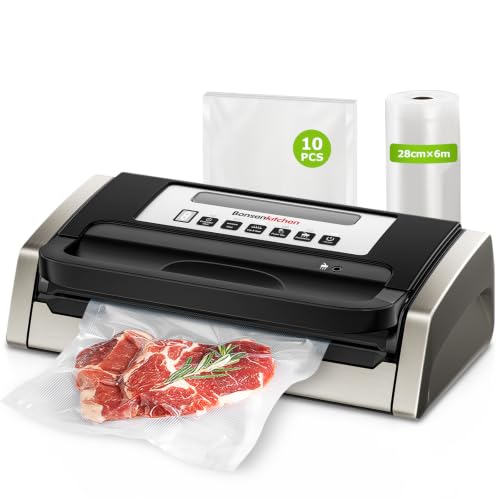
At the budget end, compact external sealers from brands like Bonsenkitchen, Inkbird and similar can be found for under £40 and cover the basics competently. For occasional freezer storage, sealing the odd bulk buy or portioning a batch now and then, they draw a decent vacuum and produce a serviceable seal without asking much of your budget. As a first sealer to find out whether you will use one, they make a lot of sense.
The compromises are predictable. The vacuum is weaker and slower, the sealing bar is narrower and can produce a less reliable weld, and the machine needs longer to cool between seals, so a big portioning session is a stop-start affair. Build quality is lighter, so they are less likely to survive years of heavy use. They are genuinely fine for light, occasional sealing; they are not built for daily batching or sous vide.
Buy a budget sealer if you want to try the workflow cheaply or your sealing will be genuinely occasional. If you already know you will use one weekly, the extra outlay on the FoodSaver or Anova buys a stronger seal, faster repeated use and a machine that will still be working in several years.
Best for the committed: a chamber sealer
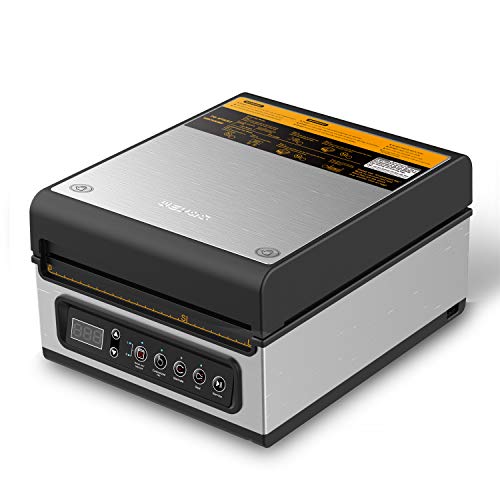
For anyone who seals liquids regularly, marinades, stews, soups, or who portions large batches most days, a chamber sealer like the Avid Armor USV32 is the real answer. By evacuating the air from a sealed chamber rather than sucking it through a nozzle, it produces the strongest and most consistent vacuum available, handles liquids without the freezing workaround, uses cheaper smooth bags rather than textured ones, and seals batch after batch without a cool-down.
The trade-offs are size, price and commitment. A chamber sealer is a large, heavy countertop machine that costs several times what an external sealer does, and it only makes sense if you use it hard enough to justify that. For a serious home cook who batch-cooks and sous vides constantly, or anyone dealing with liquids, it is transformative; for occasional use it is wildly over-specified. Buy one only if you know your usage warrants it.
How to choose a vacuum sealer: what matters
Vacuum-sealer marketing focuses on vacuum pressure and bag counts, but the features that determine whether a machine suits you are more practical. Weigh the ones below against how you actually plan to use it.
External versus chamber: match it to what you seal
This is the first and most important decision. If you seal dry and semi-dry foods, meat, fish, vegetables, bread, an external suction sealer is cheaper, smaller and entirely sufficient. If you regularly seal loose liquids, or you portion large batches daily, a chamber sealer’s stronger, liquid-friendly vacuum is worth the size and expense. Most home buyers are firmly in external-sealer territory; be honest about whether you truly need a chamber before paying for one.
Seal strength, moist mode and pulse control
A strong, wide, reliable seal is the whole point, so prioritise a machine known for a secure weld that survives freezing without peeling. A moist or wet-food mode matters if you seal anything with surface moisture, adjusting the seal timing so it holds. And a pulse or manual-stop function is what lets you seal delicate items, berries, bread, ready meals, without crushing them, so look for it if your sealing goes beyond firm cuts of meat.
Bags, rolls and running costs
Consumables are the ongoing cost of owning a sealer, so check what your chosen machine uses and how easy it is to buy in the UK. External sealers need textured or embossed bags to work; chamber sealers use cheaper smooth bags. A built-in roll cutter, as on the FoodSaver, lets you make custom-length bags and reduces waste. Factor the price and availability of bags into the real cost of the machine, not just the sticker price.
Duty cycle and build: how hard you will use it
If you plan a big weekly portioning session, the machine’s duty cycle, how many seals it can do before it needs to cool, matters a great deal. Budget sealers stall after a handful of seals; better external machines and all chamber sealers run for longer. Build quality follows the same line: a heavier, better-made machine survives years of use, while a light budget one may not. Match the machine’s stamina to how much you will ask of it in a single session.
Also worth considering
A couple of options sit outside our main picks. Handheld and cordless sealers that work with zipper-style bags, including FoodSaver’s own handheld, are a low-commitment way to seal small quantities and re-seal opened packets without a full countertop machine, though the seal is weaker and shorter-lived. And if freezer storage rather than sous vide is your only goal, remember that good-quality freezer bags with the air pressed out, or reusable silicone bags, cover light needs at a fraction of the cost, and a sealer only earns its place once you are storing enough to notice the difference.
It is also worth pairing the decision with your freezer. A vacuum sealer delivers its biggest payoff alongside a chest or larger freezer, where bulk-buying and long-term storage make the waste savings add up. If your freezer is a single drawer under the fridge, the case for a sealer is weaker simply because you cannot store enough to exploit it.
Which vacuum sealer should you buy?
For most people the choice comes down to two external sealers. If you sous vide or batch-cook seriously and want the strongest seal, the Anova Precision Vacuum Sealer Pro is the pick, especially if you already own an Anova stick. If your needs are mainstream freezer storage and you want a proven, easy-to-feed machine at a sensible price, the FoodSaver V4840 is the value choice and the right one for the largest number of buyers.
Reach for a sub-£40 sealer only if your use will be genuinely occasional or you want to test the workflow cheaply, and step up to a chamber sealer only if you seal liquids or big batches daily and will use it hard enough to justify the size and cost. Whichever you choose, pair it with enough freezer space to make the savings real.
FAQ
What is the best vacuum sealer in the UK for 2026?
For most people the best external vacuum sealer is the Anova Precision Vacuum Sealer Pro if you sous vide or batch-cook, or the FoodSaver V4840 for everyday freezer use at a sensible price. If you regularly seal liquids or big batches, a chamber sealer like the Avid Armor is the stronger choice.
Are vacuum sealers worth it?
For households that batch-cook, buy in bulk or throw away food, yes, a vacuum sealer often pays for itself within months by extending freezer life several times over and cutting waste. If you freeze little and cook day to day with a small freezer, it may not earn its worktop space.
Can vacuum sealers seal liquids?
External suction sealers struggle with loose liquids because the vacuum draws them into the machine; the workaround is to freeze the liquid first or use a moist mode. If you regularly seal marinades, soups or stews, a chamber sealer handles liquids directly and is the better tool.
Do I need a vacuum sealer for sous vide?
It is not strictly essential, water displacement in a zipper bag works for short cooks, but a vacuum sealer gives a tighter, more reliable seal that hugs the food and prevents floating on long cooks. If you sous vide often, a strong external sealer like the Anova makes a real difference.
What bags do vacuum sealers use?
External suction sealers need textured or embossed bags or rolls to channel the air out; smooth bags will not work. Chamber sealers use cheaper smooth bags. Check availability and price of your chosen machine’s bags in the UK, as consumables are an ongoing cost, and consider a machine with a built-in roll cutter to reduce waste.