Homemade ice cream sits in that satisfying category of things a good machine makes genuinely easy and a bad one makes more trouble than it is worth. Done well, you get gelato and sorbet fresher and with better ingredients than anything from a tub, at a fraction of the cost of the premium brands, and with the freedom to make flavours no shop sells. Done badly, with an underpowered machine or a bowl you forgot to freeze, you get a soupy, icy disappointment and a machine that migrates to the back of a cupboard. The good news is that under £200 there are now machines that make it reliably easy, and picking the right type for how you cook is most of the battle. If you already own a strong blender, our guide to the [best blenders UK 2026] covers the machine that makes the smooth bases these makers churn.
The single biggest decision is compressor versus bowl. Compressor machines have a built-in freezer, so they chill and churn on demand with no planning, and can make batch after batch, but they cost more and take up more space. Bowl machines rely on a double-walled bowl you freeze solid overnight first; they are cheaper and more compact, but you have to plan ahead and you get one batch before the bowl needs re-freezing. Under £200 you can buy a good example of either, so this guide ranks picks across both types and the newer spin-based approach, matched to how often and how spontaneously you want to make ice cream.
Everything here has been tested on the same recipes, a classic custard-based vanilla, a fruit sorbet, and a frozen yoghurt, so the comparisons reflect real results rather than spec sheets.
Who tested this and how
I am Ben, the editor of Kitchen Kit, and I churned my way through these machines in a normal UK kitchen with a normal freezer, which matters because bowl machines live and die by how cold your freezer runs and whether you remembered to put the bowl in the night before. My test batches were the ones that separate good machines from adequate ones: a rich custard ice cream that needs proper churning to stay smooth, a fruit sorbet that turns icy if the machine is slow, and a frozen yoghurt that reveals how well a machine incorporates air for a light texture.
For each machine I judged the final texture, smooth and scoopable versus grainy and icy, how long a batch took from base to soft-serve, how loud the churning was, and, crucially for bowl machines, how much planning and freezer space the whole process demanded. I also considered how easy each was to clean and store, because an ice cream maker is by nature an occasional appliance, and one that is a chore to set up and wash will simply not get used often enough to justify buying.
How the best ice cream makers compare
The under-£200 field sorts into three approaches. Compressor machines are the most convenient and consistent, freezing on demand with no pre-planning and allowing back-to-back batches, at the top of this price range. Freeze-the-bowl machines are cheaper and more compact but require an overnight freeze and give one batch at a time. And spin-based machines like the Ninja CREAMi take a different route entirely, freezing bases solid in tubs and then shaving and spinning them into ice cream, which trades one kind of planning for enormous flavour flexibility.
[INSERT COMPARISON TABLE HERE – 4 rows, 4 columns: Model | Type | Best for | Approx. price. Rows: Cuisinart ICE-100 (compressor, frequent makers, ~£180); Cuisinart ICE-30BC (freeze-bowl, occasional makers, ~£75); Salter/Andrew James sub-£40 (freeze-bowl, budget/occasional, ~£35); Ninja CREAMi (spin-based, families & flavour variety, ~£150)]
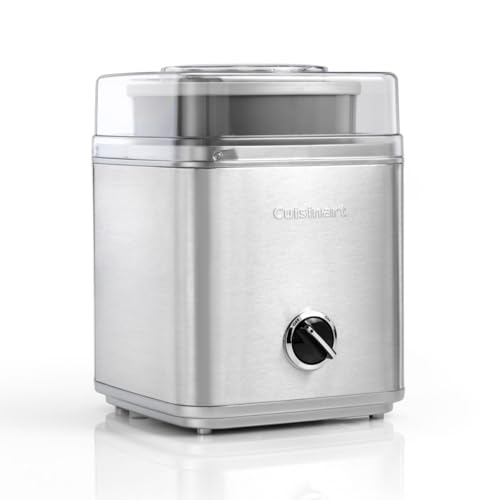
Best overall: Cuisinart ICE-100
The Cuisinart ICE-100 is the machine to buy if you want to make ice cream on a whim and make it well. Because it has a built-in compressor, there is no bowl to pre-freeze and no planning required: you pour in your base, choose ice cream or gelato, and the machine chills and churns it in one go, producing a consistently smooth, scoopable result. Crucially, it can make batch after batch without stopping to re-freeze anything, which is the feature you appreciate most when you are making more than one flavour or feeding a crowd.
The dedicated gelato paddle is a genuine point of difference, churning more slowly to incorporate less air for the denser, silkier texture gelato is supposed to have, while the standard paddle whips a lighter classic ice cream. In testing it produced the smoothest sorbet and the most reliable custard of anything here, with none of the iciness that catches out slower machines. It is the closest thing under £200 to the convenience of a proper freezer-equipped machine.
The caveats are size and price. It is the largest and heaviest option here and sits at the top of the budget, and it needs a permanent home rather than a cupboard, because it is too bulky to keep hauling out. But if you make ice cream regularly and value being able to do it without a day’s notice, it is comfortably the best machine in this guide and our overall pick.
Best value bowl machine: Cuisinart ICE-30BC
For occasional ice cream makers who are happy to plan ahead, the Cuisinart ICE-30BC is the sweet spot on value. It uses the classic freeze-the-bowl method: you keep the double-walled bowl in the freezer, and when you want ice cream you slot it in, pour in your base, and churn for around 20 to 25 minutes to a soft-serve consistency that firms up in the freezer. For a fraction of a compressor’s price, it makes genuinely good ice cream, sorbet and frozen yoghurt.
Within its method it performs well. The bowl holds its cold long enough to churn a full batch to a smooth texture, the motor is quiet and unfussy, and the results are close to what the pricier compressor machine achieves, provided your freezer is cold enough and the bowl has had a proper overnight freeze. For a household that makes ice cream now and then rather than weekly, paying several times more for a compressor is hard to justify when this does the job.
The trade-offs are inherent to the type. You get one batch before the bowl needs re-freezing, so back-to-back flavours mean buying a second bowl or waiting a day, and you must remember to freeze the bowl in advance, which is the classic bowl-machine pitfall. But if you can live with a little planning, it is the best-value route to good homemade ice cream and our value pick.
Best budget: a sub-£40 bowl machine
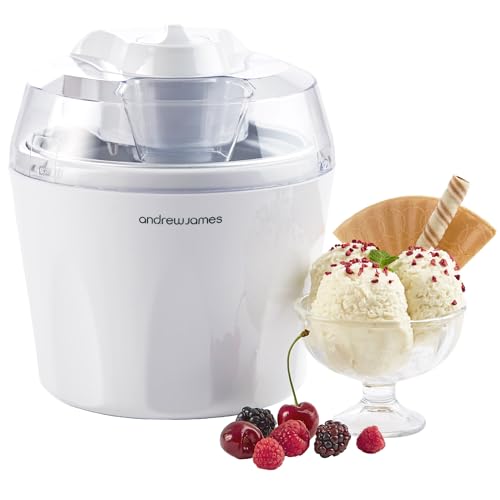
At the budget end, freeze-the-bowl machines from brands like Salter and Andrew James can be found for under £40 and cover the basics. For occasional soft-serve, a simple sorbet, or making ice cream with children as an activity, they churn a small batch competently without asking much of your budget, and they store compactly between uses.
The compromises are what you would expect. The bowls are smaller and lose their cold faster, so you have a shorter window to churn before the mixture starts to turn icy, and the motors are less powerful, which shows in a slightly coarser final texture. Build quality is lighter, and the smaller capacity means these are best for one or two servings rather than a family batch. They make perfectly enjoyable homemade ice cream; they simply demand more of your timing and give a little less in refinement.
Buy a budget machine if your ice-cream making will be genuinely occasional or you want a cheap way to try the hobby. If you already know you will make it often, the step up to the ICE-30BC, or a compressor machine if you can stretch to it, buys smoother results and a lot less faff.
Best for families and flavour variety: Ninja CREAMi
The Ninja CREAMi takes a different approach that suits families and flavour experimenters especially well. Instead of churning a liquid base, you freeze your base solid in one of its tubs overnight, then the machine shaves and re-spins the frozen block into a smooth ice cream, gelato, sorbet or milkshake. Because each tub is a single base, it is brilliant for making several different flavours, or several portion-controlled individual servings, from the same session.
In practice it is enormously flexible. You can make a healthier frozen yoghurt in one tub and an indulgent chocolate ice cream in another, re-spin a portion to soften it, and add mix-ins partway through. Families with different tastes, or anyone managing portions and ingredients, tend to love it for exactly this reason. The texture is genuinely good, if slightly different in character from a churned machine.
The trade-off is that it swaps one kind of planning for another: you still have to freeze bases the night before, and each tub is a fixed portion, so it is less about churning a big communal batch and more about assembling individual servings. It is also a bulky machine. But for households that want variety and portion control above all, it is the most versatile option here.
How to choose an ice cream maker: what matters
Ice-cream-maker marketing focuses on capacity and preset counts, but the decisions that actually shape your experience are simpler. Weigh the ones below against how often and how spontaneously you want to make frozen desserts.
Compressor versus freeze-bowl: convenience versus cost
This is the defining choice. A compressor machine freezes on demand with no planning and makes back-to-back batches, but costs more and takes up more space. A freeze-bowl machine is cheaper and more compact but ties you to an overnight bowl freeze and one batch at a time. If you make ice cream often or on impulse, a compressor is worth the premium; if you make it occasionally and can plan ahead, a bowl machine saves you money and worktop space.
Capacity and freezer space
Check both the batch capacity and, for bowl and spin machines, how much freezer space the bowl or tubs demand, because a large frozen bowl can swallow a whole freezer drawer. Match the batch size to your household: a small budget bowl makes one or two servings, while a compressor or larger bowl machine handles a family batch. If freezer space is tight, a compressor machine that needs no pre-freezing sidesteps the problem entirely.
Texture, paddles and churning
Smoothness comes down to how well and how fast the machine churns before the mixture sets. Faster, more effective churning means a smoother, less icy result, which is where compressor machines and better bowl machines pull ahead of budget ones. A dedicated gelato paddle, as on the Cuisinart ICE-100, incorporates less air for a denser texture, worth having if authentic gelato is a goal. For light frozen yoghurt, you want a machine that whips in enough air for a soft, airy finish.
Noise, cleaning and storage
An ice cream maker is an occasional appliance, so how easy it is to clean and store decides whether it gets used. Removable, dishwasher-safe bowls and paddles make the after-churn cleanup painless, while machines with many parts or awkward seals become a deterrent. Consider noise too, as compressor machines hum for the whole churn, and think about where a bulky machine will live, because one that has to be dug out of a high cupboard will be used far less than one left ready on the worktop.
Also worth considering
A couple of alternatives sit outside our main picks. Some stand mixers, including KitchenAid models, offer a freeze-bowl ice cream attachment, which is worth considering if you already own the mixer and would rather not buy a standalone machine, though it uses the same plan-ahead bowl method. And at the very simplest end, a good blender or food processor can turn frozen bananas and fruit into a quick soft-serve style dessert with no dedicated machine at all, which covers casual cravings without any new appliance.
It is also worth being realistic about how often you will use one. Ice cream makers are among the appliances most likely to be bought in a burst of summer enthusiasm and then forgotten, so the honest question is whether you will make enough to justify the space. If the answer is only a couple of times a year, a budget bowl machine or a blender workaround is the sensible call; if you will make it regularly, a compressor machine earns its keep.
Which ice cream maker should you buy?
For most people who make ice cream regularly and want it to be easy, the Cuisinart ICE-100 is the right answer, provided you have space for it. Making frozen desserts on demand with no bowl to pre-freeze, and being able to run several batches in a row, is worth the premium if you will use it, and it produced the best textures in testing.
If you make ice cream occasionally and can plan ahead, the Cuisinart ICE-30BC is the value choice and the one we would recommend to the most readers, delivering most of the quality for far less money. Choose the Ninja CREAMi if your priority is flavour variety and portion control for a family, and reach for a sub-£40 bowl machine only if your use will be light and occasional or you are testing the hobby.
FAQ
What is the best ice cream maker under £200 in the UK for 2026?
For most people the best under-£200 machine is the Cuisinart ICE-100, a compressor model that freezes on demand and makes back-to-back batches with excellent texture. If you make ice cream only occasionally and can plan ahead, the freeze-bowl Cuisinart ICE-30BC is the better-value choice.
Is a compressor ice cream maker worth it?
If you make ice cream often or on impulse, yes. A compressor machine needs no pre-frozen bowl, chills and churns on demand, and can make several batches in a row, which a freeze-bowl machine cannot. If you make ice cream only occasionally and are happy to plan ahead, a cheaper bowl machine saves money and space.
Do you have to freeze the bowl on an ice cream maker?
On freeze-bowl machines, yes, the double-walled bowl must be frozen solid, usually overnight, before churning, and it gives one batch before needing to re-freeze. Compressor machines have a built-in freezer and skip this step entirely, while spin machines like the Ninja CREAMi freeze the base rather than a bowl.
Can you make sorbet and frozen yoghurt as well as ice cream?
Yes. All the machines here handle sorbet and frozen yoghurt as well as ice cream and gelato; you simply change the base recipe. Faster, more effective churning gives smoother sorbet, and a machine that whips in plenty of air gives lighter frozen yoghurt, so a better machine widens the range of good results.
How long does homemade ice cream take to make?
Churning itself typically takes 20 to 40 minutes to reach soft-serve, after which most people freeze it for a few hours to firm up. Compressor machines are ready whenever you are; bowl machines add the overnight bowl freeze beforehand; and spin machines like the CREAMi need the base frozen solid in advance, so plan around your chosen type.