If you batch-cook, a food processor is the single appliance that changes the maths of a Sunday prep session. The hour you would spend dicing onions, grating cheese, slicing carrots and rubbing butter into flour collapses into a couple of minutes of feeding ingredients through a chute. For anyone cooking in quantity for a family or a week of lunches, that is not a luxury; it is the difference between batch-cooking as a sustainable habit and batch-cooking as a chore you abandon by February. If you are still weighing a processor against a blender, our guide to the [best blenders UK 2026] explains where the two appliances overlap and, more usefully, where they do not.
The catch is that food processors vary wildly in how much batch work they can actually take. A small 1.5-litre bowl and a modest motor will chop an onion happily but bog down on a double batch of dough or a full head of cabbage, while the serious machines swallow big loads without a flinch and are built to do it every week for a decade. This guide is written specifically around batch cooking, so the emphasis throughout is on bowl capacity, motor stamina under load, and the durability that separates a machine you will still own in ten years from one that dies the first time you push it.
We have tested across the price spectrum, from lifetime-guarantee premium machines to sensible mid-range all-rounders and honest budget options, and ranked our picks by the kind of kitchen and cooking they suit rather than crowning one winner for everyone.
Who tested this and how
I am Ben, the editor of Kitchen Kit, and I tested these processors the way a batch-cooker actually uses them, in a normal UK kitchen with real quantities and real time pressure. My test jobs were the ones that expose a machine’s limits under batch conditions: chopping a full kilo of onions to an even dice, grating a large block of cheese and a bag of carrots, slicing potatoes evenly for a gratin, and, the hardest test of all, making shortcrust pastry and a batch of bread dough, which loads the motor and the bowl seals in a way that light chopping never does.
For each machine I judged how evenly it chopped without turning half the load to mush while leaving the rest in chunks, whether the motor slowed or the bowl leaked under a heavy dough, how quickly I could swap discs and empty the bowl between jobs, and how much of a nuisance the parts were to wash, because a processor with a dozen fiddly components will sit unused if cleaning it feels like a second chore. I also ran each machine through at least a week of ordinary prep so the verdicts reflect living with the thing, not just a single demonstration.
How the best food processors compare
Food processors sort themselves into three broad tiers for batch cooking. Premium machines pair large, often multiple bowls with induction motors built for daily heavy use and back it with long guarantees. Mid-range all-rounders offer a generous bowl and enough power for weekly batch prep at a far gentler price, and are where most sensible buyers should look. Compact and budget machines handle everyday chopping and grating but reach their limits quickly on big loads and dough, making them better suited to smaller households or occasional use.
[INSERT COMPARISON TABLE HERE – 5 rows, 4 columns: Model | Bowl size | Best for | Approx. price. Rows: Magimix 5200XL (3.6L main, big-batch everything, ~£340); Kenwood Multipro Express (3.5L, value batch prep, ~£150); Ninja Food Processor with Auto-iQ (2.1L, compact kitchens, ~£100); Russell Hobbs Desire (1.5L, occasional use, ~£55); Magimix 3200XL (3.0L, smaller households wanting premium, ~£250)]
Best overall: Magimix 5200XL
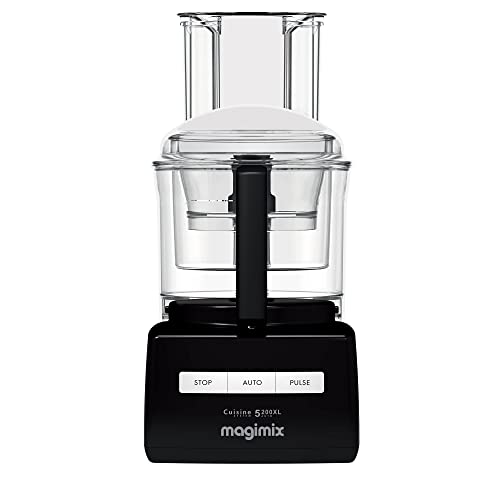
The Magimix 5200XL is the machine batch-cookers gravitate to, and for good reason. Its commercial-grade induction motor runs quietly and refuses to bog down, driving through a full bowl of dough or a heavy load of vegetables without the strain that makes cheaper machines whine and slow. The three nested bowls, a large main bowl plus midi and mini bowls, mean you can chop a small quantity of herbs or process a full batch of soup base without decanting, which in practice is the feature you appreciate most on a busy prep day.
Build quality is the other half of the appeal. The Magimix is assembled to a standard that justifies its long motor guarantee, the discs are sharp and cut cleanly rather than tearing, and the whole machine has the reassuring heft of something engineered to be used hard for years. For batch cooking specifically, the combination of a big bowl, a motor that never flinches, and durability you can rely on is exactly the right set of priorities, and nothing else here matches it on all three at once.
The honest caveats are price and storage. This is a large, heavy machine with a full complement of discs and bowls to house, and it costs several times what a competent budget processor does. But if you batch-cook every week, the per-use cost over a decade is trivial, and the time it saves is real. It is the most defensible expensive purchase in this category and our overall pick.
Best value all-rounder: Kenwood Multipro Express
Most people do not need a Magimix, and the Kenwood Multipro Express is the machine that demonstrates it. For well under half the price it offers a generous 3.5-litre bowl, a strong motor that handles weekly batch prep without complaint, and a genuinely useful integrated weighing scale that lets you measure ingredients straight into the bowl, which saves both washing-up and guesswork when you are prepping in quantity.
In use it does the core batch jobs well. It chops evenly, grates and slices quickly through its disc set, and copes with pastry and lighter doughs, though it will show a little more strain than the Magimix on a heavy bread dough. The wide feed tube swallows whole vegetables with minimal pre-cutting, which is exactly what you want when you are processing a big load and do not want to halve every carrot first.
The compromises are modest and reasonable at the money. It does not feel as tank-like as the Magimix, the motor is not built for the same decade of daily abuse, and the parts count is on the higher side. But for the large majority of UK batch-cookers who want real capability without a premium price, this is the sensible default and our value recommendation.
Best compact: Ninja Food Processor with Auto-iQ
Batch cooking and small kitchens are not mutually exclusive, and the Ninja Food Processor with Auto-iQ is the pick for people who prep in quantity but cannot spare the worktop for a full-size machine. Its 2.1-litre bowl is smaller than our top picks but still enough for a meaningful batch, and the strong Ninja motor punches above the machine’s size, handling chopping, grating and dough programmes with the pulse-and-pause intelligence the brand is known for.
The Auto-iQ presets are more useful here than they first appear, taking the guesswork out of dough and even chopping so you get consistent results without hovering over the pulse button. And because it stores in a fraction of the space of a Magimix, it is far more likely to stay on the worktop and get used, which is ultimately what makes any prep appliance worthwhile.
Its limits are the ones you would expect from the size. The smaller bowl means more batches for a big cook-up, and it lacks the multi-bowl flexibility and lifetime build of the premium machines. But for a compact kitchen that still wants to batch-cook properly, it is the best balance of performance and footprint we tested.
Best budget: a sub-£60 food processor
At the budget end, machines like the Russell Hobbs Desire and similar sub-£60 processors from Salter and Breville handle the everyday jobs, chopping onions, grating cheese, slicing vegetables, without asking much of your budget. For a smaller household, an occasional batch-cooker, or a first kitchen, they cover the basics competently and take the drudgery out of hand-chopping.
It is worth being honest about the trade-offs. A 1.5-litre bowl fills quickly when you are batch cooking, so you will process in more, smaller loads. The lighter motor will slow or overheat if you push it with dense doughs, and the discs dull faster than premium ones. These machines chop and grate perfectly well; they are simply not built for the heavy, repeated, big-load work that defines serious batch cooking.
Buy a budget processor if your batch cooking is modest and occasional and you would rather not tie up cash in a large machine. If you batch-cook every week and in quantity, the extra outlay on the Kenwood pays for itself in bigger loads, less strain, and a machine that will not need replacing in a couple of years.
How to choose a food processor for batch cooking: what matters
Food processor marketing emphasises accessory counts and wattage, but for batch cooking specifically the priorities are narrower. The features below are the ones that actually determine whether a machine will keep up with the way you cook.
Bowl capacity: the number that governs everything
For batch cooking, bowl size is the single most important specification, because it dictates how many times you stop, empty and refill. A 1.5-litre bowl is fine for small jobs but frustrating for big ones; look for 3 litres or more if batch cooking is your main use. Bear in mind the usable capacity for liquids and doughs is lower than the marked total, since a bowl filled to the brim will leak past the seal, so buy bigger than you think you need.
Motor power and stamina: torque under load
Wattage is a rough guide, but what matters for batch work is stamina under a heavy load. A machine that chops a light bowl of vegetables happily may slow, whine or cut out when asked to knead a full dough or process a dense root-vegetable load. Induction motors, as on the Magimix, are quieter and built to sustain heavy use over years, which is why premium machines command their price. If you regularly make dough or process big loads, prioritise a motor rated for that, not just a high headline wattage.
Discs, blades and the feed tube: the batch-prep workhorses
For batch cooking the disc set does most of the work, so look for sharp, reversible slicing and grating discs and, ideally, an adjustable-thickness slicer. A wide feed tube matters more than it sounds: one that swallows a whole potato or block of cheese saves you pre-cutting every item, which is exactly the tedious step you bought the machine to avoid. Check that the discs cut cleanly rather than tearing, as blunt or poorly designed ones bruise soft ingredients.
Cleaning and storage: what keeps it in use
A food processor with a dozen parts that need hand-washing will end up in a cupboard, however good it is. Look for dishwasher-safe bowls and discs and a design that assembles and dismantles without a fight, because on a batch day you will swap tools several times. Storage matters too: premium machines come with a lot of discs and bowls, so factor in where they will live before you buy the biggest option.
Also worth considering
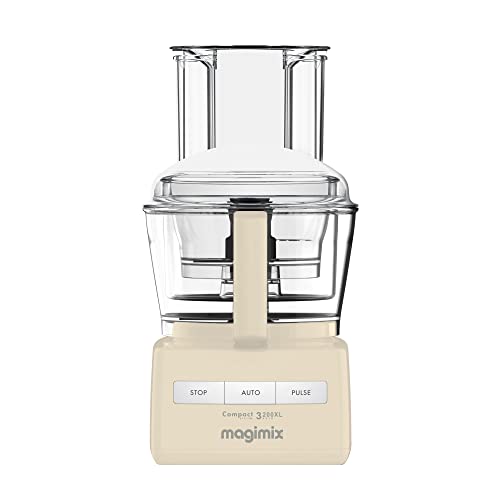
A couple of machines sit just outside our main picks. The Magimix 3200XL offers most of the premium build and durability of the 5200XL in a slightly smaller three-litre form, worth considering for a smaller household that still wants a lifetime machine. And the Kenwood MultiPro Sense adds more accessories and a slightly larger bowl than the Express for buyers who want to lean further into one machine doing everything from dough to citrus juicing.
It is also worth remembering the overlap with other appliances. If your batch cooking leans heavily on soups and purées rather than chopping and grating, a good blender or stick blender may serve you better for that specific job. Many batch-cookers end up with both, using the processor for dry prep and slicing and the blender for anything that needs to be smooth.
Which food processor should you buy?
For serious batch cooking, the Magimix 5200XL is the right answer if the price and the storage fit your kitchen. Its big multi-bowl capacity, induction motor and lifetime-grade build are exactly the priorities that matter when you process big loads week after week, and it is the only pick here that will still be doing all of it, effortlessly, in a decade.
If that is more machine than you want to pay for, the Kenwood Multipro Express is the value choice and the one we would recommend to the most readers: a generous bowl, enough power for weekly batch prep, and a built-in scale that genuinely earns its place. Choose the Ninja Food Processor with Auto-iQ if your kitchen is short on space but you still batch-cook, and reach for a sub-£60 machine only if your prep is modest and occasional.
FAQ
What is the best food processor for batch cooking in 2026?
For heavy batch cooking, the Magimix 5200XL is the best choice, thanks to its large multi-bowl capacity, quiet induction motor and lifetime-grade build. If you want most of that capability for far less, the Kenwood Multipro Express is our value pick and the right machine for most buyers.
What size food processor do I need for batch cooking?
Look for a bowl of at least 3 litres if batch cooking is your main use, so you spend less time stopping to empty and refill. Remember that usable capacity for liquids and dough is lower than the marked total, so it is worth buying a size up from what you think you need.
Can a food processor make bread dough?
Yes, most mid-range and premium processors can knead dough using a plastic or dough blade, though heavy bread doughs load the motor hard and are where cheaper machines struggle. If you make dough regularly and in quantity, choose a machine with a strong induction motor like the Magimix, or consider a stand mixer for very heavy doughs.
What is the difference between a food processor and a blender?
A food processor chops, slices, grates and kneads dry and semi-dry ingredients using interchangeable discs and blades, which is what batch prep needs. A blender liquidises, producing smooth soups and smoothies. They overlap little in practice, and batch-cookers often own both. Our blender guide covers that side in detail.
Are budget food processors any good for batch cooking?
For light, occasional batch work, yes, a sub-£60 processor will chop and grate perfectly well. But smaller bowls mean more, smaller loads, and lighter motors struggle with dense doughs and big quantities. If you batch-cook every week, a mid-range machine like the Kenwood pays for itself in bigger loads and longer life.