

A toaster is one of the cheapest appliances you can buy and one of the easiest to overpay for. Prices run from under £20 to well over £200 for what is, mechanically, a very simple machine – a few heating elements, a timer and a spring. Yet the gap between a good toaster and a poor one is real and you notice it every morning: even browning across the whole slice rather than a pale stripe down the middle, slots wide enough for a crumpet or a doorstep of sourdough, and a lift that works reliably for years rather than jamming after eighteen months.
This guide covers the best toasters in the UK for 2026 across every budget, and explains what actually justifies spending more so you know where the value stops. The single biggest decision is not brand or style but capacity. If you are toasting for one or two, a two-slice toaster is smaller, cheaper and takes less worktop; for a family, a four-slice model saves running two batches every breakfast. We cover the bigger machines in more depth in our best 4-slice toasters for families guide, but the shortlist below deliberately spans both formats so you can compare like with like.
Beyond capacity, the meaningful differences come down to how evenly a toaster browns, how wide its slots are, how well it is built and whether it can be repaired when something wears out. Every toaster below is widely available in the UK and represents a strong choice in its price band. Prices were checked on Amazon UK in September 2026 and change often, so check the live price before you buy.
The best toasters at a glance
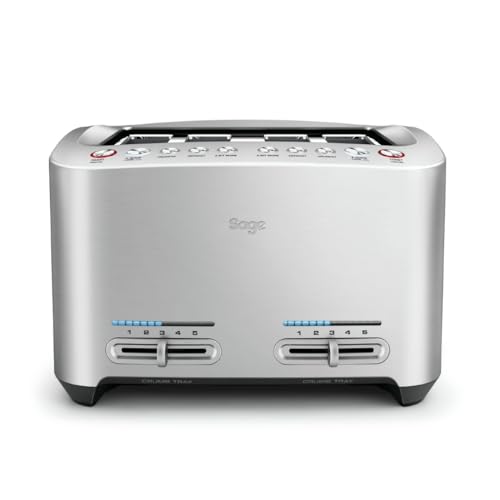
- Best overall: Sage Smart Toast 4-Slice (BTA845UK) – about £160
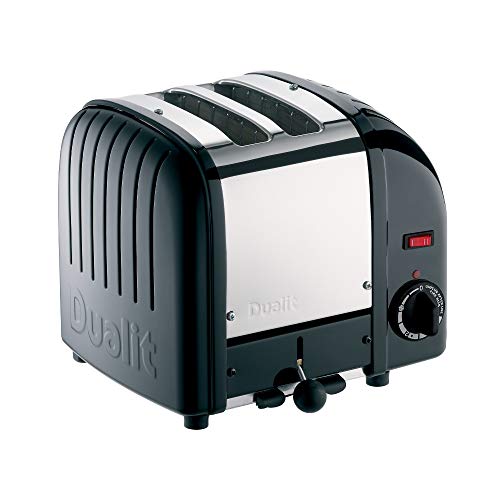
- Best for the long term: Dualit Classic 2-Slice Vario – about £175
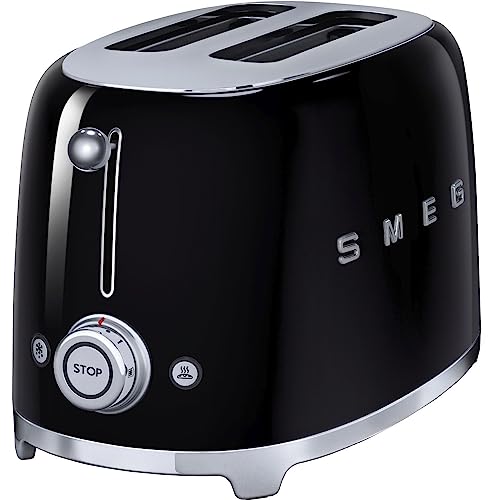
- Best style icon: Smeg TSF01 2-Slice – about £120
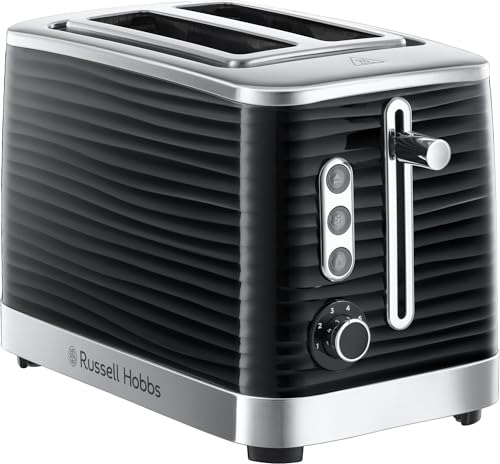
- Best budget: Russell Hobbs Inspire 2-Slice – about £37
- Best affordable style and best for independent 4-slot control: De’Longhi Icona Vintage 4-Slot – about £59
- Best all-metal toaster for the money: KitchenAid 2-Slice (5KMT2115) – about £50
Two-slice or four-slice: which do you actually need?
This is the question that should drive your choice more than any other, and it is worth answering honestly before you fall for a colour or a brand. A two-slice toaster suits one or two people, costs less and takes up a smaller strip of worktop – the sensible default for singles, couples and small kitchens. A four-slice model earns its place the moment more than two people want toast at the same time, or when you regularly toast for guests, because it clears a full round in one go instead of two.
The trade-off is size and, sometimes, control. Some four-slice toasters run all four slots from a single browning control, which means you cannot toast two slices lightly and two darkly at the same time – a real annoyance in a household with different tastes. Others, such as the De’Longhi Icona Vintage below, let you run each pair of slots independently, which also saves energy when you only need two slices. A four-slice toaster also needs a noticeably bigger footprint, so measure your worktop before committing.
If in doubt, size to your busiest breakfast rather than your average one. A couple who occasionally host is usually happy with two slots; a family of four with a shared morning rush will get daily value from four. Each toaster below is labelled by format so you can filter quickly.
The best toasters in detail
1. Sage Smart Toast 4-Slice – Best overall (about £160)
The Sage Smart Toast 4-Slice (BTA845UK) is the most complete toaster in this guide and the one that suits the widest range of households. It has four extra-wide slots and a one-touch automatic lowering system that gently lowers the bread and raises it again at the end of the cycle, so there is no lever to push. Variable browning control lets you set exactly how dark you like your toast, and an LED indicator shows how far through the cycle it is.
Its one-touch buttons are what set it apart from cheaper models. ‘A Quick Look’ raises the toast mid-cycle so you can check progress without cancelling, while ‘A Bit More’ adds a short burst of toasting when a slice is not quite done, without running a full second cycle – a small feature that quickly becomes part of the morning routine. There are also dedicated crumpet and frozen settings, and the wide slots take thick artisan bread and bagels comfortably. A front crumb tray tips straight into the bin for easy cleaning.
The drawbacks are size, price and control. At roughly 34cm wide and 2,000W, it is a substantial machine, and one browning setting covers all four slots, so it is less flexible than a toaster with independent pairs. At around £160 it is an investment. For a family, or anyone who values convenience and wide slots, though, it is the toaster most people would be happy to use every morning for years. It is sold by Pattern UK through Amazon and averages around 4.5 out of 5 at the time of writing.
Best for: families and anyone who wants the most convenient four-slice toaster.
2. Dualit Classic 2-Slice Vario – Best for the long term (about £175)
The Dualit Classic is the toaster to buy if you only want to buy once. Each one is hand-assembled at Dualit’s UK factory – the assembler’s name is printed on the base plate – and the Classic has been built in the UK since 1952. It is designed to be repaired rather than replaced, with replacement parts readily available, so when something eventually wears out you can fix it rather than throw the whole toaster away.
The heating elements are Dualit’s own ProHeat design, which have a protective armour-plated layer to make them far more durable than the exposed wire elements in most toasters. A mechanical timer controls the cycle, a slot selector lets you heat just one slot when you only want a single slice, and a manual ejector lever lets you raise the toast to check on it mid-cycle – useful for crumpets, teacakes and bagels. Non-slip feet keep it firmly in place on the worktop.
It is a more hands-on toaster than the Sage, with no digital display, automatic lowering or one-touch presets, and at around £175 it is the most expensive toaster here. Spread over a lifespan that can realistically run to decades, however, it can work out as one of the cheapest per year. It is currently sold by Premium Living UK through Amazon, with limited stock at the time of writing, and averages around 4.5 out of 5. A four-slice Classic is also available if you need the capacity.
Best for: anyone who values longevity and repairability over digital convenience.
3. Smeg TSF01 2-Slice – Best style icon (about £120)
The Smeg TSF01 is the toaster that made retro kitchen appliances a category, and it remains the benchmark for style. Its 1950s-inspired curves come in a wide range of colours, and it pairs with the rest of the Smeg range, so it slots straight into a coordinated breakfast setup alongside a matching kettle.
The looks are backed by sensible features. Two extra-wide slots with self-centring racks hold bread evenly for consistent toasting, there are six browning levels, and dedicated buttons cover reheat, defrost, bagel and cancel. A removable stainless steel crumb tray makes cleaning simple, and at around 3kg it has a reassuringly solid feel on the worktop.
You are paying a premium for design, and some of the price is undeniably the badge and the finish. At around £120 on Amazon at the time of writing, however, it is considerably cheaper than its list price, and it is a good toaster that happens to look superb rather than a style piece that compromises on function. It is sold by Electrical Emporium through Amazon and averages around 4.7 out of 5 – the highest rating in this guide. A four-slice version, the TSF02, offers the same look with more capacity.
Best for: design-led kitchens and anyone building a matching breakfast set.
4. Russell Hobbs Inspire 2-Slice – Best budget (about £37)
The Russell Hobbs Inspire proves you do not need to spend much to get the essentials right. For under £40 it offers extra-wide slots that cope with thicker bread, six browning levels and the frozen, reheat and cancel functions most people use day to day. A lift-and-look feature lets you check on your toast without cancelling the cycle, and a high-lift function raises smaller items such as crumpets and teacakes clear of the slots so you do not burn your fingers.
The high-gloss textured finish with chrome accents looks more expensive than it is, and the buttons light up softly while in use. Russell Hobbs includes a two-year guarantee, extended to three years when you register online, which is reassuring at this price.
The trade-offs are build and longevity: it is lighter and more plasticky than the premium models and will not last decades like a Dualit. For a first flat, a rental, a student kitchen or anyone who does not see the point in spending more on a toaster, it is very hard to fault. It is sold by Amazon and averages around 4.4 out of 5.
Best for: budget buyers, first kitchens and light everyday use.
5. De’Longhi Icona Vintage 4-Slot – Best affordable style (about £59)

If you love the retro look but cannot justify Smeg money, the De’Longhi Icona Vintage is the value-led alternative – and, unlike the Smeg TSF01, it is a four-slot toaster. It shares much of the same visual appeal, with soft curves, chrome detailing and a pastel colourway, at around half the price.
Crucially for families, it offers independent two-slice operation, so you can run one pair of slots on its own or use all four at once. There is variable browning control, variable-width slots, and electronic controls for reheat, defrost, a one-sided bagel setting and cancel. An extra-lift position helps with removing small items, and an extra-deep crumb tray means less frequent emptying. At 1,800W it toasts four slices quickly.
It is not built to the same standard as the flagship style icons, and the finish feels a step down when you look closely. As a way to get a characterful, family-sized toaster – especially paired with the matching Icona kettle – it is a smart middle ground. It is sold by Amazon and averages around 4.4 out of 5.
Best for: families who want retro style and independent control on a sensible budget.
6. KitchenAid 2-Slice (5KMT2115) – Best all-metal toaster for the money (about £50)
The KitchenAid 5KMT2115 is the option for buyers who want a sturdy metal-bodied toaster with a classic American look rather than a 1950s pastiche – and at around £50 on Amazon at the time of writing, it is far more affordable than KitchenAid’s reputation suggests. It is a natural fit if your kitchen already has a KitchenAid stand mixer or kettle.
It has an all-metal body with a chrome control knob, extra-wide 3.8cm slots with self-centring racks, and an extra-deep steel toasting cavity. A dial offers five shade settings, there is a dedicated bagel button, and a manual high-lift lever raises smaller items clear of the slots. At 1,100W and 1.8kg, it is compact enough for smaller worktops.
It lacks the digital extras and one-touch features of the Sage, and five browning settings is fewer than most rivals offer. Its rating is also the lowest in this guide, at around 4 out of 5, so it makes most sense as a coordinating piece for a KitchenAid kitchen rather than a first choice on features alone. It is sold by Amazon.
Best for: KitchenAid owners and anyone who wants an all-metal toaster without paying premium prices.
How much should you spend on a toaster?
Toasters fall into three broad price bands, and knowing which one your habits belong in prevents both overpaying and false economy. Under about £40 you are in budget territory: models like the Russell Hobbs Inspire toast well, include the functions most people use and are the right call for light use, spare kitchens and tight budgets. You give up build quality and longevity, but the everyday job gets done.
The roughly £50 to £120 band is where most people find their sweet spot. Here you get sturdier build, smarter styling and features such as independent four-slot control – the KitchenAid 5KMT2115, the De’Longhi Icona Vintage and, at current prices, the Smeg TSF01 all sit here. For the majority of households, this is the sensible place to shop.
Above about £150 you reach the premium toasters: the Sage Smart Toast 4-Slice and the Dualit Classic. You are paying for convenience features, heavier construction and – crucially with Dualit – the ability to repair rather than replace. That outlay is worth it if you toast daily and keep appliances for years, and largely wasted if your toaster sees light, occasional use. Match the spend to how hard the machine will work.
What to look for in a toaster
Slot width and length
Slot width matters most for what you eat. Standard slots handle sliced bread fine, but if you toast crumpets, bagels, thick artisan slices or homemade loaves, look for extra-wide, self-centring slots that hold the bread evenly against the elements. Slot length matters too: a long-slot toaster takes a whole slice from a hand-cut loaf without you turning it halfway, which is worth seeking out if you buy bakery bread.
Browning control and features
The number of browning settings matters far less than people assume. What counts is whether the toaster browns evenly and repeats the same result reliably, batch after batch. Automatic lowering and progress indicators are genuine conveniences on pricier models, and a lift-and-look function that pauses rather than cancels is more useful than it sounds. Defrost and bagel modes are worth having – a proper bagel setting heats one side more than the other, so the cut face crisps while the crust stays soft.
Build and repairability
Budget toasters are perfectly good for years of light use; premium ones justify the outlay through heavier construction and, in Dualit’s case, the ability to replace parts rather than the whole machine. Decide whether you are paying for convenience, for style or for longevity – they are three different reasons to spend more – and consider a coordinating kettle if a matching breakfast setup matters to you. Our best kettles guide covers the options.
Toaster FAQs
What is the best toaster brand in the UK?
There is no single best brand – it depends on your priority. Dualit leads on build quality and repairability, Sage on convenience features, Smeg and De’Longhi on style, and Russell Hobbs on value. Choose the brand whose strength matches what you care about most, rather than assuming the most expensive is automatically best for you.
Are expensive toasters worth it?
They can be, but only for the right reasons. A premium toaster buys heavier build, more convenience features and – with a repairable model like the Dualit Classic – a much longer usable life, which can make it cheaper per year than a budget model you replace repeatedly. For light, occasional toasting, a good budget toaster does the same everyday job for a fraction of the price.
Should I buy a 2-slice or 4-slice toaster?
Buy a two-slice toaster for one or two people and small kitchens, and a four-slice model for families or anyone who regularly toasts for several people at once. If you choose a four-slice toaster and your household likes toast done differently, look for independent controls for each pair of slots, as on the De’Longhi Icona Vintage.
What slot width do I need?
Standard slots are fine for sliced bread. If you toast crumpets, bagels, thick-cut or homemade bread, choose a toaster with extra-wide, self-centring slots – and consider a long-slot model if you regularly toast whole slices from a hand-cut loaf.
Do bagel and defrost settings really do anything?
On better toasters, yes. A true bagel setting heats one side more than the other so the cut face crisps while the crust stays soft, and a defrost setting adds extra time at a gentler heat to thaw bread before toasting it. On the cheapest models the difference is smaller, but the functions still help.
How long should a toaster last?
A budget toaster typically gives a few years of use and a mid-range model longer. A repairable premium toaster such as the Dualit Classic can last well over a decade because worn parts, including the elements, can be replaced. Regularly emptying the crumb tray helps any toaster last longer and reduces the risk of burning crumbs.
The final word
For most households, the Sage Smart Toast 4-Slice is the toaster to buy – wide, convenient and roomy enough for a family, with one-touch features you will use every day. If you want an appliance built to last and be repaired, the Dualit Classic is worth its premium; if style leads your kitchen, the Smeg TSF01 delivers the looks without sacrificing performance; and if you simply want reliable toast for as little as possible, the Russell Hobbs Inspire does the job for under £40.
For a family-sized toaster with retro looks and independent slot control on a budget, the De’Longhi Icona Vintage is the smart middle ground, while the KitchenAid 5KMT2115 offers all-metal build for around £50. Settle your capacity and budget first, and the right choice from this list follows quickly.