
| Our verdict at a glance – four ways to choose Best overall for most kitchens: Smeg TSF01 – around £150. The complete modern function set, the better-looking body and easier daily use. The sensible default unless repairability is the priority. Best for the long term: Dualit Classic 2-Slice – around £170. Hand-assembled, fully rebuildable and realistically a twenty-year appliance. The lowest cost per year of anything in the category. Best for thick and artisan bread: Dualit Classic – the wider, deeper slots and manual timer handle a hand-cut sourdough slice that defeats the Smeg. Best if neither convinces you: Sage the Toast Select Luxe – around £200. Motorised lift, one-slice mode, a proper bread menu and far better browning precision than either, in a less distinctive body. |
There are only two toasters most people can name on sight, and they are both British kitchen fixtures for completely different reasons. The Smeg TSF01 is the 1950s-styled, enamelled, chrome-trimmed object that turns up in every kitchen photograph. The Dualit Classic is the squat, riveted, industrially honest machine that has looked essentially the same since the 1950s because it actually is from then. Both cost around £150 to £180. Both appear near the top of the best toasters UK 2026 shortlist. And they are asking for the money on almost opposite grounds.
The Smeg argument is about appearance and completeness: a beautifully finished body with all the modern functions – defrost, bagel, reheat, self-centring slots, lift and look. The Dualit argument is about permanence: a hand-assembled toaster with replaceable elements and a mechanism designed to be rebuilt rather than binned, which means it can plausibly still be in use in 2046.
Neither argument is wrong. They suit different households, and the choice comes down to four questions: how much the toaster’s appearance matters, what bread goes into it, whether the modern functions get used, and how long the appliance is expected to last. This comparison works through each of them.
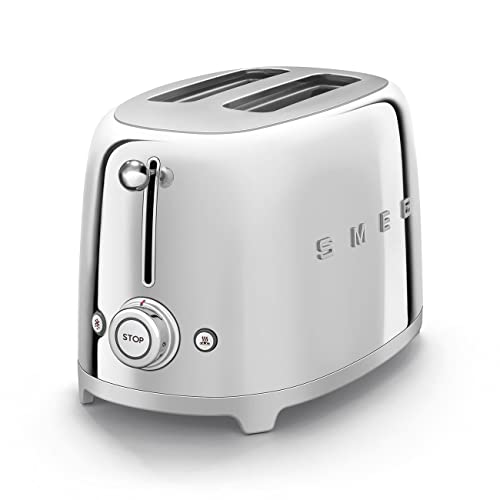
- MULTI-FUNCTION CONTROL: reheat to heat toast or slices of bread, defrost to unfreeze frozen slices of bread or bagel to brown just one side of the bread without toasting the other
- OPTIMUM BROWNING CAPABILITY: with 6 browning levels, you can choose how brown you like your toast and have it to your perfect level everytime
- LARGE COMPARTMENTS: self-centering racks in the compartments ensure even toasting of slices of bread, whatever size they may be
- AUTOMATIC: when the selected toasting time has finished, the slices pop up automatically, there is also a removable and washable crumb tray for easy maintenance
- 2 YEAR GUARANTEE: This product comes with a 2 year guarantee when you register for free with Smeg, where you’ll be able to return the appliance to be repaired or replaced if faulty or broken down
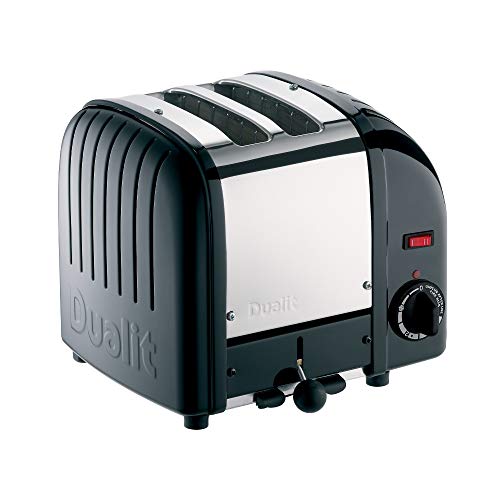
- HAND BUILT and FULLY REPAIRABLE: Each toaster is hand-assembled from start to finish in our factory in the UK. You will find the name of the assembler who built your toaster on the base plate. The Classic Toaster is built to last, with repairable or replaceable parts easily obtained should you need them.
- PROHEAT ELEMENTS: Exclusive to Dualit, ProHeat elements have a protective, armour-plated layer making them virtually unbreakable. Giving you a longer working life than traditional wire element toasters with a superior heat spread and tastier toast, muffins, sandwiches or teacakes.
- INNOVATIVE FUNCTIONS: The slot selector allows you to toast one or two slices of bread whilst the ejector lever lets you check the bread while its toasting, perfect for crumpets, tea cakes and bagels. Non-slip feet ensure it stays precisely where you want it for less mess and more safety.
- A BRAND YOU CAN TRUST: From our founding in 1945 we have continued to provide high quality, innovative products to make your life easier and more stylish. Our Classic Toaster has been hand built in the UK since 1952 and has earned its place as an iconic kitchen essential.
Design and materials: two kinds of good-looking
The Smeg is the more conventionally attractive object and it is not close. Die-cast aluminium body, thick enamel coat, chrome collar and dial, curved 50s silhouette, and a colour range broad enough to coordinate with a matching kettle and coffee machine. It weighs around 4kg and sits absolutely still. Anyone buying a toaster because it will be on display every day is buying this one, and the finish holds up over years rather than dulling like painted plastic.
The Dualit is handsome in a different register – the appeal is honesty rather than prettiness. The body is stainless steel, the corners are square, the rivets are visible, the timer is a mechanical dial with an audible tick, and the whole thing looks like catering equipment because it is descended from catering equipment. Each unit is hand-assembled in West Sussex and carries the assembler’s stamp. In a kitchen aiming at industrial or utilitarian rather than pastel and curved, it is the better fit.
Footprint favours the Dualit slightly. The Smeg’s curved body means it needs around 30cm of worktop depth to sit comfortably, which is tight under a standard wall unit. The Dualit is more upright and squarer, and in the two-slice version takes less depth. Both are heavy, which is a virtue – neither slides when the lever is pushed.
On materials neither is compromised, and that alone separates both from the £50 mainstream. These are metal appliances in a category almost entirely given over to plastic, and it is the clearest thing the premium buys on either machine.
Functions: the Smeg wins decisively
This is the least ambiguous section of the comparison. The Smeg TSF01 has six browning levels on a chrome dial, four function buttons – defrost, reheat, bagel and cancel – self-centring slot guides that clamp a slice in the middle of the chamber, a lift-and-look function and a high-lift carriage. It is a complete, modern specification and everything on it works as intended.
The Dualit Classic has a mechanical timer dial, a selector for which slots are energised, and an Eject lever. That is the whole feature set. There is no defrost, no bagel setting, no reheat, no automatic pop-up – the timer runs down, the elements switch off, and the toast stays in the slot until the lever is used. Bread from the freezer means simply running the timer longer, which works but takes judgement rather than a button.
Whether that matters depends entirely on habits. A household that toasts frozen bread, bagels and crumpets on rotation will use the Smeg’s buttons daily and find the Dualit tedious. A household that toasts sliced bread and nothing else will never miss them, and may prefer the directness of a timer that does exactly one thing. The manual timer has a genuine advantage too: it gives fine, continuous control over toasting time rather than six fixed steps, which is more precise once the feel for it is learned.
One Dualit design consequence is worth flagging: because the toast does not pop up, it does not go cold in the slot waiting to be collected – it stays warm above the elements. Anyone who has walked away from a toaster and come back to cold toast will recognise why that is useful.
Toast quality and bread handling
On standard supermarket sliced bread, both produce good even toast at the middle settings and there is little to separate them. The Smeg is slightly more even across the face of the slice thanks to the self-centring guides, which stop a thin slice leaning against one element. The Dualit’s browning is marginally less uniform but well within the range nobody would notice without two slices side by side.
Bread thickness is where they separate properly. The Smeg’s slots are around 3cm wide, which handles sliced bread, bagels, crumpets and normal bakery slices easily but struggles with a genuinely thick doorstep cut from a hand-cut sourdough. The Dualit’s slots are wider and deeper, and the machine was designed around a catering environment where bread arrived in whatever thickness it arrived in. For anyone whose bread comes from a bakery and gets cut by hand, this is the deciding factor.
At the extremes of browning, the Dualit’s manual timer is the better tool. The Smeg’s dial moves quickly from dark to scorched over its last two positions, which makes genuinely dark toast a matter of using lift-and-look to check. The Dualit’s continuous timer allows a precise extra ten seconds. Conversely, the Smeg’s lowest settings are barely distinguishable from each other, while the Dualit can be run for a genuinely short cycle.
Both suffer the standard thermostat drift – the second round comes out darker because the chamber is warm – and both need the setting backed off slightly for batch two. Neither is unusual in this respect. Anyone wanting a toaster that actively compensates should look at the motorised, sensor-driven approach described in the Sage the Toast Select Luxe review.
Repairability and cost per year
This is the Dualit’s entire case, and it is a strong one. The Classic uses ProHeat elements that are individually replaceable with a screwdriver, and Dualit sells them, along with timers, levers, feet and crumb trays, for a fraction of the cost of a new toaster. The design assumption is that the body outlives the consumables, and the brand has supported the range long enough for that to be demonstrably true rather than a marketing claim.
The Smeg is not repairable in the same way. It is well built and the mechanical parts feel engineered rather than sprung, but a failed element means a replacement toaster rather than a replacement part. Realistically it is a ten-year appliance, possibly more, which is far better than a plastic toaster – but it is a finite one.
The arithmetic matters. A £170 Dualit kept for twenty years with, say, £60 of elements along the way works out at around £12 a year. A £150 Smeg kept for ten years is £15 a year. A £45 plastic toaster replaced every five years is £9 a year – so the cheap toaster still wins on pure cost, and neither premium machine is a money-saving purchase. What the Dualit offers is the lowest cost per year of anything with a metal body, plus the environmental argument of not throwing an appliance away.
There is a caveat on the Dualit worth being honest about. The elements do need replacing, sometimes sooner than owners expect, and the cost and mild inconvenience of doing so is a real part of ownership rather than a theoretical option. Anyone who will not actually order and fit a replacement element is buying the philosophy without the benefit.
Everyday living: cleaning, warmth and noise
The Smeg is the easier machine to live with day to day. The crumb tray is generously sized and slides out from the front, the enamel body wipes clean without smearing, the exterior stays cooler than the Dualit during a cycle, and the high-lift carriage means a crumpet can be retrieved with fingers. Cleaning is a wipe with a damp cloth.
The Dualit runs hotter on the outside – single-skin stainless steel with elements close behind it – and the polished panels show fingerprints in a way enamel does not. The crumb tray is smaller. Retrieving toast requires the Eject lever rather than an automatic pop-up, which is a change of habit rather than a hardship. None of this is a problem, but it is less effortless than the Smeg.
Both are quiet in the sense that toasters are quiet. The Dualit’s mechanical timer ticks audibly and rings faintly at the end of the cycle, which some owners find charming and others find irritating. The Smeg is silent apart from the carriage.
So which should you buy?
For most kitchens, the Smeg. It is the better-looking object, it has every function a modern household actually uses, the toast is marginally more even, it is easier to clean and cooler to touch, and at around £150 it is slightly cheaper. If the toaster is part of how the kitchen looks and the bread comes pre-sliced, this is the straightforward answer and it will not disappoint on the toast.
For a specific and quite committed buyer, the Dualit. If the bread is hand-cut and thick, if the modern functions would go unused, if the industrial look appeals more than the retro one, and above all if the idea of owning one toaster for twenty years and replacing elements rather than appliances is genuinely attractive, then the Dualit is the better purchase and the better value over its life.
And if this comparison has mostly revealed that browning precision matters more than either body – that the real complaint is toast that comes out inconsistent – then neither is the answer, and the motorised, sensor-controlled Sage is the machine to look at instead. It is less beautiful than both and better at toasting than either.
FAQ
Is a Dualit toaster worth the money?
It is worth it if the elements actually get replaced. The Classic’s value case rests on being rebuildable – individually replaceable ProHeat elements, replaceable timers and levers, and a stainless body designed to outlast all of them. Kept for fifteen or twenty years, the cost per year is lower than anything else with a metal body. Bought and then binned after five years when an element fails, it is an expensive toaster with no functions.
Does the Smeg toaster make better toast than the Dualit?
Marginally, on standard sliced bread, because the self-centring slot guides keep a thin slice from leaning against one element. The difference is small enough that it only shows with two slices side by side. On thick hand-cut bread the Dualit is clearly better, because its slots are wider and deeper. At the darkest settings the Dualit’s continuous mechanical timer gives finer control than the Smeg’s six fixed steps.
Which is better for bagels and crumpets?
The Smeg, comfortably. It has a dedicated bagel function that runs the inner element at full power and the outer element low, toasting the cut face while warming the crust without drying it. The Dualit has no bagel setting – the selector can energise particular slots, but there is no asymmetric element control – so a bagel is toasted on judgement with the timer. Both handle crumpets fine.
Do Smeg toasters last?
They should. The body is cast aluminium rather than plastic, the moving parts are metal, and the enamel finish resists wear well, which points to a ten-year-plus life. The limitation is repairability: unlike the Dualit, a failed element means a new toaster rather than a new part. It is a well-made appliance with a finite life rather than a rebuildable one.
Which costs less to run?
Effectively the same, and the difference is trivial. The Smeg TSF01 two-slice draws around 950W and the Dualit two-slice somewhat more, but both run for only a couple of minutes, so a round of toast costs a fraction of a penny either way. Running cost should play no part in the decision. Cost per year of ownership is the figure that actually varies, and that favours the Dualit if the elements get replaced.
Can you get a four-slice version of both?
Yes. Smeg offers the TSF02, a four-slice model with two long slots that take two slices each and also accommodate longer hand-cut bread – which incidentally fixes the standard Smeg’s slot-width limitation. Dualit offers the Classic in two, three, four and six-slice configurations, all with the same replaceable-element architecture. Both four-slice versions cost meaningfully more than their two-slice equivalents.
The final word
Smeg and Dualit are selling two different ideas about what an expensive toaster is for. Smeg is selling a beautiful, complete, easy appliance that will look the same in ten years. Dualit is selling a plain, functionally sparse appliance that will still be working in twenty-five because it was designed to be taken apart.
The Smeg is the right answer more often, because most households toast sliced bread, use the defrost and bagel buttons, and want the toaster to look good doing it. The Dualit is the right answer for fewer people but a better answer for them – thick bread, indifference to buttons, and a genuine intention to keep one appliance for decades. Work out which of those describes your kitchen and the choice makes itself.



