
| Our verdict at a glance Dualit Classic 2-Slice Toaster – around £180. Rating: 8.7/10 One-line verdict: a hand-built, fully repairable toaster that makes excellent, even toast and should outlast every other appliance in the kitchen – provided you can live without a pop-up mechanism. Buy it if you want an appliance you will never replace, value repairability over convenience, and make toast often enough that a mechanical timer becomes second nature. Skip it if you want toast to look after itself, need a bagel or defrost setting, or would rather spend £150 less on a toaster that does 90 per cent of the job. |
The Dualit Classic is the most divisive toaster on sale in the UK, and it has been for about seventy years. It costs roughly six times what a competent supermarket toaster costs, it does not pop up when the toast is done, and it has no bagel button, no defrost setting and no digital display. By every conventional measure of appliance progress it is a step backwards.
Weighing up the options? See our round-up of the best toasters in the UK.
And yet it remains the toaster that people keep for twenty years and hand on. The reason is a design philosophy almost nothing else in a modern kitchen follows: every component is replaceable, every element unscrews, and the whole thing is assembled by hand in West Sussex with the assembler’s stamp on the base. That is the entire argument, and whether it persuades you depends on what you want a toaster to be. For the wider category context, the best toasters UK 2026 guide covers the alternatives.
How the Dualit Classic compares to the alternatives
In the £150 to £200 bracket the Dualit’s direct rivals are the Smeg TSF01, which trades on retro styling and a full complement of modern functions, and the Sage Toast Select Luxe, which is the most technologically sophisticated toaster on the market. Both of those will pop your toast up automatically, defrost a frozen slice and toast a bagel on one side. The Dualit will do none of those things.
What the Dualit does that neither can is survive. A Smeg or a Sage with a failed element is a repair job that usually costs more than the machine is worth. A Dualit with a failed element is a twenty-minute job with a screwdriver and a £25 part, and Dualit still stocks elements for models made decades ago. Against a supermarket toaster at £30, the Dualit costs six times as much and will outlast six of them, which makes the arithmetic closer than the sticker price suggests.
The honest framing is that the Dualit is not competing on features and never has been. It is competing on the proposition that you buy one toaster, once.
The ProHeat elements and the quality of the toast
The toast itself is the part that most reviews skip past, and it is where the Dualit quietly justifies a good deal of its price. The ProHeat elements are armour-plated – the heating wire is wound onto a mica sheet and sandwiched in aluminium rather than left exposed – which gives a broader, more even radiant heat than the bare wire elements used in almost every cheaper toaster.
The practical result is browning that is even across the whole face of the slice rather than striped, with no pale band at the top and no scorched patch where an element sits closest. On a thick slice of sourdough, where cheap toasters typically produce a dark centre and undercooked corners, the difference is obvious side by side. The elements also recover heat quickly between slices, so the fourth round of toast comes out the same colour as the first – something a lot of toasters fail at.
The slots are wide and deep enough for hand-cut bread, crumpets and bagels, and the Classic’s slot width is adjustable on some variants. There is no motorised carriage, so bread sits on a manual lever that you push down and lift when finished.
The manual timer: the thing people either love or hate
This is the feature that determines whether the Dualit is right for you. Instead of a thermostat that decides when the toast is done, there is a wind-up mechanical timer that runs the elements for as long as you set. When it reaches zero it cuts the power and pings. The toast does not pop up. It sits in the slots, staying warm, until you lift it out.
For some households this is intolerable, and it is worth being blunt about that. If your morning involves putting bread in a toaster and walking away to do something else, the Dualit will burn your toast or leave it cold depending on which way you guessed. It requires a small amount of attention every time.
For others it is the point. A mechanical timer does exactly the same thing on a cold machine as on a hot one, which is not true of a thermostat – most electronic toasters run the second round noticeably darker than the first. Once you know that your bread takes a minute and forty seconds, it takes a minute and forty seconds every time, in January and in July. And the toast staying warm in the slots rather than firing out onto a cold worktop is a genuine, small, daily pleasure.
There is also a selector on the front that lets you run one slot or both, which saves electricity when making a single slice and is the sort of small practicality that gets designed out of cheaper products.
Build, materials and repairability
The body is stainless steel with cast aluminium end plates, and it weighs considerably more than any plastic toaster. It does not slide across the worktop when you push the lever down, which is a low bar that a surprising number of toasters fail to clear. The finish is available in polished steel and a range of enamelled colours, and the enamel is thick and properly cured rather than sprayed on.
Repairability is the headline. The elements unscrew individually from the back, the timer is a serviceable mechanical unit, the crumb tray slides out cleanly, and Dualit publishes parts and fitting instructions for the whole range. That means a Classic bought today is not a disposable object, and a second-hand one from twenty years ago is a viable purchase – which is why they hold their value on the used market in a way no other toaster does.
It is also worth noting what this costs in convenience. There is no cord storage, no lift-and-look, no crumpet setting, no motorised lowering. The design has been left almost entirely alone since 1952, which is admirable and also means it has none of the refinements the last seventy years produced.
Living with it day to day
The daily experience settles into a rhythm quickly. Bread in, lever down, twist the timer, wait. The ping is loud enough to hear from the next room, which partly compensates for the lack of a pop-up. The exterior gets hot – properly hot, not warm – so it needs clearance from anything that minds heat, and it is not an appliance for a kitchen with small children at worktop height.
Cleaning is easy. The crumb tray pulls out from the base and the steel wipes down without marking. Because the elements are enclosed rather than exposed wire, crumbs do not weld themselves to the heating surface the way they do in cheaper toasters, which is one of the reasons the browning stays consistent over years rather than degrading.
It draws around 1200W for a two-slice model, which is lower than many modern toasters and means it toasts slightly more slowly. A round of toast takes roughly two to three minutes rather than the ninety seconds a 1600W machine manages. That is part of why the browning is so even, but it is a real difference on a rushed morning.
Is the Dualit Classic worth it?
At around £180, the value case rests entirely on how long you keep it. Priced over five years it is expensive. Priced over twenty, with one element replacement at £25, it is cheaper than buying a £40 toaster every four years – and that is not a stretched hypothetical, because Dualit Classics from the 1990s are still in daily use in plenty of kitchens.
The feature case is weaker and should be acknowledged. If you want defrost, bagel, lift-and-look and a machine that manages itself, a Sage or a Smeg gives you all of that for similar money, and a £60 Russell Hobbs gives you most of it for a third. The Dualit is a deliberate refusal of that convenience in exchange for durability and better browning.
The rating of 8.7 reflects a product that does its core job better than almost anything else and does several adjacent jobs not at all. Buy it with clear eyes about the manual timer and it is one of the few appliances in a modern kitchen that genuinely rewards the outlay.
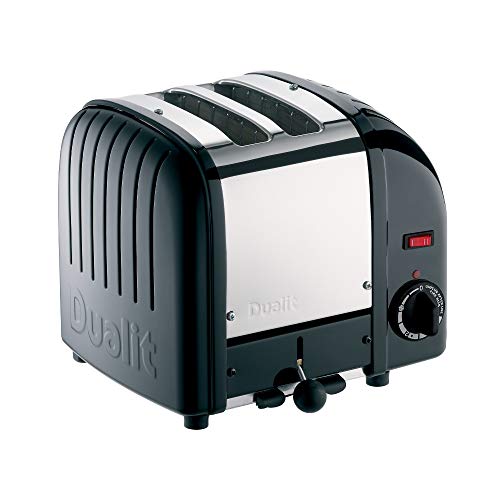
- HAND BUILT and FULLY REPAIRABLE: Each toaster is hand-assembled from start to finish in our factory in the UK. You will find the name of the assembler who built your toaster on the base plate. The Classic Toaster is built to last, with repairable or replaceable parts easily obtained should you need them.
- PROHEAT ELEMENTS: Exclusive to Dualit, ProHeat elements have a protective, armour-plated layer making them virtually unbreakable. Giving you a longer working life than traditional wire element toasters with a superior heat spread and tastier toast, muffins, sandwiches or teacakes.
- INNOVATIVE FUNCTIONS: The slot selector allows you to toast one or two slices of bread whilst the ejector lever lets you check the bread while its toasting, perfect for crumpets, tea cakes and bagels. Non-slip feet ensure it stays precisely where you want it for less mess and more safety.
- A BRAND YOU CAN TRUST: From our founding in 1945 we have continued to provide high quality, innovative products to make your life easier and more stylish. Our Classic Toaster has been hand built in the UK since 1952 and has earned its place as an iconic kitchen essential.
FAQ
Does the Dualit Classic pop up automatically?
No. When the mechanical timer reaches zero it cuts power to the elements and sounds a ping, but the bread stays in the slots until you lift the lever manually. This is deliberate – it keeps the toast warm and avoids the mechanism that fails most often on conventional toasters – but it does mean the toaster cannot be left unattended in the way most people expect.
Why is the Dualit Classic so expensive?
Three reasons: it is hand-assembled in the UK rather than mass-produced abroad, it uses armour-plated ProHeat elements that cost considerably more than the bare wire elements in cheap toasters, and it is engineered to be dismantled and repaired, which requires fasteners and serviceable sub-assemblies instead of glued plastic. The price reflects the manufacturing model as much as the materials.
Can you replace the elements in a Dualit toaster?
Yes, and it is the main reason to buy one. Each element unscrews individually from the rear of the body and can be swapped with a screwdriver in around twenty minutes. Replacement elements cost roughly £20 to £30 and Dualit stocks them for models going back decades. The timer, lever and crumb tray are similarly serviceable.
Does the Dualit Classic have a defrost or bagel setting?
No. There are no electronic functions at all – just the timer, the slot selector and the lever. For frozen bread you simply set a longer time; for a bagel you toast both sides normally or run a shorter cycle and turn it. If one-sided bagel toasting matters to you, the Smeg TSF01 or the Sage Toast Select Luxe are the better choices.
How many slices does the Dualit Classic take?
The Classic comes in two, three, four and six-slice versions sharing the same body architecture and elements. The 2-slice reviewed here suits one or two people; larger households are better served by the 4-slice, which uses the same manual timer and repairable construction and adds a second slot selector.
The final word
The Dualit Classic is not the most convenient toaster you can buy and it makes no attempt to be. What it offers instead is the best and most consistent browning in its class, a build that will outlast the kitchen it sits in, and the unusual modern luxury of an appliance you can repair yourself rather than throw away.
That is worth £180 to a certain kind of buyer and not to another, and the manual timer is the honest dividing line between them. If a small daily interaction with an appliance sounds like a chore, buy something else. If it sounds like the point, this is the only toaster worth considering.



