
Walk down the juicer aisle, or scroll the category on Amazon, and the first choice is not brand or price. It is the mechanism. Centrifugal juicers shred produce against a fast-spinning basket and throw the juice out through a mesh. Cold-press juicers, also called slow or masticating juicers, crush it with a slowly turning auger. The two approaches give different juice, different noise levels, different cleaning routines and very different price tags, so it is worth understanding the trade-off before spending money.
This head-to-head puts one of each side by side: the Philips Viva Collection HR1832, a 500W centrifugal juicer at around £59.99, and the Fridja f1900, a 240W cold-press juicer at around £129.99. Both were confirmed as live, in-stock listings on Amazon UK, and the specifications below come from those listings. For a wider view of the category, see the best juicers UK round-up, then come back here to settle the mechanism question.
The short version is that the cheaper centrifugal machine wins on speed, size of feed and simplicity, while the cold-press machine wins on juice quality, yield from leafy greens and versatility. Which of those matters more depends on how often juice will actually be made.
The two juicers at a glance
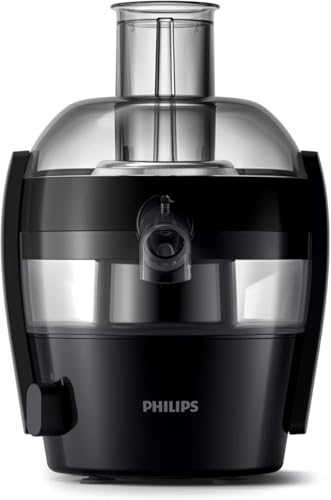
- COMPACT & FAMILY-SIZED CAPACITY – Make fresh juice for the whole family in one go with a 1.5L capacity, enough to fill up to six glasses without needing to empty the pulp container
- QUICKCLEAN TECHNOLOGY – Clean up in just one minute with QuickClean technology, featuring a smooth, easy-to-rinse sieve that reduces pulp buildup for hassle-free cleaning
- ECO-FRIENDLY, LESS WASTE – Designed with integrated pulp collection, this juicer minimizes waste by keeping all pulp in one container, making it easy to compost or dispose sustainably
- EASY, MESS-FREE SERVING – Juice directly into your glass with a drip-stop spout that prevents spills, allowing you to juice and serve without cluttering your countertop
- TRANSPARENT CONTAINER – Watch fruits and vegetables transform into juice with the clear pulp container, so you know exactly when it’s time to empty


- EASY TO CLEAN DESIGN: Powerful 240W matte black stainless steel, easy-to-clean metal with a large 75mm tilting feeding tube for minimal waste. Easy to assemble, operate, and clean, 100% BPA-free parts ensure safe cleanup. Runs quietly - less than 60 decibels. Heavy-duty stainless steel and a sturdy, stable body ensure a quiet and calm environment when juicing, and look amazing in your kitchen
- HIGHER NUTRITIONAL VALUE: As a masticating juicer machine, the auger spins at 60 RPM, which preserves the vitamins, enzymes, minerals, trace minerals and nutrients from being destroyed as opposed to centrifugal juicers. Maintain minimal oxidation, low heat buildup, reduced foaming, and no clogging. Features a tilted, wide-mouth feeding chute for minimal waste and faster operation, requiring less preparation time
- NEW SIEVE INCLUDED: In our latest version, we've included a sieve. That means you can decide if you'd like the pulp bits in or out! Simply place it on top of the juice jug, and it will catch all the pulp as the juice is being made
- MORE THAN JUST JUICE: High yield and dry pulp extraction. Use the new sieve to decide if you want bits in or out! This machine extracts your fruits, vegetables, sorbets, nut milks, nut butters, and fruit ice creams. Two filters are included for all drinks, fruit ice cream, and fruit sorbets. Comes with two 1-litre jugs and a cleaning brush. Slow juicers have a higher juice yield compared to centrifugal juicers due to the auger squeezing and reverse function
- JUICES & NUT MILKS: Feeding in whole fruits like apples, carrots, and lemons is easier than ever! Cold-pressed juice, citric juices, and vegetable juices are quickly prepared. Not only does your juicer machine produce juice, but the f1900 whole fruit juicer also produces sorbets, fruit ice cream, nut butters and nut milks quickly
How each type of juicer works
A centrifugal juicer, such as the Philips HR1832, drops chopped fruit or vegetables onto a rapidly spinning grater disc inside a mesh basket. Centrifugal force pushes the juice through the mesh while the dry pulp collects in a separate container. Because the disc spins so fast, a glass of juice is ready in well under a minute, which is the main reason this design dominates the budget end of the market.
A cold-press juicer, such as the Fridja f1900, uses a single auger that turns at low speed. The listing quotes about 60 RPM. Produce is crushed and squeezed against a filter screen, and the juice runs out into a jug while the pulp is pushed out of a separate spout. There is far less air whipped into the juice and far less heat generated, which is where the term cold-press comes from.
Neither method is inherently dangerous or unhealthy. The differences are practical: how much juice each extracts, how it tastes and looks after an hour in the fridge, how loud the process is, and how much time goes into preparing and cleaning up.
Juice quality and yield
Cold-press juicers generally produce a smoother, denser juice with less foam. Slow extraction incorporates less air, so the juice tends to separate more slowly in the fridge and can be kept for longer than the frothy result of a high-speed machine. The Fridja listing says its auger is designed to preserve more vitamins and minerals than a centrifugal design, but that is a manufacturer claim and independent evidence on nutritional differences between juicing methods is limited. The reliable, observable difference is taste, texture and how long the juice looks fresh.
Yield is where the gap is widest. An auger squeezes pulp repeatedly, so it pulls more liquid from leafy greens such as spinach and kale, wheatgrass, herbs and soft fruit. A centrifugal machine copes well with hard, watery produce such as apples, carrots, cucumbers and citrus segments, but tends to leave leaves and herbs wetter and gives less juice per pound spent on ingredients. Anyone planning to juice mostly carrots and apples will notice less difference than someone making green juices.
The Fridja f1900 also includes a sieve to catch pulp, so the finished juice can be made smoother or left with some texture, and two filters: one for juice and one for frozen-fruit sorbet and similar recipes. The Philips has a single sieve design and a pulp container that holds up to 1.5L, which the listing says is enough for about six glasses before it needs emptying.
Speed, feed chute and preparation
Speed is the centrifugal machine’s strongest argument. The Philips HR1832 is built for quick, one-glass-at-a-time juicing: load, switch on, and pour. It has a drip-stop spout, so a glass can be filled directly from the machine, and the see-through pulp container makes it obvious when to empty it.
The Fridja f1900 is deliberately slower. Produce has to be fed a little at a time, and the feed chute is narrow at around 78mm, so apples, oranges and larger vegetables need cutting into pieces first. That is not a serious drawback for someone who enjoys the ritual of juicing or juices once a day, but it becomes tedious for a household making large volumes before work.
As a rough guide, the centrifugal type suits a busy morning where speed matters more than perfect juice. The cold-press type suits a slower routine, batch juicing on a weekend, or anyone who dislikes foam.
Noise and size
Noise is a genuine difference. Centrifugal juicers spin fast and are loud, closer to a blender than to an appliance that can be run quietly in an open-plan flat. The Fridja listing states that it runs at under 60 decibels, which is a manufacturer figure but consistent with what slow juicers typically deliver: a low, steady grind rather than a high whine. Early-morning juicing in a shared home is far easier with the slower design.
On the worktop, the Philips HR1832 measures about 23cm by 23.3cm and stands 42cm tall according to the listing. It is tall but has a modest footprint and its parts tuck into a cupboard. A cold-press juicer like the Fridja is a heavier, more solid machine with a vertical design of its own, and it comes with two 1-litre jugs and a cleaning brush that also need storing.
Cleaning and day-to-day effort
Cleaning is the reason many juicers end up at the back of a cupboard. Centrifugal machines have a mesh basket and a grater disc that hold onto fibre and need brushing under the tap. The Philips uses what the listing calls QuickClean technology, a smooth sieve designed to reduce pulp build-up, and the parts are described as dishwasher-safe, which helps.
The Fridja f1900 has fewer fast-moving parts, but an auger, a screen and a brush-cleaned filter still take a couple of minutes to rinse, ideally straight after use before pulp dries on. The included brush makes the job simple, and the fine screen is easy to rinse if it is done straight away. The trade-off with cold-press is not that cleaning is harder, but that there is more to take apart and put together each time.
Versatility
A centrifugal juicer makes juice and little else. A cold-press juicer with the right filter can also make nut milk, sorbet from frozen fruit, and nut butters or fruit ice cream, according to the Fridja listing. Those extras are worth having if juicing is only one of several uses, but they should not be the deciding factor if juicing is the only goal.
Who each juicer suits
A few everyday scenarios show how the choice plays out. A student or first-time buyer who wants a glass of orange, apple or carrot juice on the odd morning will get everything needed from the Philips, and will not feel short-changed by the lower price. A couple who make a green juice with spinach, celery and ginger most days will find the Fridja pays for itself in better yield and a smoother drink.
A family with children who want juice quickly before school may prefer the Philips for its speed and its ability to run a whole apple through in seconds, particularly if the pulp container holds enough for several glasses. A household that values a quiet kitchen, or that likes to batch-juice on Sunday for the week ahead, is better served by the cold-press design.
It is also worth thinking about storage. A juicer that lives on the worktop gets used far more often than one that has to be dug out of a cupboard, so a machine that fits the space available, and a routine that fits the machine, matter as much as the specification sheet.
Price and running costs
The Philips HR1832 was listed at around £59.99 and the Fridja f1900 at around £129.99 when checked. That is a gap of roughly £70, which is meaningful at this end of the market. Electricity use is small for either machine; the centrifugal juicer draws more power (500W against 240W), but for a few minutes at a time the cost difference is trivial.
The bigger cost is ingredients. Because a cold-press juicer extracts more from the same produce, particularly leafy greens, part of the £70 price difference can be recovered over time by anyone juicing several times a week. Occasional juicers are unlikely to make that money back.
Which one should you buy?
Choose the Philips Viva Collection HR1832 if speed, a low price and easy pouring matter most, if the produce is mostly apples, carrots, citrus and other hard, watery items, and if juicing will happen a few times a week rather than daily. It is the sensible entry point for anyone unsure whether juicing will stick.
Choose the Fridja f1900 if juice quality, quiet operation and yield from greens matter, if there is time for chopping and slower extraction, or if nut milk and sorbet sound appealing. It costs more, but it is the better long-term machine for regular juicers. Anyone weighing up slow juicers more broadly can compare it with other models in the best masticating juicers UK guide.
Frequently asked questions
Is a cold-press juicer worth the extra money?
For regular juicers, usually yes. The higher yield, smoother texture and quieter running are noticeable, and a cold-press machine like the Fridja f1900 also makes nut milk and sorbet. For an occasional glass of orange or apple juice, a centrifugal machine at around £60 is enough.
Does cold-press juice keep for longer?
Generally it holds its colour and texture for longer than juice from a fast centrifugal machine, because less air is mixed in during extraction. It should still be kept in a sealed container in the fridge and drunk within a day or two, and freshly made juice is always best.
Can a centrifugal juicer handle leafy greens?
It can, but with poor yield. Leaves and herbs pass through a spinning basket without being squeezed properly, so a lot of juice stays in the pulp. Rolling greens up tightly and alternating them with hard produce such as apple or cucumber helps, but a cold-press machine is the better tool for greens.
Which is easier to clean?
Both take a few minutes. The Philips HR1832 has dishwasher-safe parts and a QuickClean sieve, while the Fridja f1900 comes with a cleaning brush. Rinsing straight after use makes either much easier.
Which is quieter?
The cold-press design. The Fridja listing quotes under 60 decibels, while a centrifugal juicer such as the Philips spins at high speed and is noticeably louder.
The final word
The cold-press versus centrifugal question comes down to how much time, money and patience juicing deserves. The Philips Viva Collection HR1832 at around £59.99 is the quick, affordable and undemanding choice. The Fridja f1900 at around £129.99 costs more and takes longer, but rewards regular use with better juice, better yield from greens and a quieter kitchen. Anyone who expects to juice most days should lean towards the Fridja; anyone still trying out the habit should start with the Philips and upgrade later if it sticks.
Related guides
If you are still deciding, these related Kitchen Kit guides are worth a look:



