
If you are shopping for a serious blender in the UK, you will keep landing on the same two names. Vitamix sells a reputation for near-indestructible motors and silky results. Ninja sells clever programmes, a lower price and a lot of attachments. This comparison uses the Vitamix Explorian E310, priced at around £425, against the Ninja 3-in-1 Detect Power Blender Processor Pro TB401UK, priced at around £240. Prices are approximate and change often, so check the live listing before you buy.
Our verdict, in one line: for most households the Ninja is excellent everyday blending for roughly half the money. The Vitamix is for people who blend daily and care about texture quality and long-term durability.
Our top picks at a glance
- Best for most households: Ninja Detect Power Blender Processor Pro. It blends, chops and mixes dough, includes single-serve cups and costs around half of the Vitamix.
- Best for daily blending and the smoothest results: Vitamix Explorian E310. Simple, powerful and built to be repaired rather than replaced.
- Blending a few times a week? The Ninja will do the job. Blending every day, or hate replacing appliances? Look hard at the Vitamix.
How the two blenders compare at a glance
- Vitamix Explorian E310: about £425, 1.4 litre container, 2HP motor, variable speed dial and pulse, self-cleaning, laser-cut stainless steel blades.
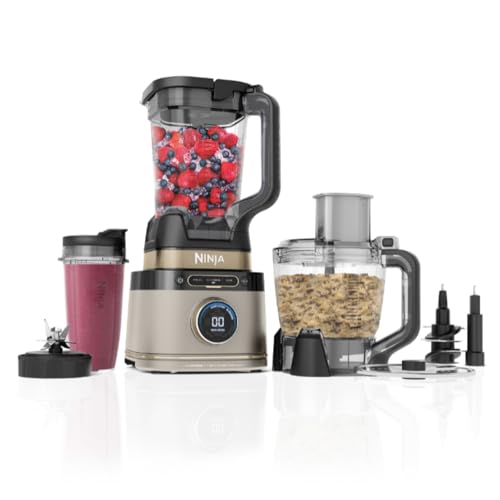
- Ninja Detect Power Blender Processor Pro TB401UK: about £240, large jug plus food processor bowl and two single-serve cups, BlendSense automatic programmes, ten manual speeds, dough blade.
- Approach: Vitamix builds a simple, brutally effective machine and expects you to drive it, while Ninja builds a cleverer machine that drives itself.
That philosophical difference explains most of what follows. The Vitamix has few controls and lets you decide how long and how fast to blend. The Ninja detects what is in the jug and adjusts speed and timing for you, with a manual mode if you prefer to take over.
Vitamix Explorian E310
The E310 is Vitamix’s entry point to the Explorian range, and it keeps the things that make the brand what it is: a powerful 2HP motor, hardened stainless steel blades and a variable speed dial with pulse. It has no auto programmes, which some buyers see as a drawback and others as a feature, because there is very little to go wrong. Amazon UK lists it at around £425 with a rating of about 4.6 stars from a little over 200 ratings, and the box includes a 1.4 litre container suited to small to medium batches.
It is not the cheapest way to make a smoothie. What you get for the money is the way it handles hard jobs and how long it is meant to last. Vitamix machines have a reputation for lasting many years, with repair support available, and that reputation is the main argument for paying more. The Explorian range comes with a five-year warranty per the listing.
- Best for: daily smoothie drinkers, green smoothie fans, nut butter makers and anyone who wants a long-term machine.
- Watch out for: a smaller jug than some rivals, no personal cups included, and a price that needs justifying by use.

Ninja Detect Power Blender Processor Pro TB401UK
The Ninja is the more versatile of the two. It is a three-in-one: a large jug for smoothies and soups, a food processor bowl with dough blade for chopping and mixing, and two single-serve cups for a quick drink on the way out. BlendSense technology detects ingredients, portion size and ice, then adjusts speed, time and pulse for you. You can also use the dial for manual control across ten speeds. Amazon UK lists it at around £240 with about 4.5 stars from over 170 ratings.
For a busy household, that automation is genuinely useful. You press a button and walk away. What you give up is the ultimate finish on tough, fibrous ingredients and the long-service reputation that Vitamix carries.
- Best for: families, occasional and moderate use, anyone who wants a blender and a small food processor in one.
- Watch out for: a shorter service life than a Vitamix, and a machine that works harder on very dense jobs.

Smoothies and fibrous greens: the clearest gap
The clearest difference between the two shows up with green smoothies. The Vitamix produces a noticeably smoother result with raw kale and other fibrous greens. The Ninja performs well, but leaves a slight texture that longer blending reduces without eliminating. If you drink a spinach-and-kale smoothie every morning and dislike any grittiness, that difference is worth paying attention to. If your smoothies are mostly fruit, yoghurt and a handful of spinach, you may never notice it.
Hot soup, nut butter and the hard jobs
Both machines handle hot soup safely as long as you follow the manufacturer’s guidance on filling levels and venting the lid. Nut butter is where the Vitamix pulls ahead: it runs without strain, while the Ninja works noticeably harder and benefits from being given a rest between runs. Ice and frozen fruit are handled equally well by both, so crushed ice drinks and frozen desserts will not separate them.
Controls and attachments: where Ninja wins
This is the Ninja’s strongest ground. Its auto-programmes deliver results with no effort, and the box includes single-serve cups and a food processor bowl. The Vitamix offers manual control via the dial, and personal cups are sold separately. If you want a machine that does more jobs, or one that a less confident cook can use without a learning curve, the Ninja is the easier winner.
Noise, size and living with them
Both are loud, which is the price of the power. The Vitamix produces a deep, industrial roar; the Ninja is higher-pitched and, to our ear, more irritating. Neither is suitable for a quiet early start if you share walls with neighbours. In terms of storage, measure under your wall units: a full jug on a base can be taller than you expect, and the Ninja’s extra parts will need somewhere to live in a cupboard.
The durability argument, and why it changes the maths
This is the point that turns a £185 price gap into a fairer fight. Vitamix machines have a reputation for lasting fifteen to twenty years with repair support available. Ninja works on more of a replacement model, with shorter warranties and no meaningful repair ecosystem. Spread over many years, a Vitamix can work out cheaper per year of use than a machine that needs replacing twice. If you would buy a new blender every four or five years anyway, the maths favours the Vitamix. If you blend a couple of times a week and are happy to replace it, the Ninja is the better buy.
A note on cleaning, because it affects how often you will actually use either machine. Both can be cleaned with warm water and a drop of washing-up liquid run through a short blend, which takes under a minute and is the habit most owners settle into. The Ninja has more parts to wash, including the processor bowl, blades and cups, so a busy household should check which of those are dishwasher safe on the listing. The Vitamix has fewer parts, which is part of why it tends to get used every day.
It is also worth thinking about what you will really make. If your blender spends most of its life on a weekday smoothie, a soup on Sunday and the occasional milkshake, the difference in results between the two is small and the Ninja’s extras add real value. If you plan to grind nuts, make dips and nut butters, or process large quantities of fibrous vegetables, the Vitamix earns its premium. Be honest about your habits before spending the extra money, because a blender you use every day is good value at almost any price, and one that lives in a cupboard is expensive at any price.
So which should you buy?
- Choose the Ninja Detect Power Blender Processor Pro if you blend a few times a week, want automatic programmes and extras, and prefer to spend less.
- Choose the Vitamix Explorian E310 if you blend daily, love green smoothies, make nut butters, or refuse to buy disposable appliances.
If you are still weighing up the rest of your kitchen, see our comparisons of KitchenAid vs Kenwood vs Bosch stand mixers and Magimix vs Kenwood food processors, and our toaster and juicer reviews.
Frequently asked questions
Q: Is a Vitamix worth twice the price of a Ninja?
A: If you blend daily and want the smoothest results and a long-lasting machine, yes. For occasional blending, the Ninja is better value.
Q: Does the Vitamix make better green smoothies?
A: Yes. It blends raw kale and fibrous greens noticeably smoother than the Ninja.
Q: Which handles ice and frozen fruit better?
A: Both handle ice and frozen fruit equally well.
Q: Can either make hot soup?
A: Yes, both can blend hot soup safely when you follow the filling and venting instructions.
Q: How long does a Vitamix last?
A: Fifteen to twenty years or more is commonly cited with care and repair support, but treat that as typical rather than guaranteed. Check the warranty on the listing.
Weighing up the options? See our round-up of the best blenders in the UK.