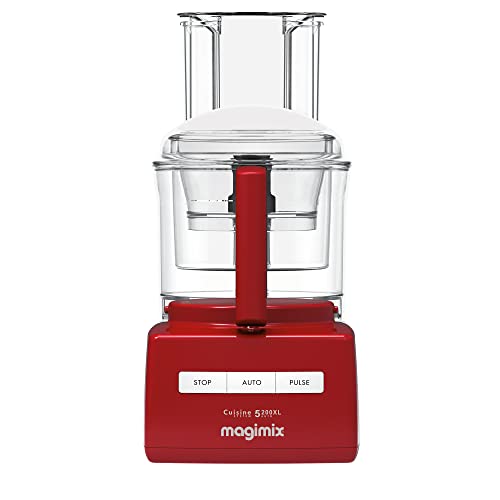
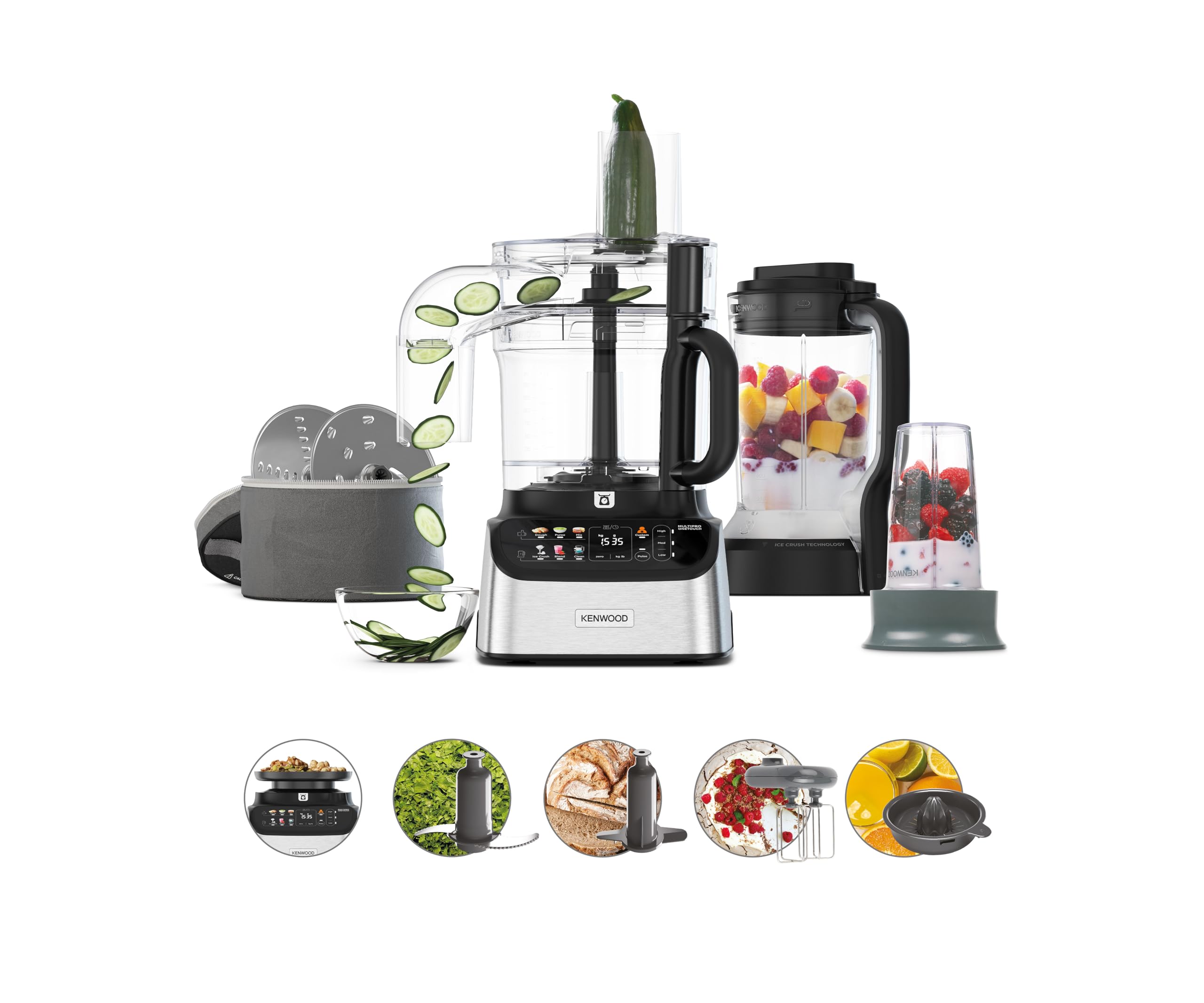
Magimix and Kenwood are two of the best known names in UK food processors, and they sit at very different ends of the price range. The Magimix 5200XL is the French-built, induction-motor benchmark that many cooks keep for decades. The Kenwood MultiPro Express is the sensible, well-equipped mainstream model that costs a fraction as much and does most of the same everyday jobs.
This comparison looks at the 5200XL against the Kenwood MultiPro Express FDP65.860WH: build, blades, capacity, noise, and what you actually get for the price gap. Prices are approximate, were seen on Amazon UK when we checked, and move often, so check the live listing before buying.
How the two machines compare at a glance
Feature | Magimix 5200XL Premium | Kenwood MultiPro Express |
Approx. price seen | About £439 | About £109.90 |
Motor | 1,100W induction | Geared, compact motor |
Main bowl | 3.6 litres, three bowls included | Large work bowl with 9 attachments |
Extras | Extra press and 3 discs, 8-in-1 functions | 1.5 litre jug blender, mini chopper, Express Serve and Dice |
Guarantee | 30 years | Standard Kenwood guarantee, check listing |
Amazon UK rating | 4.1 stars, about 82 ratings (Premium listing) | 4.3 stars, about 480 ratings |
Best for | Build quality and longevity | Value and convenience |
Note that the standard black 5200XL also exists with a slightly different accessory set. We have used the Premium listing because it was the one Amazon was actually selling at the time of writing.
Everyday chopping, slicing and grating: closer than the price gap suggests
For ordinary home cooking, the two are closer than the price suggests. Slicing cucumbers, grating cheese, shredding cabbage for coleslaw, chopping onions and making breadcrumbs are all jobs that the Kenwood handles well. The Express Serve and Dice function, which lets you process straight into a bowl or onto a plate, is a genuinely handy feature for busy weeknights.
The Magimix does the same jobs with a little more finesse. Its blades are ultra-sharp, slices are cleaner and more even, and the larger feed tube means less prepping of ingredients. If you cook from scratch most days, you will notice the difference; if you use a food processor a couple of times a week, you may not.
Pastry, dough and heavy work: the Magimix earns its price
This is where the Magimix earns its money. The induction motor is powerful and steady under load, so pastry, bread dough, nut butters and dense mixtures are handled without the motor straining. Its three-bowl system lets you move from a big batch to a small task without washing in between.
The Kenwood can make shortcrust pastry and small batches of dough, but heavy, sticky mixtures are better in smaller quantities. If you bake often, or want a machine you will still be using in twenty years, the Magimix is the safer long-term choice.
Living with them: noise, cleaning and worktop reality
The Magimix is Quiet Mark approved and noticeably calmer than most rivals, thanks to the induction motor. It is heavy and tall, and most people find it lives on the worktop rather than in a cupboard. The Kenwood is lighter and easier to shift, but with nine attachments and a jug blender it has more parts to store and wash.
Check which parts are dishwasher-safe for both models and hand-wash sharp blades. Measure the gap under your wall cupboards before buying either machine.
Blades, discs and attachments
The Magimix is built around a smaller number of very well made parts. The S-blade, the slicing and grating discs and the dough blade are all sharp out of the box and hold their edge well, and the Premium set adds an extra press and three more discs, which is useful if you regularly grate cheese, julienne vegetables or slice large batches. Every piece fits the same central drive, so swapping between jobs is quick.
The Kenwood takes the opposite approach: quantity. Nine attachments, a jug blender for soups and smoothies and a mini chopper for herbs and garlic mean you may not need a separate blender at all. That is a real saving in both money and cupboard space. The trade-off is that the blades and discs are not quite as crisp as the Magimix, and the plastics feel lighter.
Capacity and family size
The Magimix 5200XL gives you a 3.6 litre main bowl, plus a smaller bowl and a mini bowl, so it copes with a big batch of pastry, a family-sized coleslaw or a couple of kilos of vegetables for soup. The three-bowl set is the reason many keen cooks pay the premium: you can chop nuts in the small bowl, then use the main bowl for the rest of the recipe without washing up in the middle.
The Kenwood work bowl is generous for a family of four and will handle a weekday meal prep session without trouble. If you regularly feed a crowd, batch-cook for the freezer or bake in bulk, the Magimix has more headroom.
Build quality and long-term value
The 30-year guarantee on the Magimix is unusual and is the strongest argument for the price. An induction motor has fewer wearing parts than a geared one, and spares are available years after purchase. If you spread the cost over ten or twenty years of use, the £439 looks more reasonable than it does on the day.
The Kenwood is a very good machine for its money, but it is a mainstream appliance. It is more likely to be replaced after several years of heavy use, and at around £110 that is an entirely reasonable position to take. Consider what you cook and how often before deciding whether long-term durability is worth paying for.
So which food processor should you buy?
- Choose the Kenwood MultiPro Express if you want the best value: it covers typical home cooking at a fraction of the Magimix’s cost, and it adds a jug blender and Express Serve and Dice for convenience.
- Choose the Magimix 5200XL if budget is not the main limit and you want superior build quality, blade performance, an induction motor with a 30-year guarantee and a three-bowl system.
For most people the Kenwood is the sensible buy. See also our other kitchen comparisons on Kitchen Kit if you are still deciding between appliances.
Magimix 5200XL Premium
The 5200XL Premium has a 3.6 litre capacity, three bowls, an extra press and three additional discs, and an 8-in-1 range of functions on a 1,100W induction motor. It is Quiet Mark approved and comes with a 30-year guarantee. It costs about £439 on Amazon UK, and stock looked limited when checked (only one left), with a 4.1 star rating from 82 ratings.
Kenwood MultiPro Express FDP65.860WH
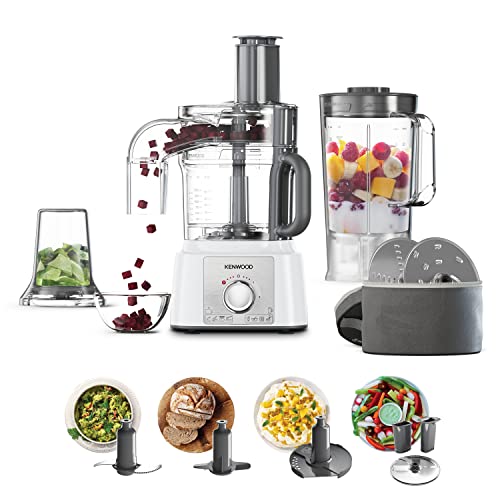
The Kenwood MultiPro Express comes with nine attachments, a 1.5 litre jug blender and a mini chopper, and the Express Serve and Dice function. Amazon UK showed about £109.90 in stock, with 4.3 stars from around 480 ratings. It is the better value pick for most households.
FAQ
Q: Is Magimix better than Kenwood?
A: On build and longevity, yes. On value, the Kenwood usually wins.
Q: Which is better for making pastry?
A: The Magimix, thanks to its induction motor and three-bowl system.
Q: Does the Kenwood MultiPro Express really have a built-in scale?
A: Some Kenwood MultiPro models are sold with a built-in scale, but check the specification on the listing for this exact model before relying on it.
Q: Are these food processors dishwasher safe?
A: Many bowls and discs are, but check each manual, and hand-wash the blades to keep them sharp.