
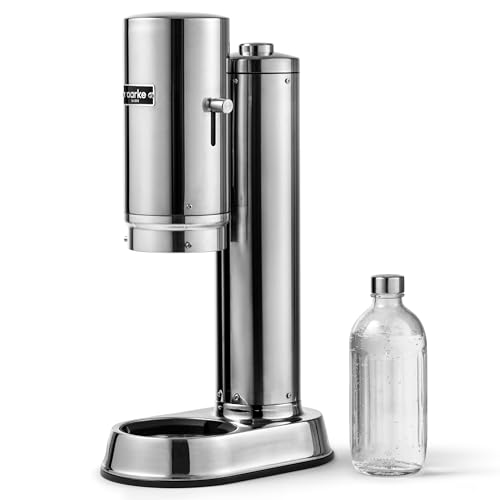
- The Carbonator Pro is made of high-quality materials. A robust machine with stainless steel enclosure
- Glass bottle included – dishwasher safe
- Compatible with most standard CO2 gas cylinders (not included)
- The carbonation process is a smooth, one-handed operation with the unique Push-to-Lock feature. Make fresh sparkling water with the push of a button.
- Designed in Sweden and engineered to elevate everyday routines
The Aarke Carbonator Pro is, without much argument, the best-looking sparkling water maker you can put on a kitchen worktop. Where most fizzy-water machines are unapologetically plastic, the Carbonator Pro is wrapped in a single piece of polished stainless steel, and it has the heft and finish of something far more expensive than a kitchen gadget. At around £269 it is also several times the price of the SodaStream most people picture when they think of home carbonation, which makes the obvious question unavoidable: is it actually better, or are you paying for the metal and the minimalism?
Weighing up the options? See our round-up of the best sparkling water makers.
The headline difference, beyond the looks, is the bottle. The Carbonator Pro is the premium model in Aarke’s range and, unlike almost everything else on the market, it carbonates into a proper glass bottle rather than plastic, which matters both for how the water feels to drink and for how the thing looks on the table. If you are weighing it against the field, read this alongside my round-up of the best sparkling water makers UK 2026, where it sits at the luxury end of a market full of cheaper, plainer options.
I have used the Carbonator Pro as my everyday fizzy-water machine to work out where the money goes, how good the carbonation really is, and whether the glass bottle and steel body justify the premium over a standard SodaStream.
How the Carbonator Pro compares to the alternatives
The Carbonator Pro’s rivals split into two groups. There is its own cheaper sibling, the plastic-bottled Aarke Carbonator 3, which shares the steel body but loses the glass bottle, and then there is the whole SodaStream range, which costs far less and uses plastic throughout but does the same fundamental job. The Pro sits at the top of the market on price and finish.
The table below lines the Aarke Carbonator Pro up against the machines people most often consider alongside it, so you can weigh build, bottle type, cylinder system and price before deciding.
Design and build: the reason most people buy it
There is no point pretending otherwise: the design is the headline, and it is genuinely lovely. The single-piece stainless-steel body feels dense and cool to the touch, the lever action that drives the carbonation is smooth and deliberate, and the whole machine has a presence on the worktop that no plastic rival can match. It comes in several finishes, and unlike most kitchen gadgets it is something you would happily leave out on display rather than hide in a cupboard.
The glass bottle is the other half of the appeal. It looks far better on a dinner table than a scuffed plastic bottle, the water feels cleaner and more ‘still-water-like’ to drink from glass, and there is no faint plastic taste over time. The flip side is obvious: glass is heavier, breakable, and not something you would throw in a rucksack, so it is a worktop-and-table proposition rather than a take-it-to-the-gym one.
Carbonation: how good is the fizz?
This is where it is worth being honest. The Carbonator Pro produces excellent, fine-bubbled sparkling water, and you have good control over the level of fizz by how many times you press the lever. At its most aggressive it gets genuinely sharp and lively, the kind of carbonation that holds up to a strong cordial or a slice of lime, and a light press gives a gentle spritz for drinking plain.
But the carbonation itself is not meaningfully better than what a good SodaStream produces. Both push CO2 into water, and once you have dialled in your preferred number of presses the bubbles are comparable. The Pro’s advantages are real, but they are about the experience and the glass bottle, not about producing fundamentally fizzier water than a machine costing a third as much.
Running costs and the CO2 question
The Carbonator Pro uses standard threaded 60-litre CO2 cylinders, the same screw-in type used by many SodaStream machines, which is good news because it means you are not locked into a single proprietary supplier and you can shop around for cylinder refills. A cylinder carbonates roughly sixty litres of water before it needs swapping, and the per-litre cost of home carbonation works out far cheaper than buying bottled sparkling water from a supermarket, which is the main practical argument for owning any of these machines.
Where the Pro costs you is purely the upfront price. The CO2 economics are the same as a cheaper machine, so the £269 is not buying you cheaper water, it is buying you the steel and the glass. If saving money on fizzy water is your actual goal, you reach break-even far sooner with a SodaStream; the Pro is for people who also want the object.
Living with it day to day
In daily use the Carbonator Pro is a pleasure with a couple of small frictions. Attaching the glass bottle takes a deliberate twist and feels reassuringly solid, and the lever action is satisfying, but you do need to be a little careful with the glass around hard sinks and stone worktops. There is no electronics and nothing to plug in, which means nothing to go wrong and no battery to charge, and cleaning is simply a matter of rinsing the bottle.
One genuine usability note: you carbonate plain water only and add any flavour afterwards, which is the correct way to do it and keeps the machine clean, but it does mean the Pro is a sparkling-water specialist rather than a fizzy-drinks factory. For pure sparkling water, served from glass, it is about as good as the home experience gets.
Is the Aarke Carbonator Pro worth it?
If you want a sparkling water maker that doubles as a piece of kitchen design, you value drinking from glass over plastic, and the running costs do not deter you, the Carbonator Pro is worth it. It is beautifully made, it will last, and the glass bottle genuinely improves the experience of drinking sparkling water at home. For that buyer it is a quietly brilliant object.
If your priority is simply cheap fizzy water with the least possible outlay, you should look elsewhere, because a SodaStream carbonates water just as well for a fraction of the price and reaches break-even far faster. The Carbonator Pro is a luxury, and a well-judged one, but it is a luxury, and you should buy it as such. A good place to compare the value end is my SodaStream Terra review, linked alongside this.
FAQ
Is the Aarke Carbonator Pro worth the premium over a SodaStream?
It depends on what you value. The carbonation itself is comparable, so the premium pays for the stainless-steel body and the glass bottle rather than for fizzier water. If design and a glass bottle matter to you, it is worth it; if you simply want affordable sparkling water, a SodaStream does the same core job for far less.
Does the Aarke Carbonator Pro use a glass bottle?
Yes, and that is its defining feature. The Pro carbonates into a proper glass bottle, unlike almost every other mainstream machine, which use plastic. The glass looks better on the table, the water feels cleaner to drink, and there is no plastic taste, though glass is heavier and breakable.
What CO2 cylinders does the Aarke Carbonator Pro use?
It uses standard threaded 60-litre screw-in CO2 cylinders, the same type used by many SodaStream machines. That means you are not tied to a single supplier and can shop around for refills, and one cylinder carbonates roughly sixty litres of water before it needs replacing.
Can you add squash or cordial to the Aarke Carbonator Pro?
You carbonate plain water and then add any cordial, squash or citrus afterwards. You should never carbonate anything but water, as flavourings can foam violently and make a mess inside the machine. Adding flavour after carbonation keeps the bottle and machine clean and works perfectly well.
Is the Aarke Carbonator Pro electric?
No, and that is part of its appeal. It is entirely manual, driven by a lever, with no electronics, no plug and no battery. That means there is nothing to charge and very little that can go wrong, and you can use it anywhere on the worktop without needing a socket nearby.