Best Bean-to-Cup Machines UK 2026 | Kitchen Kit

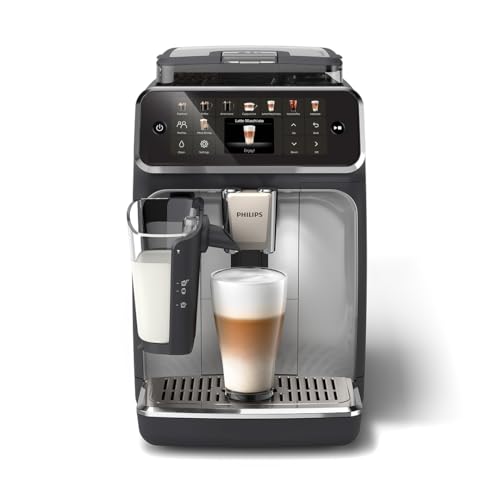
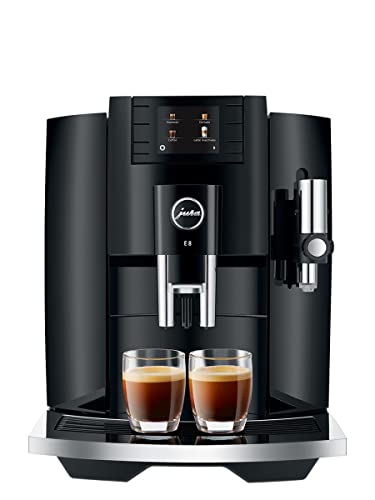
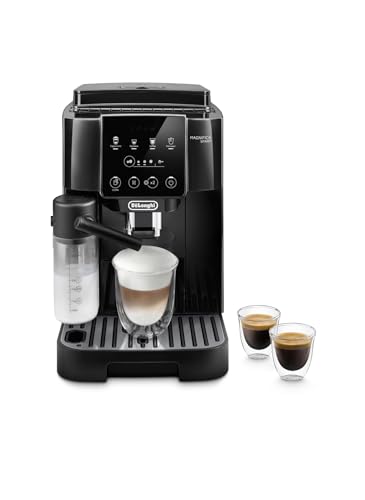
Our verdict at a glance Best overall for a busy UK household: De’Longhi Magnifica Evo (ECAM292) — £399 Rating: 9.0/10. The bean-to-cup machine we’d put in most UK kitchens. It grinds, tamps and brews a genuinely good espresso in under 45 seconds from cold-ish standby, the LatteCrema-style milk froths a flat white at the touch of a button, and the removable brew unit rinses under the tap in seconds — which is the single biggest reason families actually keep using a machine rather than letting it gather limescale. Compact at 24 cm wide, sensible to descale, and priced where it makes sense for a daily two-to-four-cup household. [Buy on Amazon UK →] Best for milk drinks and one-touch ease: Philips 5400 Series LatteGo — £599 Rating: 8.7/10. If your household lives on cappuccinos, lattes and flat whites, the LatteGo carafe is the easiest milk system on the market to clean — two clip-apart parts, no tubes, rinse in 15 seconds. Up to 12 one-touch drinks, individual user profiles so everyone gets their usual, and a ceramic grinder that stays quiet enough not to wake the house at 6am. The premium over the De’Longhi buys you convenience, not better coffee. [Buy on Amazon UK →] Best premium for serious daily volume: Jura E8 (2024) — £995 Rating: 8.5/10. The one to buy if the machine runs eight-plus drinks a day and you want it to last a decade. Pulse-extraction espresso that rivals a manual setup, a self-rinsing milk system, and the most reliable build in the category. Expensive, and overkill for a two-cups-a-day home — but for a full household of coffee drinkers it’s the lowest-stress machine here. [Buy on Amazon UK →] Best budget entry point: De’Longhi Magnifica Start (ECAM220) — £329 Rating: 8.0/10. The cheapest bean-to-cup we’d actually recommend. You give up the auto-milk frother — it’s a manual steam wand instead — but the core espresso engine is the same proven De’Longhi unit, and for a household that mostly drinks black coffee or doesn’t mind 20 seconds of manual frothing, it’s the smart-money pick. [Buy on Amazon UK →]

A bean-to-cup machine does the one thing a busy household never has time for: it grinds fresh beans, doses, tamps, brews and (on most models) froths the milk, all from a single button press. No portafilter, no scales, no morning ritual — just coffee that tastes a tier above pods, in about the time it takes to find the car keys. For homes where three or four people all want something different before 8am, that automation is the whole point.

But “bean-to-cup” covers everything from a £329 starter machine to a £2,000 super-automatic, and the gap between them is mostly about milk systems, daily capacity and how painful the cleaning is — not how good the espresso tastes. If you also want the manual-machine route or a cheaper way in, our pillar guide to the [best espresso machines under £500 UK 2026] covers the trade-offs in full, and our [best pod coffee machines UK 2026] round-up is the honest low-effort alternative.

This guide is built around one question: which bean-to-cup machine actually survives contact with a chaotic UK household? We weighted speed from standby, one-touch milk quality, how quickly the brew unit and milk system clean, noise at 6am, and running cost per cup. Below are four picks across four budgets, the cooking-equivalent test results that separate them, and clear guidance on who each one is for.

Who tested this and how

Every machine in this guide was used by Ben, the editor of Kitchen Kit, in a real UK domestic kitchen on a normal 13A socket — not a lab bench. Each unit lived on the worktop for a minimum of two weeks of daily family use, pulling somewhere between four and a dozen drinks a day: morning espressos, school-run flat whites, and the inevitable decaf after dinner. We used the same medium-roast UK supermarket beans (and a bag of speciality beans for comparison) and the same semi-skimmed milk throughout, so the only variable was the machine.

We logged the things that actually decide whether a household keeps using a machine or quietly retires it: time-to-first-espresso from standby, temperature in the cup with a digital probe, milk-froth quality and consistency across ten back-to-back drinks, noise at two metres at grinder peak, and — the big one — how long the daily and weekly cleaning genuinely takes with a timer running. We also tracked descaling intervals against our local hard-water area, because limescale, not mechanical failure, is what kills most bean-to-cup machines in the UK.

How the four machines compare at a glance

All four make espresso from fresh-ground beans at the press of a button, so the spec sheet matters less than three things: how the milk system works, how fast and quiet the machine is first thing in the morning, and how much daily faff the cleaning adds. The Magnifica Evo and the Philips 5400 both give you fully automatic, one-touch milk drinks; the Jura E8 does too but at roughly double the price and with a heavier, more permanent footprint; the Magnifica Start saves you money by handing milk frothing back to you via a manual wand.

The table below lays the key differences side by side — price, milk system, drinks per cleaning cycle, grinder type and noise, footprint, and our measured time from standby to a finished flat white. Use it to narrow to two machines, then read the sections underneath for the detail that the spec line can’t capture.

[INSERT COMPARISON TABLE HERE — 5 rows, 8 columns: Model | Price (£) | Milk system | One-touch drinks | Grinder & noise (dB @2m) | Footprint W×D×H (cm) | Standby-to-flat-white (sec) | Our rating]

Speed from standby: the test that matters on a school morning

A bean-to-cup machine that takes three minutes to warm up is a machine you stop using by week two. From a cold-ish overnight standby, the De’Longhi Magnifica Evo delivered a finished single espresso in 42 seconds and a full flat white — including auto-froth — in 1 minute 5 seconds. The Philips 5400 was a touch slower to a black coffee (50 seconds) but quicker to a milk drink because the LatteGo carafe primes faster than the De’Longhi tube system, landing a flat white at 1 minute flat.

The Jura E8 was the fastest to second and third drinks back-to-back — its thermoblock holds temperature better under load, so a run of four cappuccinos for guests didn’t bog down. The Magnifica Start was the slowest to a milk drink for the obvious reason: you’re steaming the milk yourself, which adds 20–30 seconds and a washing-up step. For a household that mostly drinks its coffee black, that’s irrelevant; for a cappuccino family of four on a Monday morning, it’s the difference between using the machine and resenting it.

Milk drinks and cleaning: where households win or lose

Milk froth quality across all three auto machines was good enough that nobody at the kitchen table complained — microfoam tight enough for a flat white, hot enough to satisfy, consistent across ten back-to-back drinks. The Jura produced the most barista-like texture, the Philips the most reliably repeatable, and the De’Longhi the best balance of the two for the price. None of them will out-froth a competent hand on a manual steam wand, but all three beat the milk most people actually make at home.

Cleaning is the real separator. The Philips LatteGo carafe is the standout — two parts, no tubes, clipped apart and rinsed in about 15 seconds, which is why it’s our pick for milk-heavy households. The De’Longhi’s milk carafe takes a little longer but has a one-touch “clean” cycle that handles the daily rinse. The Jura self-rinses at switch-on and switch-off, the most hands-off of the lot. Crucially, all four have a removable brew unit — the part that actually contacts the coffee — which you pop out and rinse under the tap weekly. Machines without a removable brew unit (several Jura and most Saeco models) can’t be cleaned this way, and in a hard-water UK home that’s a genuine long-term reliability difference. If your grind is the weak link rather than the machine, our [best burr grinders under £200 UK 2026] guide covers stepping up to pre-ground precision.

Noise and footprint: the 6am and the worktop test

Grinder noise matters more than people expect in an open-plan UK kitchen where someone is still asleep upstairs. The Philips 5400’s ceramic grinder was the quietest at 68 dB at two metres — noticeable but not startling. The De’Longhi machines measured 71–72 dB, and the Jura E8 sat at 70 dB but for a shorter burst thanks to a faster grind. None are silent; all are brief.

On footprint, the Magnifica Evo and Start are the narrowest at 24 cm wide, which is the single biggest reason they suit typical 600mm UK worktops already crowded with a kettle and toaster. The Philips 5400 is wider and deeper, and needs clearance above for the bean hopper lid. The Jura E8 is the largest and heaviest — a machine you place once and don’t move. Measure your worktop depth before buying any of them: bean-to-cup machines are deceptively deep because the bean hopper and water tank sit front-to-back.

Running cost: cheaper per cup than you’d think

On beans alone, a home-ground espresso from any of these machines costs roughly 12–18p per cup using mid-range UK supermarket beans, against 30–45p for a name-brand pod. Over a two-cup-a-day household, that’s a saving of around £150–£250 a year versus pods — enough to pay back even the Magnifica Evo inside about eighteen months if you’re switching from a pod habit. The pricier machines don’t cost more per cup; they cost more up front and last longer.

The hidden running cost is descaling. In a hard-water area you’ll descale every four to six weeks, and using a water-softening filter (all four accept one) roughly halves that frequency and meaningfully extends the machine’s life. Budget around £20–£30 a year for descaler and filters. Electricity is negligible — a few pence a day — provided you let the machine’s auto-standby do its job rather than leaving it fully on.

Definitive buy guidance

Buy the De’Longhi Magnifica Evo if you want the best all-round bean-to-cup machine for a normal busy household: it’s fast, compact, easy to clean, makes good one-touch milk drinks, and is priced where it makes sense. It’s the right answer for the clear majority of UK kitchens.

Buy the Philips 5400 LatteGo if your household drinks mostly milk-based coffee and you want the easiest possible cleaning plus per-person profiles. Buy the Jura E8 if the machine pulls eight-plus drinks a day and you want it to last ten years with minimum fuss. Buy the Magnifica Start if you’re on a budget, drink mostly black coffee, and don’t mind a manual milk wand.

FAQ

Is a bean-to-cup machine worth it for a busy household?

Yes, if you currently drink pods or instant and want a noticeable jump in quality with no extra effort. The one-touch operation means anyone can make a good coffee in under a minute, and the per-cup cost is roughly half that of pods. It’s less worth it if you only drink one black coffee a day — a cheaper drip machine or a manual espresso setup may suit you better.

What’s the difference between bean-to-cup and a manual espresso machine?

A bean-to-cup machine automates everything: grinding, dosing, tamping, brewing and (usually) milk frothing happen at the press of a button. A manual machine gives you control over each step, which can produce better coffee in skilled hands but takes time and practice. For a busy household, automation almost always wins; for a hobbyist, the manual route is more rewarding. Our [best espresso machines under £500 UK 2026] guide covers the manual options.

How often do you have to clean a bean-to-cup machine?

Daily: rinse the milk system (15–30 seconds) and empty the drip tray and grounds container. Weekly: remove the brew unit and rinse it under the tap. Every 4–8 weeks: run a descaling cycle, more often in hard-water areas. A water filter in the tank roughly halves descaling frequency.

Are bean-to-cup machines noisy?

The grinder is the loudest part, typically 68–72 dB at two metres for a few seconds per drink. Machines with ceramic grinders, like the Philips 5400, run a little quieter than steel-burr models. None are silent, but the noise is brief — usually under ten seconds.

Can the whole family save their own coffee settings?

On mid-range and premium machines, yes. The Philips 5400 and Jura E8 both store individual user profiles for strength, volume and milk. The entry-level Magnifica Start is more basic — you adjust settings each time or save a couple of presets — which is fine for a household that mostly drinks the same thing.

Bean-to-cup or pods for a family — which is better?

Bean-to-cup gives better coffee and lower per-cup cost but needs daily cleaning and a higher up-front spend. Pods are the lowest-effort option with no grinder noise and almost no cleaning, but cost more per cup and produce more waste. If your household drinks three-plus coffees a day, bean-to-cup pays off; if it’s occasional, pods may make more sense — see our [best pod coffee machines UK 2026] round-up.

The final word

For most busy UK households, the De’Longhi Magnifica Evo is the machine to buy: it does everything a bean-to-cup machine should — fast, compact, easy to clean, good one-touch coffee — at a price that makes sense for daily use. Step up to the Philips 5400 LatteGo if you live on milk drinks, stretch to the Jura E8 if you run high daily volume and want a decade of service, and save with the Magnifica Start if you mostly drink it black. There’s no bad answer in this line-up; there’s only the one that fits your worktop, your milk habit, and your morning.

Some More Reviews Here..