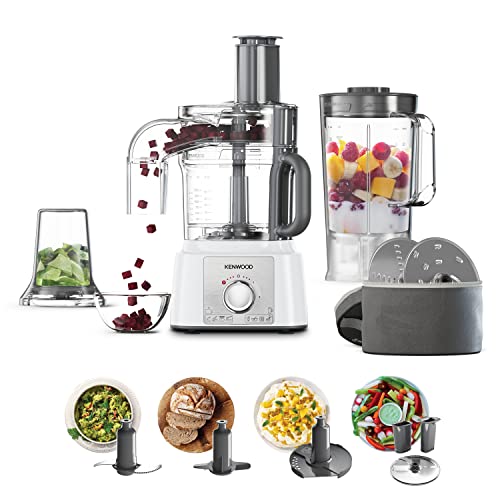
The Kenwood MultiPro Express is a mid-priced food processor built around two ideas: Express Dice, which cuts firm vegetables into proper cubes, and Express Serve, which sends sliced or grated food out through a chute so the bowl never fills. This review looks at how those features hold up in UK batch cooking, and whether the Kenwood is a sensible alternative to a Magimix. Prices are approximate and change often, so check the live listing before buying.
Weighing up the options? See our round-up of the best food processors in the UK.
Kenwood Multipro Express: the essentials at a glance
The MultiPro Express sits between budget processors and premium machines such as the Magimix 5200XL. You get a large main bowl, an integrated blender goblet and the proprietary Express attachments. On Amazon UK the FDP65 model with Express Serve and Express Dice, a 1.5L jug blender and a mini chopper is typically listed at roughly £110, and it is rated 4.3 stars from several hundred reviews.
- Best for: batch cooks and families who prep a lot of vegetables and want them diced quickly.
- Not for: occasional users or small kitchens with limited cupboard space.
- The trade-off in one line: the Kenwood buys you speed and convenience, where the Magimix buys you longevity and refinement.
Express Dice: the feature the machine lives or dies on
The dicing kit pairs a grid plate with a blade to produce cubes rather than the chopped fragments you get from a standard blade. That matters more than it sounds. Diced onion from the Express kit browns like knife-cut onion does, which makes it useful as the base for stews, curries and bolognese where the texture of the soffritto shapes the finished dish.
It works best on firm produce such as onions, carrots, celery, peppers and potatoes. It struggles with soft, wet vegetables like ripe tomatoes, which tend to squash rather than cut cleanly. If most of your prep is firm veg, this is the reason to buy the machine.
Express Serve: less headline, more daily use
Express Serve directs sliced or grated food through a chute instead of filling the bowl. The bowl never fills, so you never have to stop, and you can slice or grate straight onto a plate or into a pan. It also cuts the washing-up, because the main bowl stays clean when you are only using the discs.
It is not the feature that sells the machine, but it is the one you will notice every time you grate a block of cheese or slice a batch of potatoes for a gratin.
Blades, discs and general processing performance
For chopping, slicing, grating and dough-making the Kenwood is competent. It does the everyday jobs well and handles family-sized quantities without fuss. There is a genuine quality gap to the Magimix, though: the Magimix blades are sharper and better shaped, its cuts are marginally cleaner and its induction motor is quieter.
For most households that gap will not change dinner. It becomes more relevant if you use a processor daily for years, or if noise bothers you in an open-plan kitchen.
Living with it: storage, cleaning and the parts problem
This is a big machine with a lot of parts: a base, main bowl, blender goblet, discs and the dicing kit. It needs plenty of storage space, so it is a poor fit for small kitchens or anyone who wants a processor to live in a drawer.
Cleaning is more work than with a simpler processor. The dicing grid is the fiddly part because it has a lot of edges to trap food, so rinse it straight after use before anything dries on. Most parts are dishwasher safe, though we would hand-wash some components to protect them.
Kenwood Multipro Express vs Magimix
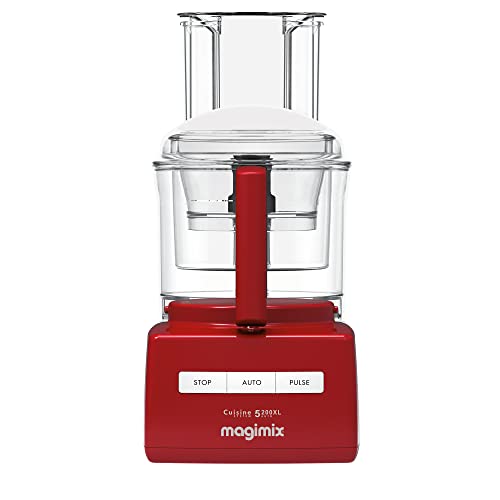
The Magimix 5200XL is the machine to look at if you want a processor for decades rather than years. It offers better blades, a quieter induction motor and a 30-year guarantee, but costs considerably more, and the Amazon UK listing was low on stock at the time of writing at around £440. The Kenwood costs a fraction of that and puts its money into time-saving features for high-volume prep. See our Magimix 5200XL review for the detail.
If you want the best food processors for batch cooking more broadly, our 2026 roundup compares more options at different price points.
Is the Kenwood Multipro Express worth it?
Yes, for people who prep vegetables often. Getting properly diced, dry, fryable vegetables out of a machine in a couple of minutes is something almost nothing else at this price does. It suits batch cooks and families best. If you only use a processor occasionally, or your storage is limited, a simpler and smaller machine will suit better.
Who should buy it, and who should not
Buy it if you cook from scratch several times a week, make big pots of stew, curry or soup, or batch-prep vegetables for the freezer. The dicing kit turns the most tedious part of that job into a couple of minutes, and the chute keeps the workflow moving because you are not stopping to empty the bowl.
Think twice if you mainly want a processor for the odd batch of pastry or a bit of grating. In that case the extra parts and the storage footprint are cost without benefit, and a compact machine will be easier to live with. If you already own a good stand mixer or a stick blender, check which jobs a processor would genuinely take over before spending.
One practical tip: keep the discs and dicing kit together in a single tub or drawer. The machine only saves time if you can find the right part quickly, and the number of accessories is the main reason people stop using processors.
FAQ
Does the Kenwood Multipro Express dicing attachment actually work?
Yes. It produces genuinely even cubes of firm vegetables that brown properly when fried, though it struggles with soft produce such as ripe tomatoes.
What is Express Serve on the Kenwood Multipro Express?
It is a feature that lets you slice or grate continuously straight onto a plate or into a pan, so you do not need to keep emptying the bowl.
Kenwood Multipro Express vs Magimix: which is better?
The Magimix offers better durability and blade quality, backed by a 30-year guarantee. The Kenwood costs less and prioritises time-saving features for high-volume prep.
Is the Kenwood Multipro Express hard to clean?
It is more work than a simpler processor because there are more parts, but most are dishwasher safe. The dicing grid needs rinsing promptly.
Is the Kenwood Multipro Express good for small kitchens?
Not ideal. You need space to store the base, bowl, goblet, discs and dicing kit.
Kenwood MultiPro Express (FDP65.860WH)
This is the version with Express Serve, Express Dice, a 1.5L jug blender and a mini chopper. It was in stock at roughly £110 on Amazon UK when we checked, and is well reviewed. Check the live listing for the current price and what is included.
Magimix 5200XL Premium (the longevity option)
If you want sharper blades, a quieter motor and a long guarantee, and can stretch to the price, the Magimix 5200XL is the step up. Stock on Amazon UK was limited when we checked, so check the live listing.