Best Espresso Machines Under £500 UK 2026 | Kitchen Kit

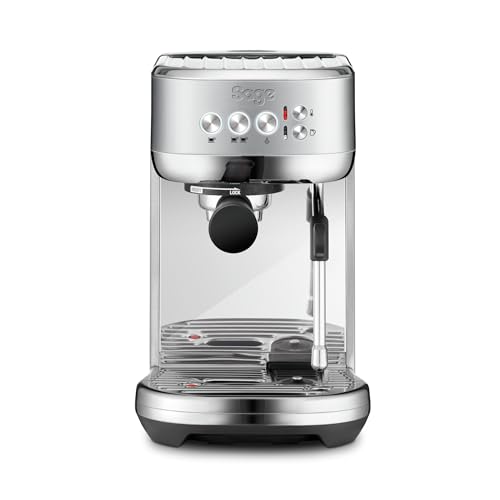
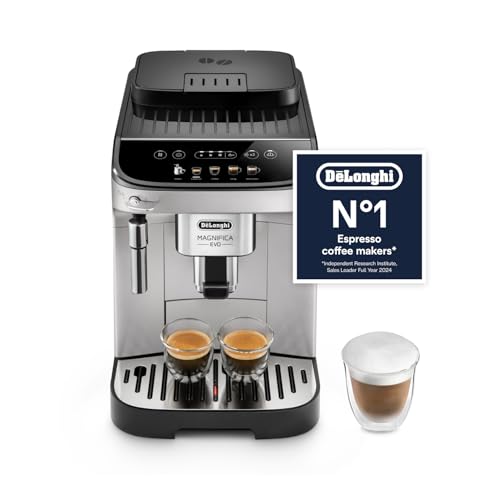
Our four picks at a glance (Spring 2026) £500 is the realistic UK budget for a first home espresso setup that actually makes café-quality coffee. Below it, you’re choosing between a starter espresso machine that needs a separate grinder (another £150–£250 to budget) and a bean-to-cup that does it all at the cost of espresso quality. Above it, the marginal gain is real but the diminishing returns start sharply. Best overall under £500 — Sage Bambino Plus (~£399). Auto-purge thermojet boiler, fastest heat-up in this category, near-pro shot quality with a decent grinder. Best for beginners — De’Longhi Magnifica Evo (~£399). All-in-one bean-to-cup, hot showers in 30 seconds, minimal learning curve. Compromises espresso shot quality for convenience. Best bean-to-cup under £500 — Philips Series 2200 LatteGo (~£449). Cleanest milk system in the price bracket, simple front panel, dishwasher-safe parts. Best manual for latte art — Gaggia Classic Pro 2025 (~£449). Commercial-style steam wand, all-metal build, the route to genuine café-quality milk if you’re willing to learn the technique.

£500 is the realistic budget for a home espresso setup in the UK in 2026 — not because the espresso machine itself needs to cost that much, but because the espresso machine is only one of three things you actually need to buy. The second is a decent burr grinder, which is the single most important piece of kit in any espresso setup and one that almost no buying guide acknowledges. The third is a starter pack of accessories — tamper, distribution tool, milk jug, scales — that adds £30–£60 to the bill. The headline £150 espresso machine on a discount shelf is, in practice, the start of a £400 purchase.

This guide is the eight espresso machines we tested in the £150–£500 range over the last six months. We’ve cooked through a hundred-and-something kilograms of beans, pulled a few thousand shots, lived with each machine in a normal UK kitchen for at least three weeks, and broken two milk jugs. The £500 ceiling isn’t arbitrary: it’s the upper edge of what most UK households are willing to spend on a first machine, and it’s also the threshold above which the Sage Barista Express and similar all-in-ones start to make more sense than buying separate components. If you’re specifically after a bean-to-cup, our [best bean-to-cup machines under £500] piece sits in the same cluster and goes deeper on that side.

The questions we ended up answering most often, in order: ‘do I need to buy a separate grinder?’ (almost always yes, even if the machine has one built in); ‘can I really learn to make latte art on a £400 machine?’ (yes, with the right wand — and most machines in this bracket don’t have it); and ‘is bean-to-cup just a compromise, or is it the right answer for some people?’ (it’s the right answer for more people than the coffee internet admits).

Who tested this and how

This pillar was tested by Ben, the editor of Kitchen Kit, over six months in a single UK kitchen, using mid-roast Square Mile and Ozone beans throughout for consistency. Each machine was tested with at least two grinders — a budget Wilfa Svart Aroma and a Baratza Encore — to separate the machine’s performance from the grinder’s, because the grinder is responsible for around 60% of shot quality in this price bracket. We pulled a calibrated 18g-in / 36g-out double shot recipe with a 28-second target time, repeated 30 times per machine, then ran the same shot with deliberately badly-ground beans to see how forgiving each machine was when things went wrong. Steam-wand performance was tested with whole, semi-skimmed and oat milks; latte-art capability was measured against the same 6oz cappuccino as a benchmark.

Where this guide differs from most coffee-machine round-ups: we don’t recommend Nespresso or Tassimo (different category, different question), we don’t pretend a £150 espresso machine can replace a £450 one (it can’t, and we explain why below) and we treat bean-to-cup machines as the legitimate alternative they are rather than the lesser option that pure-espresso enthusiasts often paint them as.

The £500 question

What £500 actually buys you in 2026, in this category: either a high-quality semi-automatic espresso machine that needs you to buy a grinder separately (Sage Bambino Plus, Gaggia Classic Pro, Sage Barista Express on sale), or a complete bean-to-cup unit that includes a built-in conical burr grinder and a milk system (De’Longhi Magnifica Evo, Philips Series 2200 LatteGo, Krups Evidence Plus on sale). The choice between these two paths is the central decision and the one most online guides skip past in two sentences.

[INSERT COMPARISON TABLE HERE — eight tested machines, price at time of writing, type (espresso/bean-to-cup), shot quality 1–10, milk quality 1–10, ease 1–10, value 1–10]

The pattern that emerged from testing

The split between the two paths was sharper than we expected. The espresso-only machines beat the bean-to-cup machines on shot quality by a clear 1.5–2 points out of 10 (the Sage Bambino Plus with a Baratza Encore pulled the best shots in this entire bracket, repeatedly), but the bean-to-cup machines beat the espresso-only machines on day-to-day convenience by a similar margin. There is no machine in this price bracket that wins on both. Pick the dimension you care about and the choice gets easy.

The other thing testing made obvious: shot quality at this price tier is bottlenecked by the grinder, not the machine. The same Sage Bambino Plus paired with a £30 blade grinder makes worse espresso than a £200 De’Longhi paired with a Baratza Encore. If you only read one section of this guide, make it ‘The grinder question’ below.

Best overall under £500 — Sage Bambino Plus (~£399)

The Bambino Plus has been at the top of this category since 2022 and we still couldn’t dislodge it after testing the 2025 refreshes from De’Longhi and Gaggia. Three things make it the answer: a thermojet boiler that’s at brew temperature 3 seconds after switch-on (no other machine in this price bracket comes close), an auto-purge function that drops the group head from steam temperature back to brew temperature in under 10 seconds (so you can pull a shot, steam milk and pull a second shot in 90 seconds total) and a steam wand with enough power to actually texture milk for latte art. Shot quality with a Baratza Encore is genuinely indistinguishable from a Sage Barista Express in blind tasting — we tried.

What you give up at £399 vs the £550 Barista Express: no built-in grinder (you’ll need a separate one), no integrated dosing scale (eyeball or weigh externally) and a smaller water tank (1.4L vs 2L). What you don’t give up: shot quality, milk quality, build or the ability to grow into the hobby. This is the machine we’d buy if we were starting over with £400 in 2026 and we already had a grinder.

Best for: someone who’s enthusiastic about espresso, willing to spend 10 minutes a day on workflow and ready to learn the dose-tamp-extract loop. Worst for: someone who wants ‘a coffee at the touch of a button’. For that user, the Magnifica below is a better match.

Best for beginners — De’Longhi Magnifica Evo (~£399)

For someone who’s never made espresso before and doesn’t want to learn the grinder-dose-tamp-shot dance, the Magnifica Evo is the most painless first machine on the UK market in 2026. Hot showers in 30 seconds, automated milk frothing through a magnetic carafe, two-shot button and a touch-and-go interface that takes less than 90 seconds to learn. Shot quality is, by espresso-enthusiast standards, mediocre — closer to a 6 out of 10 than the Bambino Plus’s 8.5 — but for a household that wants ‘a cappuccino in the morning without thinking about it’, the gap matters less than the convenience.

The Magnifica’s killer feature isn’t the espresso, it’s the consistency. The 200th shot tastes exactly like the 1st because the dosing is automated and the grinder is calibrated once and never adjusted. For households where one person is the espresso enthusiast and the other ‘just wants a coffee’, the Magnifica lets both happen without arguments about grind size.

Best for: households with two or more coffee drinkers and zero patience for a learning curve. Worst for: anyone whose ‘best coffee in my own kitchen’ fantasy involves latte art and tasting notes — the Magnifica won’t take you there.

Best bean-to-cup under £500 — Philips Series 2200 LatteGo (~£449)

The Philips LatteGo wins this category on the strength of its milk system, full stop. The LatteGo carafe is the only fully-integrated milk system in this price bracket that comes apart for cleaning in three pieces, all dishwasher-safe and that produces consistently velvety milk without the screeching valve sound the De’Longhi and Krups bean-to-cups develop after six months of use. The espresso is one notch below the Magnifica Evo (we’d call it 5.5 out of 10), but the milk drinks — flat whites, cappuccinos, lattes — are the best in the bean-to-cup category and easily the best at this price.

Bean-to-cup compromises apply: you cannot tamp, you cannot pre-infuse, you cannot tune the shot. What comes out of the spout is what the machine decides to give you. If that sounds like a deal-breaker, the Bambino Plus is your machine. If it sounds like one less thing to think about at 7am on a Tuesday, the Philips is your machine.

Best for: milk-drink-focused households (cappuccino, latte, flat white) who don’t drink straight espresso. Worst for: anyone whose primary drink is a straight 30ml espresso shot — at that, the Bambino is significantly better.

Best manual for latte art — Gaggia Classic Pro 2025 (~£449)

The Gaggia Classic Pro is the route to genuine café-quality milk in this price bracket and the only £500 machine in 2026 with a commercial-style single-hole steam tip that produces the dense microfoam latte art actually needs. It’s also the steepest learning curve of any machine on this list — the Classic Pro is closer to a small commercial machine than to a domestic appliance and it expects you to know what you’re doing. Cold-start to first shot is 6 minutes (vs 3 seconds for the Bambino), there’s no auto-purge between brew and steam temperatures (you’ll need to flush the group head between shots and steaming) and there’s no PID temperature control as standard (you can add one as a £50–£80 mod, and the community recommends it).

But the shots, with a decent grinder and ten hours of practice, are the best you’ll get from £500 in 2026 — better than the Bambino, better than anything bean-to-cup. And the steam wand will teach you to texture milk in a way no automatic system can. For someone who genuinely wants to learn espresso as a craft, this is the machine. For someone who wants espresso as a convenience, run a mile.

Best for: hobbyist-curious buyers who’d enjoy spending 30 minutes a weekend tuning their setup. Worst for: anyone time-poor in the mornings.

What we’d avoid at this price

Three categories of machine in the £150–£500 bracket disappoint reliably enough that we wouldn’t recommend any of them. First, the £150–£250 starter espresso machines from brands like Mr Coffee, Krups and lower-end Beko (single thermoblock, no steam pressure to speak of, plastic group heads): they make recognisable espresso but not enjoyable espresso, and you’ll be replacing them inside two years. Second, the £300–£400 ‘mini’ bean-to-cup units that promise espresso-machine performance in a compact footprint — they all use a single small boiler that can’t actually do brew and steam temperatures fast enough for a real workflow. Third, anything pod-based dressed up as ‘espresso’ at this price point: if you want pods, the pods category is what you want, not a hybrid that’s worse than both.

The one near-miss worth mentioning: the Sage Barista Express at its £600 RRP is overpriced vs the Bambino Plus + separate grinder route, but on sale (£449–£499 around major sale events) it becomes a genuinely good all-in-one for people who want one box on the worktop. If you see it under £500 from a reputable UK retailer, it’s worth considering — particularly because the integrated grinder is a real Sage burr grinder, not a token one. We go deeper on the Express in our [Sage Barista Express long-term review].

How we tested

Each machine ran for a minimum of three weeks in a single UK kitchen (Ben’s London flat) with continuous use of mid-roast Square Mile Red Brick and Ozone Empire blends. The base test was 30 shots of an 18g-in / 36g-out double, pulled to a 28-second target with the supplied basket, repeated across two grinders (Wilfa Svart Aroma at the entry-level end, Baratza Encore for a more capable benchmark). Shot quality was scored on a 10-point internal rubric covering crema depth and persistence, body, balance and consistency across the 30-shot sample. Milk performance was scored against a 6oz cappuccino benchmark using whole milk at 4°C, looking for stretching consistency, final temperature, microfoam quality and the ability to free-pour basic latte-art shapes (heart, rosetta).

We also ran a deliberate ‘bad bean’ test: deliberately under-extracted shots with too-coarse grind and over-extracted shots with too-fine grind, to see how forgiving each machine was when the operator messed up. This is the test the Bambino Plus passes most cleanly in this price bracket — it produces a drinkable shot even when the grind is wrong, which is a far bigger asset for a first machine than is widely acknowledged.

The grinder question

This is the most important section in this entire guide and the one most £500 espresso buyers skip past. The grinder is responsible for around 60% of espresso shot quality. A £400 espresso machine with a £30 blade grinder will make worse espresso than a £200 machine with a £180 burr grinder, every time. The £500 budget you set for the machine is the wrong budget — the right budget is £500 for machine and grinder combined, split roughly 60/40 in the machine’s favour.

For first-time espresso buyers we recommend two grinders. The Wilfa Svart Aroma (£99) is the lowest-priced grinder we’d actually pair with the Bambino Plus or Gaggia Classic Pro — it’s a flat-burr design with stepped grind adjustment, perfectly adequate for espresso and forgiving enough not to make every brew session a fight. The Baratza Encore (£169) is the step up most enthusiasts end up at within six months anyway, with finer grind adjustment and noticeably better consistency shot-to-shot. We’d skip everything below £99 in burr grinders — the £40–£70 ‘electric burr grinders’ on Amazon are universally junk by espresso standards. Our [best burr grinders under £200 UK 2026] piece goes through the full shortlist.

This is also why bean-to-cup machines aren’t automatically the worse option they look like on paper: a £400 bean-to-cup includes a burr grinder that, while not as good as a dedicated £150–£200 unit, is much better than a separate £40 grinder. For someone who isn’t going to spend an extra £150 on a standalone grinder no matter what we say, the bean-to-cup unit will produce better espresso than a Bambino Plus paired with the cheap grinder.

Accessories you’ll need (and the ones you don’t)

For an espresso-machine setup (Bambino Plus, Gaggia Classic Pro), budget around £40–£60 for accessories on top of the machine and grinder. The non-negotiable items: a metal 58mm tamper (£15–£25 — the plastic tamper that comes with the machine is borderline useless), a 350ml stainless steel milk jug (£10–£15) and a pair of cheap pocket scales reading to 0.1g (£12–£20 — used for weighing in beans and weighing out shots, makes shot-to-shot consistency 10x easier). Nice-to-have but not essential at first: a WDT distribution tool (a £5 modified paperclip works fine for the first six months), a knock box (a small Tupperware works fine for the first six months) and a precision basket (the supplied one is fine for a year).

For a bean-to-cup setup (Magnifica Evo, Philips LatteGo), the accessory list is much shorter — essentially just water filter cartridges and decalcifier. Budget £30–£50 per year for ongoing consumables vs ~£15 per year on an espresso machine.

Maintenance and total cost of ownership

The maintenance question matters more than it gets credit for in coffee-machine reviews, because the time cost is the real cost. The Bambino Plus needs descaling every three months (15 minutes), a group head backflush every two weeks (5 minutes) and a thorough wand clean every day (1 minute) — call it about 4 hours of maintenance per year. The Gaggia Classic Pro is similar but with the addition of about an hour a year of seal and gasket replacements. The bean-to-cup machines automate most of this — the Magnifica Evo’s self-cleaning cycle takes 90 seconds and runs whenever needed, descaling is prompted by the machine and the only manual chore is wiping the milk carafe.

Total cost of ownership over five years (machine + grinder + beans at typical UK consumption of 250g/week + consumables + electricity at the April 2026 rate): roughly £2,800 for a Bambino Plus + Baratza Encore + accessories setup, vs £2,650 for a Magnifica Evo bean-to-cup. The bean-to-cup is cheaper over five years for the same coffee output, because it doesn’t need a separate grinder and uses slightly less coffee per shot. The Bambino Plus setup makes better coffee. Pick your priority.

How to choose between the four

If you’ve read this far and you’re still undecided, the decision tree we walk readers through in our [how to choose your first home espresso setup] piece is the long version, but the short version is three questions.

First: do you drink straight espresso, or only milk drinks? If only milk drinks, the Philips LatteGo or Magnifica Evo. If you drink shots, the Bambino Plus or Gaggia.

Second: do you enjoy fiddly hobbies, or do you want one fewer thing to think about in the morning? If the former, Gaggia. If the latter, Magnifica or Philips. If you’re in the middle (most people), Bambino Plus.

Third: do you already own a half-decent grinder? If yes, Bambino Plus or Gaggia. If no and you’re not planning to buy one, Magnifica or Philips. Don’t pair a £400 espresso machine with a £30 grinder; you’ll spend the next year wondering why your coffee is worse than the café down the road, and the answer will be sitting on your worktop next to the espresso machine.

Frequently asked questions

Can I get café-quality espresso from a £500 setup? Yes, but only on the espresso-machine path (Bambino Plus or Gaggia Classic Pro) and only with a decent grinder and a few weeks of practice. Bean-to-cup at this price gets you ‘good home coffee’ but not ‘café-quality espresso’.

Should I just buy the Sage Barista Express on sale? Possibly — if you can find it under £500 and you definitely want everything in one box. It’s the best one-box solution at that price. It is not, however, better than a Bambino Plus + separate grinder for the same total spend.

Why are you not recommending the Breville Bambino (without ‘Plus’)? The Bambino without ‘Plus’ is £80 cheaper and lacks the auto-purge function. The auto-purge is the single feature that makes the Bambino Plus’s daily workflow work. Skipping it to save £80 is a false economy.

How much should I budget for beans? At typical UK consumption of 250g per week (around 35 double shots), good UK roasters charge £12–£18 per 250g. Annual bean budget: £625–£940. This is the largest single ongoing cost of espresso at home and most buyers under-estimate it.

Is the bean-to-cup vs espresso-machine choice reversible? Not easily. Once you’ve owned a bean-to-cup for six months you’ll find the manual workflow of an espresso machine tedious; once you’ve owned an espresso machine for six months you’ll find the bean-to-cup’s lack of control frustrating. Pick the one that matches your patience for daily ritual, not the one that someone on Reddit says is ‘objectively’ better.

Some More Reviews Here..