A moka pot is one of the cheapest ways to get strong, espresso-style coffee at home. Prices start around £30 for a classic aluminium pot and rise to about £70 for induction-friendly designs. It is often called a stovetop espresso maker, but it brews at roughly 1 to 2 bar rather than the 9 bar of a machine, so the result is bold, aromatic and forgiving rather than a true crema-topped shot.
New to home espresso? Start with our first home espresso setup guide.
If you want real espresso pressure, see best espresso machines under £500 UK 2026. This guide covers five popular pots, from the classic Bialetti Moka Express to stainless steel and induction-ready options, with notes on materials, cup sizes and hob compatibility.
Prices below were checked against UK retailers and price trackers and can change, so confirm on the product box before buying.
Our top picks at a glance
- Best overall for gas and electric hobs: Bialetti Moka Express 3-cup – from about £29.95
- Best stainless steel for induction: Bialetti Venus 4-cup – around £44
- Best for a creamier cup: Bialetti New Brikka 4-cup – from about £61
- Best aluminium pot for induction: Bialetti Moka Induction 4-cup – around £67
- Best dishwasher-safe stainless option: GROSCHE Milano Steel 6-cup – check current price
How the moka pots compare
Model | Price | Material | Cup size | Induction? | Crema | Best for |
Bialetti Moka Express 3-cup | From about £29.95 | Aluminium | 3 cup (130 ml) | No | Light foam | Gas and electric hobs |
Bialetti Venus 4-cup | About £44 | Stainless steel | 4 cup (170 ml) | Yes | Light foam | Induction and durability |
Bialetti New Brikka 4-cup | From about £61 | Aluminium | 4 cup | No | Thicker, pressure valve | Creamier cup |
Bialetti Moka Induction 4-cup | About £67 | Aluminium with steel base | 4 cup | Yes | Light foam | Induction with the classic shape |
GROSCHE Milano Steel 6-cup | Check price | Stainless steel | 6 cup | Yes | Light foam | Dishwasher-safe stainless |
1. Bialetti Moka Express 3-cup – Best for gas and electric hobs


The octagonal aluminium Moka Express is the pot most people picture. It is cheap, characterful and endlessly repairable, with John Lewis listing the range from £29.95 depending on size. The 3-cup size makes about 130 ml, enough for one generous coffee or two small ones. It does not work on induction hobs, so it suits gas, ceramic electric and solid plate cooking.
2. Bialetti Venus 4-cup – Best stainless steel for induction

The Venus is a stainless steel pot with a magnetic base, so it works on induction as well as gas and electric. PriceSpy shows it at £43.79 to £49.12 across four UK retailers, with Amazon.co.uk at £43.89. The 4-cup size makes about 170 ml. Stainless steel resists pitting and does not affect flavour, which makes it a sensible long-term choice.
3. Bialetti New Brikka 4-cup – Best for a creamier cup

The New Brikka adds a pressure valve on the spout, which restricts flow and produces a thicker, foamier cup than a standard moka pot. It is still not real espresso. It is aluminium and not suitable for induction. PriceSpy lists it from £61.19, though prices vary widely between sellers, so compare before buying.
4. Bialetti Moka Induction 4-cup – Best aluminium pot for induction

This keeps the familiar aluminium upper chamber but adds a stainless steel section at the base of the lower chamber for induction hobs. It also works on gas and electric. Coffee Direct lists it at £67.00. It suits anyone who wants the classic look on an induction hob and accepts the higher price.
5. GROSCHE Milano Steel 6-cup – Best dishwasher-safe stainless option
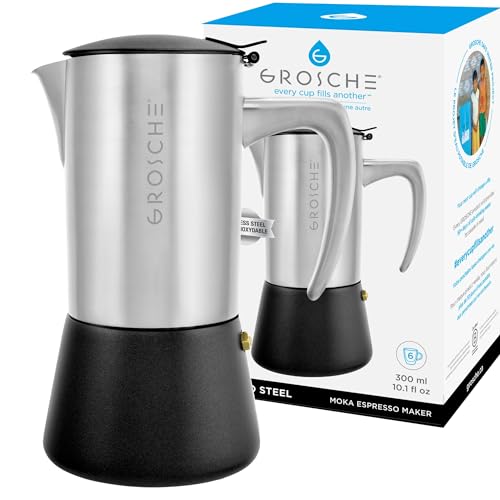
The Milano Steel is a stainless steel pot listed as suitable for induction, electric and gas, and dishwasher safe. The 6-cup size suits two or three people. A current UK price could not be confirmed, so check the product box for today’s price. Stock at some third-party sellers appears patchy.
Aluminium or stainless steel?
Aluminium heats quickly, is light and cheap, but will not work on induction and should be hand washed. Stainless steel costs more but is more durable, works on induction and can often go in the dishwasher. Hybrid designs like the Moka Induction split the difference.
Getting the grind and the brew right
Use a medium-fine grind, finer than table salt but coarser than espresso powder. A burr grinder gives more consistent results; see best burr grinders under £200. Fill the basket level without tamping, start with hot water, use medium heat and take the pot off when the coffee turns blonde and starts to gurgle. Run the base under cold water to stop it cooking.
How many cups do you really get?
Moka “cups” are small espresso-sized servings of roughly 40 to 60 ml. A 3-cup pot makes about 130 ml and a 4-cup about 170 ml, so one mug of coffee usually needs a 4 or 6-cup pot. For milk drinks, pair your pot with one of the frothers in our best milk frothers UK guide. If you prefer a fully automatic option, see best pod coffee machines UK.
Cleaning and looking after your pot
Rinse with warm water only, and avoid detergent on aluminium pots. Dry fully and store with the lid open. The gasket and filter plate wear out every year or two and cost a couple of pounds to replace.
Definitive buy guidance
Choose the Bialetti Moka Express for gas or electric hobs on a budget. For induction, pick the Venus or the GROSCHE Milano Steel if you want stainless steel, or the Moka Induction if you prefer aluminium. Choose the New Brikka if you want a creamier cup and do not use induction.
Frequently asked questions
Is moka pot coffee the same as espresso?
No, but it is close in spirit. A moka pot brews at around 1 to 2 bar of pressure, while an espresso machine uses about 9 bar, so you get a bold, concentrated coffee with light foam rather than a true crema-topped shot.
Can I use a moka pot on an induction hob?
Standard aluminium pots such as the Moka Express will not work. Use a magnetic stainless steel pot such as the Venus or GROSCHE Milano Steel, or the Moka Induction with its steel base.
What grind should I use for a moka pot?
A medium-fine grind, finer than table salt but coarser than espresso powder. Freshly ground coffee from a burr grinder gives better results than pre-ground supermarket options.
Why does my moka coffee taste bitter or burnt?
Usually because it was left on the heat too long or brewed too hot. Use medium heat, start with hot water and remove the pot when the coffee turns blonde and starts to gurgle.
How long does a moka pot last?
A well-maintained moka pot can last decades. The body rarely fails; the rubber gasket and filter plate wear out every year or two and cost a couple of pounds to replace.