Quick verdict: The Russell Hobbs 20L 5-in-1 Mini Oven (26680) is the best mini oven for most UK households – it adds air frying to a proper 20-litre oven for around £100. If you want the most capable countertop oven money can sensibly buy, the Tefal Easy Fry Air Fryer Oven is the premium pick, while the Tower 32L with dual hot plates is the one to choose if you need a hob as well as an oven.
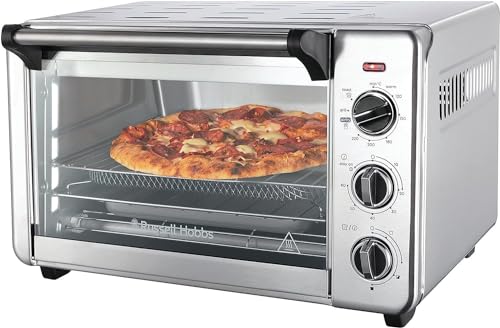


A mini oven is one of the most useful appliances you can put on a worktop, but it is also one of the easiest to get wrong. Buy one that is too small and you cannot fit a pizza in it; buy one that is too big and it swallows half your counter and costs nearly as much to run as the main oven you were trying to avoid. The choice has also got more complicated, because the line between a mini oven and an air fryer has blurred – many of today’s best-selling models do both.
This guide cuts the market down to six mini ovens that are on sale at Amazon UK right now, covering every realistic budget from about £30 to £250. It explains who each one suits, where the compromises are, and how to choose between a simple convection oven, an air fryer oven and a model with hotplates on top. If you are still weighing up which small appliances are worth the space, our best air fryers guide is a good place to start.
Prices below were checked on Amazon UK in September 2026. Mini oven prices move around a lot, especially around Black Friday and Prime Day, so it is worth checking the live price before you buy.
The best mini ovens in the UK at a glance
- Best overall: Russell Hobbs 20L 5-in-1 Mini Oven 26680 – about £100
- Best premium: Tefal Easy Fry Air Fryer Oven 20L FW605840 – about £250
- Best with hotplates: Tower 32L Mini Oven with Dual Hot Plates T14044 – about £119
- Best value with hotplates: Quest 26L Mini Oven with Double Hot Plates – about £72
- Best budget: Prodex PX7023B 23L Tabletop Mini Oven – about £50
- Best compact: Quest 35409 9L Mini Oven – about £30
Is a mini oven worth it?
For most households, a mini oven earns its place if it gets used several times a week. The main argument is energy. A typical built-in single oven draws 2–3kW and has to heat a cavity of 60–70 litres before any cooking happens. A 1,500W mini oven with a 20-litre cavity heats up far faster and has much less air to keep hot, so for small jobs – a couple of chicken breasts, a tray of oven chips, a frozen pizza – it will usually use a fraction of the electricity.
In money terms, the saving per use is modest. At UK electricity prices of roughly 25–27p per kWh, a small bake in a mini oven might cost 10–15p against 30–40p in a full-size oven, once preheating is included. That adds up to a meaningful sum if you cook for one or two most nights, but on energy alone a £100 mini oven takes a long time to pay for itself.
The stronger case is convenience and flexibility. A mini oven is ideal if you live alone or in a flat with a small or unreliable main oven, if you share a kitchen and want your own cooking space, or if you regularly need a second oven for roasts and big family meals. Models with hotplates go further and can act as a complete second kitchen for a studio flat, a caravan, a student house or a kitchen renovation.
What to look for in a mini oven
Capacity
Capacity is quoted in litres, and it matters more than almost anything else. Around 9–12 litres is enough for toast, a jacket potato or a small ready meal for one. From about 20 litres you can fit a whole chicken or a 12-inch pizza, which is where most people should be looking. Ovens of 26–32 litres or more are closer to a small main oven and suit couples and families, but they take up considerably more worktop space.
Convection fan and air frying
Cheaper mini ovens heat with top and bottom elements only, which works but can leave hot and cool spots. A convection fan circulates the air for more even cooking and quicker results. Air fryer ovens take this further with a more powerful fan and a mesh basket, giving crispier chips and wings – useful if you do not already own an air fryer and would rather have one appliance than two.
Hotplates
Some mini ovens have one or two electric hotplates on top. These are slower than a gas or induction hob, but they let you boil pasta or fry an egg while something bakes underneath. If the mini oven will be your main or only cooker, hotplates are worth having; if you already have a hob, they just add bulk and weight.
Size, controls and cleaning
Measure the space before you order, including the clearance above the oven – most manufacturers recommend leaving a gap around the sides and top for ventilation, and the tops of these ovens get hot. Simple dial controls are reliable and easy to use; digital controls and presets make air fryer ovens easier to get consistent results from. A removable crumb tray and a non-stick or enamelled interior make regular cleaning much less of a chore.
The best mini ovens in detail
1. Russell Hobbs 20L 5-in-1 Mini Oven 26680 – Best overall (about £100)
The Russell Hobbs 26680 hits the sweet spot for most buyers: it is big enough to be genuinely useful, compact enough to live on the worktop, and it adds an air fry function without the price jump of a dedicated air fryer oven. The 20-litre cavity is rated for a whole chicken, six slices of toast or a large pizza, which covers the vast majority of everyday cooking for one to three people.
There are five modes – air fry, bake, grill, toast and keep warm – driven by a 1,500W convection fan. Russell Hobbs says it preheats four times faster than a conventional oven and cooks up to 2.5 times faster, with an energy saving of around 63% for comparable jobs. Temperature runs from 85°C up to 220°C, and a bake pan and wire rack are included.
At roughly 45 x 37 x 28cm and a little over 6kg, it takes up a similar footprint to a large microwave. The 220°C maximum is slightly lower than some rivals, which matters if you like very hot pizza, and the exterior gets warm in use. It is sold and dispatched by Amazon and holds an average of around 4.2 out of 5 from more than 800 ratings at the time of writing.
Best for: small households who want one versatile countertop oven that can also stand in for an air fryer.
2. Tefal Easy Fry Air Fryer Oven 20L FW605840 – Best premium (about £250)
Tefal’s Easy Fry Air Fryer Oven is the pick if you want a countertop oven that can take over most of the jobs of a full-size oven. It shares the same 20-litre headline capacity as the Russell Hobbs, but it is built around air frying from the ground up, with three cooking levels, a more powerful 1,800W element and ten automatic programmes including roast, pizza, bake, grill, toast and dehydrate.
Tefal quotes a capacity of 1.3kg of chips, a 12-inch pizza or a chicken of up to 3kg, and says it cooks around 50% faster than a conventional oven while using up to 70% less energy (based on the brand’s own tests with frozen fries). You can use your own oven-safe dishes inside, which makes traybakes and lasagnes straightforward, and it comes with a fry basket, wire rack, food tray and crumb tray. The temperature goes up to 230°C.
The drawbacks are price and bulk. At roughly 41 x 35 x 35cm and over 10kg, it needs a permanent home on the worktop, and £250 is a lot to spend if you only want to reheat leftovers. For households replacing both an ageing air fryer and relying less on the main oven, though, it makes a strong case. It is sold by Amazon and rated around 4.3 out of 5 at the time of writing.
Best for: keen cooks and families who want one premium appliance to cover air frying, roasting and baking.
3. Tower 32L Mini Oven with Dual Hot Plates T14044 – Best with hotplates (about £119)
If you need a hob as well as an oven, the Tower T14044 is the most sensible all-in-one choice from a major brand. The 32-litre cavity is large for a countertop model – big enough for a standard chicken and family-sized portions – and on top there are two hot plates, rated at 600W and 1,000W, for pans and a frying pan.
Controls are simple dials, with the temperature adjustable from 90°C to 230°C, and the oven covers roasting, baking, grilling and toasting. Tower includes a standard one-year guarantee, which extends to three years if you register the oven online within 28 days of purchase – a worthwhile extra on an appliance that may be doing a lot of heavy lifting.
The trade-off is size and weight: at nearly 9kg with a large cavity, this is not an appliance you will move in and out of a cupboard. There is no convection fan or air fry function, so results are more traditional than the Russell Hobbs or Tefal. As a second kitchen for a studio flat, a student let or a kitchen refit, however, it is hard to beat. It is sold by Amazon and averages around 4.2 out of 5 at the time of writing.
Best for: anyone who needs a complete oven-and-hob setup on a worktop.
4. Quest 26L Mini Oven with Double Hot Plates – Best value with hotplates (about £72)
The Quest 26L offers the same basic formula as the Tower – oven below, two hobs above – for considerably less money. The 26-litre cavity will take a whole chicken or a pizza, and the two hotplates are different sizes, so you can run a small saucepan and a larger pan side by side. It has an internal light, which is unusual at this price and makes it easier to keep an eye on food without opening the door.
The temperature is adjustable up to 230°C and the timer runs to 60 minutes, both set by dials beside the door. Quest supplies a baking tray, wire rack, tray handle, crumb tray and a rotisserie fork for larger joints, so there is little else to buy. The tempered-glass door and cool-touch handle help with safety, and anti-slip feet keep it stable on the worktop.
At around 46 x 36 x 39cm and 10kg, it is a substantial unit, and the 60-minute timer means you will need to reset it for longer roasts. It is sold by The Benross Group through Amazon and has one of the highest average ratings in this guide, at around 4.5 out of 5.
Best for: budget-conscious buyers who need a hob and oven combination, including for caravans and student accommodation.
5. Prodex PX7023B 23L Tabletop Mini Oven – Best budget (about £50)
The Prodex PX7023B shows how much mini oven you can get for around £50. It has a 23-litre cavity – larger than both of our top two picks – with a 1,500W element for roasting, baking, grilling and reheating, and a temperature range of 100°C to 230°C. An oven rack and crumb tray are included.
This is a straightforward, no-frills oven. There is no fan, no air fry mode and no presets, just dial controls and a simple design that is easy to understand. That simplicity is part of the appeal: there is very little to go wrong, and it handles the everyday basics – oven chips, fish fingers, a small roast or a batch of cookies – without fuss.
Without a fan, you should expect less even browning than the convection models above, and it is worth turning trays halfway through longer bakes. At roughly 47 x 38 x 29cm, it is wider than the Russell Hobbs despite the lower price. It is sold by Go Shop Direct through Amazon and rated around 4.5 out of 5 at the time of writing.
Best for: anyone who wants a capable second oven for the lowest sensible outlay.
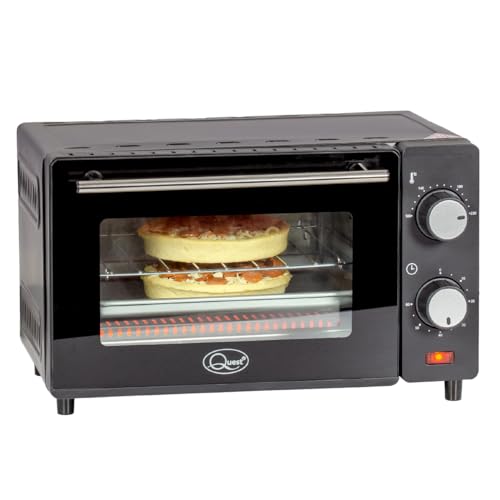
6. Quest 35409 9L Compact Mini Oven – Best compact (about £30)
Not everyone needs a 20-litre oven. The Quest 35409 is a genuinely small appliance – about 37 x 29 x 22cm and just over 4kg – that suits anyone short on space: a bedsit, an office kitchen, a caravan or a student room. The 9-litre cavity measures roughly 17 x 25 x 21cm inside, enough for toast, a jacket potato, a couple of sausages or a small ready meal.
It runs at 650W, which keeps running costs very low, and the temperature dial covers 100°C to 230°C. The 60-minute timer has automatic shut-off with a bell when food is ready, and it comes with a tray, wire rack and detachable handle. The double-glazed tempered-glass door lets you check on progress without opening it.
The limits are obvious: it will not take a pizza of any real size, and it is not designed for full meals for more than one person. As a cheap, compact extra oven, though, it does its job well and has more than 2,000 ratings on Amazon averaging around 4.1 out of 5. It is sold by The Benross Group.
Best for: single people and small spaces where worktop room is at a premium.
Running costs: how much does a mini oven cost to use?
The running cost of any oven depends on its power, how long it runs and how often the element cycles on and off to hold temperature. As a rough guide, a mini oven only draws its full rated power while heating up; once at temperature, the thermostat switches the element on and off.
Using a unit price of around 26p per kWh, a 30-minute cook would cost roughly: 5–8p in the 650W Quest 9L; 10–20p in a 1,500W model such as the Russell Hobbs, Prodex or Quest 26L oven; and 12–23p in the 1,800W Tefal. A full-size electric oven, including preheating, will often cost 30–40p or more for the same job. Using the hotplates on the Tower or Quest 26L adds to the total, since they draw up to 1,000W each.
The biggest savings come from matching the oven to the job. If you are only cooking for one or two, the smaller the cavity, the less energy is wasted heating empty space – which is why a mini oven used several times a week can make a noticeable difference to your bills over a year.
Russell Hobbs 26680 vs Tefal Easy Fry Oven: which should you buy?
These are the two air fryer ovens in this round-up and both have a 20-litre capacity, so the choice comes down to how much you will use the extra features. The Russell Hobbs costs around £150 less and covers the essentials well: air frying, baking, grilling, toasting and keeping food warm, with a convection fan and a compact footprint.
The Tefal justifies its higher price with more power (1,800W vs 1,500W), a higher maximum temperature (230°C vs 220°C), three cooking levels and ten automatic programmes, including dehydrating. It is the better choice if you plan to use it as a main oven for most meals or cook for a family, and its presets make it easier to get reliable results without experimenting.
If you mainly want a faster, cheaper way to cook small meals and do some air frying, the Russell Hobbs is the better value. If you want one appliance to take over from both an air fryer and much of your main oven use, the Tefal is worth the extra.
An alternative: a vertical air fryer instead of a mini oven
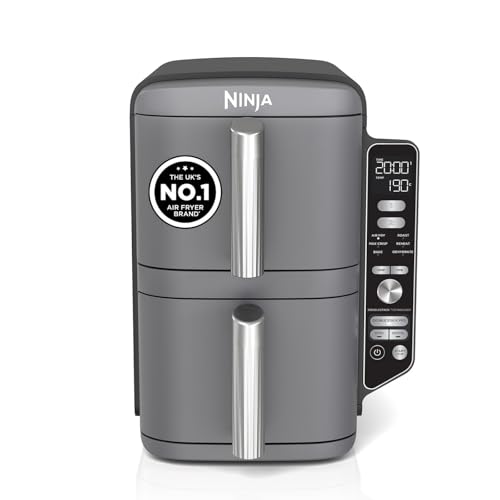
If worktop width is your main problem, it is worth considering an air fryer instead of a conventional mini oven. The Ninja Double Stack XL (SL400UK) is a 9.5-litre, two-drawer air fryer that stacks its cooking zones vertically, so it takes up far less counter width than any oven here. With two drawers and two racks, it offers four cooking levels and six functions, and Ninja says it can cook up to eight portions.
It is not a like-for-like replacement – you cannot fit a large pizza or a baking dish inside, and it will not replace the oven for cakes or lasagne. But for chips, chicken, vegetables and reheating, it covers a lot of what people use a mini oven for. It is currently around £200 at Amazon UK. Our dual-zone air fryer guide (post #4) and meal-prep round-up (post #7) cover it in more detail.
Who should buy which mini oven?
- Most people cooking for one to three: Russell Hobbs 26680. It is the best balance of size, features and price.
- Families and keen cooks: Tefal Easy Fry Air Fryer Oven. The most capable option and the closest to replacing a main oven.
- Studio flats, kitchen renovations and anyone without a hob: Tower T14044. A complete oven and hob from a major brand, with up to three years’ guarantee.
- Oven and hob on a tighter budget: Quest 26L. Similar features to the Tower for around £45 less.
- A second oven for the lowest price: Prodex PX7023B. A 23-litre oven for about £50.
- Tiny kitchens, offices and caravans: Quest 35409. Small, cheap to run and easy to store.
Mini oven FAQs
Can a mini oven replace a full-size oven?
For one or two people, a 20-litre or larger mini oven can handle most everyday cooking, including roast chicken, pizza and traybakes. It will struggle with large roasts, multiple dishes at once and big batch bakes, so most families will still want a full-size oven for Sunday dinners and Christmas.
Is a mini oven cheaper to run than an air fryer?
Usually not. Air fryers tend to have smaller cavities and cook faster, so for chips and small portions they typically use less energy than a mini oven. Mini ovens come into their own for dishes an air fryer cannot handle, such as pizzas, casseroles and baking, which is why air fryer ovens that combine both have become so popular.
What size mini oven do I need?
Around 9–12 litres suits one person cooking simple meals. For a whole chicken or a 12-inch pizza, look for 20 litres or more. Couples and families who want to use it as their main oven should consider 25–32 litres.
Do mini ovens need special ventilation?
They do not need to be ducted, but the outside surfaces get hot, so leave space around the sides and top as recommended in the manual and keep them away from curtains, blinds and wall cupboards. Never use a mini oven inside a cupboard or enclosed shelf.
Can I use normal baking trays in a mini oven?
Yes, as long as they fit and are oven-safe, with a little space around the edges for the air to circulate. Measure the internal dimensions first; most mini ovens come with a tray sized for the cavity.
Can I plug a mini oven with hotplates into a normal socket?
Most countertop models, including those in this guide, are designed for a standard 13A UK plug. Avoid using an extension lead, and do not run other high-powered appliances such as a kettle on the same double socket at the same time.
The verdict
The Russell Hobbs 20L 5-in-1 Mini Oven is the best mini oven for most UK households. It is big enough for a whole chicken or pizza, adds air frying without a big price premium, and at around £100 it is easy to justify if you cook for one or two most nights.
If budget is less of a concern and you want an appliance that can take over much of your main oven’s work, the Tefal Easy Fry Air Fryer Oven is the premium choice. For anyone who needs a hob as well as an oven, the Tower T14044 is the best all-rounder, with the Quest 26L a strong cheaper alternative. And if you only need something simple, the Prodex and compact Quest 9L show that a useful mini oven does not have to cost much at all.