

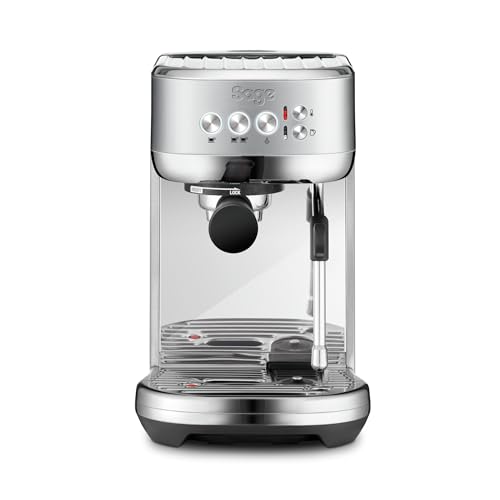
The De’Longhi Magnifica and the Sage Bambino Plus both sit at roughly the same point in the market, and both promise a proper coffee shop drink at home. They go about it in opposite ways. The Magnifica is a bean-to-cup machine: you fill the hopper with beans and the water tank, press a button and it grinds, tamps, brews and drops the used puck into an internal bin. The Bambino Plus is a compact manual espresso machine: you grind, dose and tamp yourself, and the machine supplies stable temperature, pressure and a very good automatic steam wand.
So this is less a question of which machine is better and more a question of what you want your mornings to look like. One removes effort. The other asks for involvement and repays it with a better cup. Prices below were seen on Amazon UK at the time of writing, move regularly, and should be checked on the live listing before you buy.
How the two machines compare at a glance
The table below sets out what matters on a practical level for a UK household. Figures are drawn from the manufacturer listings on Amazon UK.
Feature | De’Longhi Magnifica Evo | Sage Bambino Plus |
Type | Automatic bean-to-cup | Manual espresso machine, automatic milk wand |
Grinder | Built in, 250g bean hopper | None, budget for a separate grinder |
Water tank | 1.8 litres | Smaller removable tank |
Power / pressure | 1,450W | 15 bar, ThermoJet heat-up in seconds |
Milk | Manual steam wand | Auto MilQ automatic microfoam wand |
Approx. price seen | About £527 | About £349.95 plus grinder |
Amazon UK rating | 4.1 stars, about 1,676 ratings | 4.4 stars, about 453 ratings |
The short version: the Magnifica costs more up front but includes everything. The Bambino Plus costs less for the machine, but the true total depends on the grinder you pair it with.
Convenience versus craft: the fundamental choice
Everything else in this comparison flows from one trade-off. The Magnifica prioritises removing effort. You do not weigh, grind or tamp, there is very little to learn, and a decent drink arrives in under a minute. Anyone else in the house can use it without a lesson, which counts for a lot in a family kitchen or a shared flat.
The Bambino Plus prioritises involvement and quality. There is a learning curve of a few weeks: dialling in the grind, getting the dose right, and understanding why a shot runs too fast or too slow. If that sounds like a chore, it will be. If it sounds like a hobby, it is the whole point.
Espresso quality
On cup quality, the Bambino Plus has the edge, and it is not especially close once both machines are set up well. A separate burr grinder, fresh beans and a properly tamped 54mm portafilter produce a tighter, more nuanced espresso than any built-in grinder and brew unit in this price band, with better crema and more clarity in the flavour.
The Magnifica is far from poor. Its coffee is consistent, hot and perfectly enjoyable, particularly as a flat white or cappuccino where milk covers small differences. It will comfortably beat capsules and instant. But if you are a black-espresso drinker who notices the finer points, you will hit its ceiling sooner.
Milk, space and the grinder question
Milk is where the Bambino Plus earns real praise. The Auto MilQ wand textures milk automatically to a set temperature, giving silky microfoam without needing barista skills, and you can switch to manual if you want to learn latte art. The Magnifica gives you a manual steam wand, so results depend on your technique, but it works well once you have practised.
The grinder question is the hidden cost. The Bambino Plus needs a separate grinder, which adds money and worktop space. A good entry-level burr grinder costs from around £100 to £200, and a better one can cost much more. Add that in and the total setup comes to as much as, or more than, the all-in-one Magnifica. On space, the Bambino is narrow, but with a grinder beside it you have two appliances to house.
Day-to-day living with each machine
A typical weekday with the Magnifica is simple: press, wait, drink, and empty the drip tray and puck bin every so often. It is noisier during grinding than many people expect, so it is worth thinking about where it sits if you have a light sleeper upstairs. It is also a taller, deeper machine than the Bambino, so measure your worktop and the gap under wall cupboards before buying.
A weekday with the Bambino Plus takes longer. You weigh beans, grind, tamp, pull the shot, then steam milk, then wipe down. Once you are practised that takes about five minutes, and many owners find it a pleasant ritual. The Bambino is small enough to tuck beside a kettle, but it is at its best when you have a tidy spot for the grinder, tamper, knock box and milk jug too.
Who each machine really suits
The Magnifica suits households where several people drink coffee at different times, where the person buying it is not the person who wants to be fiddling with dosing, and where consistency matters more than perfection. It also suits people who are new to good coffee and do not want to risk an expensive hobby that gathers dust.
The Bambino Plus suits solo drinkers and couples who enjoy the process, people who already own or plan to buy a grinder, and anyone who wants to grow their skills. If you have ever thought about learning latte art, this is one of the more forgiving machines to learn on, and the automatic wand means you can start with good milk while you improve your shots.
Price and running costs
At the time of writing, the Magnifica Evo listing showed about £527 and the Bambino Plus about £349.95. Running costs are similar: both use fresh beans, so a good local roaster or supermarket beans will be your main ongoing spend. The Magnifica needs regular descaling and cleaning of its brew unit and drip tray, and the Bambino needs its portafilter, group head and steam wand wiped and flushed after each session.
Which should you buy?
- Choose the Magnifica if you want fully automatic, hands-off coffee with the grinder built in, minimal learning and nothing extra to buy.
- Choose the Bambino Plus if you want noticeably better espresso, do not mind a separate grinder, and actively enjoy being involved in making your coffee.
If you are still unsure, ask yourself whether you would rather spend five minutes on a coffee or thirty seconds. For a wider look at the market, see our best espresso machines under £500 UK 2026 guide, and our individual reviews of the De’Longhi Magnifica Evo and the Sage Bambino Plus.
De’Longhi Magnifica Evo (ECAM292.81.B)

The Magnifica Evo is the easy option. It has a built-in grinder, a 250g bean hopper, a 1.8 litre water tank and 1,450W of power, with one-touch drinks and a manual steam wand for milk. It suits busy households, mixed coffee tastes and anyone who wants good coffee without a routine. Buyers rate it 4.1 stars from more than 1,600 ratings on Amazon UK. Stock looked limited when checked, so look at the live listing before planning around it.
Sage Bambino Plus
The Bambino Plus is the compact enthusiast machine. It has a 54mm portafilter, 15 bar pressure, ThermoJet heating that is ready in seconds and the Auto MilQ automatic milk wand. It is the better choice for espresso quality and for people who want to learn, and it is more compact than most machines here. Remember to budget for a decent grinder. It holds 4.4 stars from around 450 ratings on Amazon UK and was in stock when checked.
FAQ
Q: Is the Bambino Plus harder to use than the Magnifica?
A: Yes, at first. Expect a few weeks to get consistent shots. The automatic milk wand shortens that curve for latte drinks.
Q: Do I need a grinder for the Bambino Plus?
A: Yes. It does not grind beans, and pre-ground coffee will not give you its best results. A separate burr grinder is the biggest upgrade you can make.
Q: Which makes better milk drinks?
A: The Bambino Plus with its Auto MilQ wand gives the most consistent microfoam. The Magnifica’s manual wand can match it with practice.
Q: Which is easier to clean?
A: The Bambino is simpler, with fewer internal parts. The Magnifica’s brew unit and drip tray need regular attention, and it needs periodic descaling.
New to home espresso? Start with our first home espresso setup guide.



